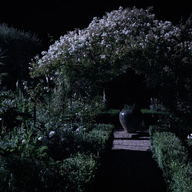
Hidden behind an overgrown gate on the edge of Prospect Park, the Thorn Garden looks abandoned to mortal eyes — a forgotten botanical enclosure left to ruin. Ivy strangles the old iron fencing, weeds claw through cracked stone paths, and the faint scent of rot clings to the air. But once inside, the illusion peels away. The plants are not dead — they are vibrant, uncanny, and wrong. Roses grow black as ink. Briars curl like serpents. Flowers bloom at night in colors no mortal painter has ever seen.
The Garden is a living cathedral. Vines twist into arches overhead, creating vaults that drip with dew and shadow. The ground is soft with loam, scattered with ritual markings half-buried beneath roots. Small offerings — bones, feathers, bottles of blood — lie tucked into the soil at seemingly random points, though the faithful whisper that the garden “eats” what it is given. In the center is a circle of thorns, a vast open space ringed by briar-walls that shift subtly when no one watches. This is where the Circle of the Crone holds their rites and welcomes outsiders into their domain.
The Thorn Garden serves as Brooklyn’s Elysium, but its neutrality is fragile. Unlike the polished marble of Manhattan or the iron discipline of the Bronx, the Garden feels feral, alive, and temperamental. The Circle insists all Kindred may enter, but only if they respect the Garden’s silence and sanctity. Disrespect, violence, or arrogance is met not by guards or Hounds, but by the Garden itself. Those who shed blood in its heart are said to vanish into the briars, leaving only their screams and the faint perfume of night-blooming roses.