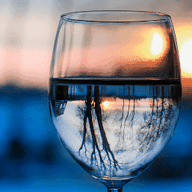
Several products of the parasitic watik tree that grows in the forests of the Dappled Haven are used together to produce a luxury beverage. Watik mead is expensive, rare, and almost never traded or sold to foreigners, although bottles are given as exquisite gifts particularly in diplomatic relations.
As described in the article on samor, watik trees graft themselves to the roots of old-growth trees and draw nourishment from their sap with no need of chlorophyll. Their leaves are white and their bark is black. In early spring before their leaves unfurl, the trees flush with small yellow five-petalled blossoms that bear an earthy, spicy fragrance a bit like nutmeg. Bees love the flowers, particularly as an early nectar source after winter, and the hives are placed around them to produce a monofloral honey that is nearly clear with the same earthy nutmeg-like aroma and taste.
A lot of good watik mead is made with mountain spring water, but the very top reserve quality is made with the clear watik sap tapped in spring. The flavour difference is subtle, contributing a further fragrant spicy-musky note that connoisseurs cannot mistake. Because the other products of the tree are so valuable, tapping is done very sparingly; and the sap is under great demand for perfumes and confectionary too. Therefore the top reserve mead is quite rare.
Watik wood makes excellent barrels, watertight just like oak. The watik barrels are used for watik mead just as they are for yud, and the top reserve mead is aged only in atus-infected wood. Similar to wine in oak, the wood imparts spicy, sweet, vanilla notes and tannin structure, although unlike oak barrels, it is not charred so that it does not darken the water-clear mead. If present, the bright streaks of atus infection leave behind a green tinge visible only on the mead's meniscus, barely perceptible, but connoisseurs look for the subtle green hue as a sign of the best top reserves.
The mead is barrel-aged for several years before being bottled. Although typically fermented dry and quite strong (16-18% is typical), the honey's aromatic character and the effect of the wood lend it a slight perception of sweetness. The top reserve mead is saved for special occasions, festivals, and rituals. Some elvish collectors have bottles that are hundreds of years old from a previous Cycle. It is rumoured that King Aegis Trenton has a few tucked away somewhere under his castle from before the Battle of the Seven Tears.