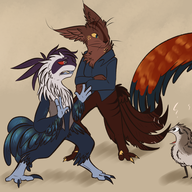
Unlike dragons, fauns are a single species with
varying races. These three race groups are known as Galliform [chicken-like],
Musteliform [weasel-like], and Dracoform [dragon-like] fauns. Despite
their head shapes seeming very different, the underlying skull structure
of each faun race is the same. Many mixed-race fauns exist.
Physically,
fauns are bipedal creatures with enormous legs, small torsos, and
generally thin arms. They are bird-like in anatomy with no actual wings,
covered in feathers and having large talons on their three-toed feet.
No faun has ever surpassed the 4 foot mark in size, usually being closer
to 2.5-3 feet in height.
All fauns are
unisex and possess both male and female features, with some leaning more
in one direction than the other. They typically have pronounced,
air-filled chests as well as decorative display feathers on their heads
and tails.
Physical makeup
Fauns, like most
sophonts, are organic creatures. Their physical composition is
carbon-based, with oxygen-carrying blood and the requirement to drink
water. Fauns are considered to be low-magic creatures, which reflects in
their physical appearance.
Colors
Fauns come in many colors
just like birds. However, unlike species such as most dragons,
stickfigures, or sorcerers, fauns rarely have extremely vibrant color
palettes. They most often come in more muted colors, such as grays,
greens, and browns with some brighter highlights. Fauns with vibrant and
colorful feathers are the most arcane, with the magic prowess they
possess giving structure to their feather coloring.
Head
The head is the feature that
varies the most among faun individuals. The three main races have
varying levels of snout size and blockiness, with galliforms having the
smallest and most petite snouts, and dracoforms having the largest and
blockiest snouts. While musteliform fauns can have ear-like feathers on
their heads, no fauns have actual external earlobes. Their ear openings
are rather high on their heads, located above and far behind the eyes.
On galliform fauns, it appears to be common for ear openings to be
slightly asymmetrical, perhaps as a remnant of their evolutionary
ancestors.
 An image showing the differences between the three faun races.
Eyes
Faun eyes are quite large in
their heads, which provide them with excellent long-distance sight and
night vision. Their irises come in a variety of mostly-warm colors,
ranging from browns, to reds, to yellows and occasionally white. Some
fauns have cooler-colored eyes, such as green or blue, but this is
considered to be more rare and only found in musteliforms. Faun eye
sclera can vary from white to yellow or red.
Teeth
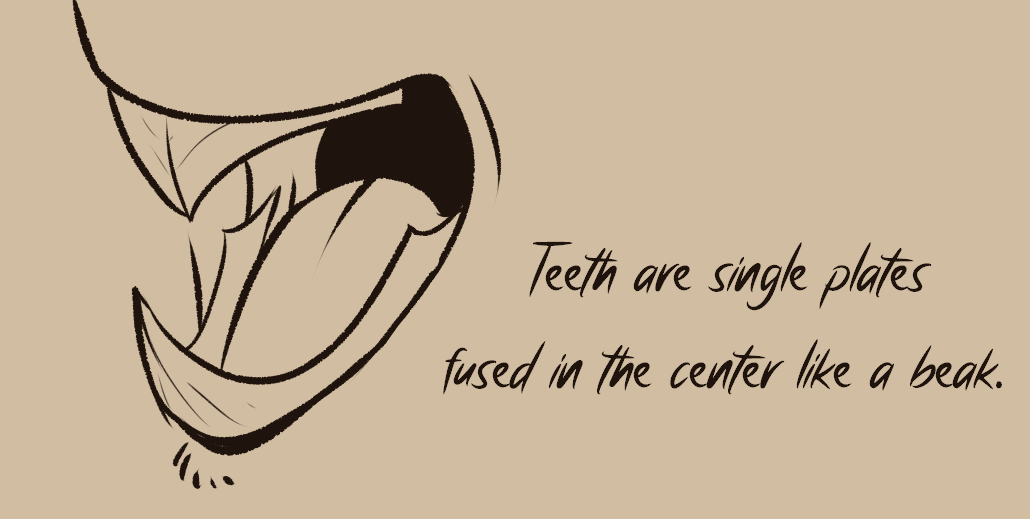
All fauns have distinct,
beak-like tooth structures which differ from that of their saurian
ancestors. These teeth are well-designed for cracking nuts and tearing
into meat and shellfish, which allow fauns to have a balanced and
omnivorous diet.
When the jaw is
at rest, the bottom set of teeth settles in front of the top set. A
pocket in the upper lips allows them to rest without damaging their
mouths, and may occasionally give a faun an underbite-like look. Faun
teeth must be worn down through consumption of nuts, wood bark, and
bones, as they grow constantly and can overgrow to damaging levels if
left unchecked. Dental malocclusions can be fatal, and dentists are
trained to file down teeth manually in the case of overgrowth.
Hands and Feet
Hands
A
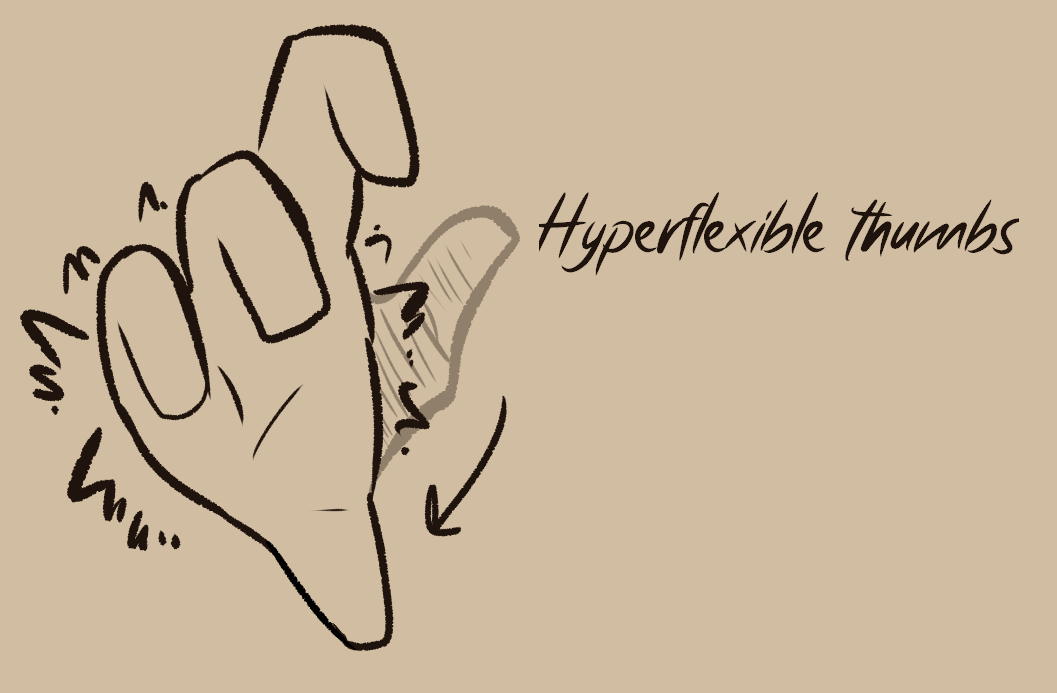
faun's hands are somewhat human-like, with no defined claws, but they
are unique in that their thumbs have an extended range of motion. Fauns
have three fingers and a thumb per hand. While stickmen have
approximately a 100° range of motion in their thumbs, fauns have closer
to a 170° range of motion. This allows for stronger grip strength and
precision by fauns.
Feet
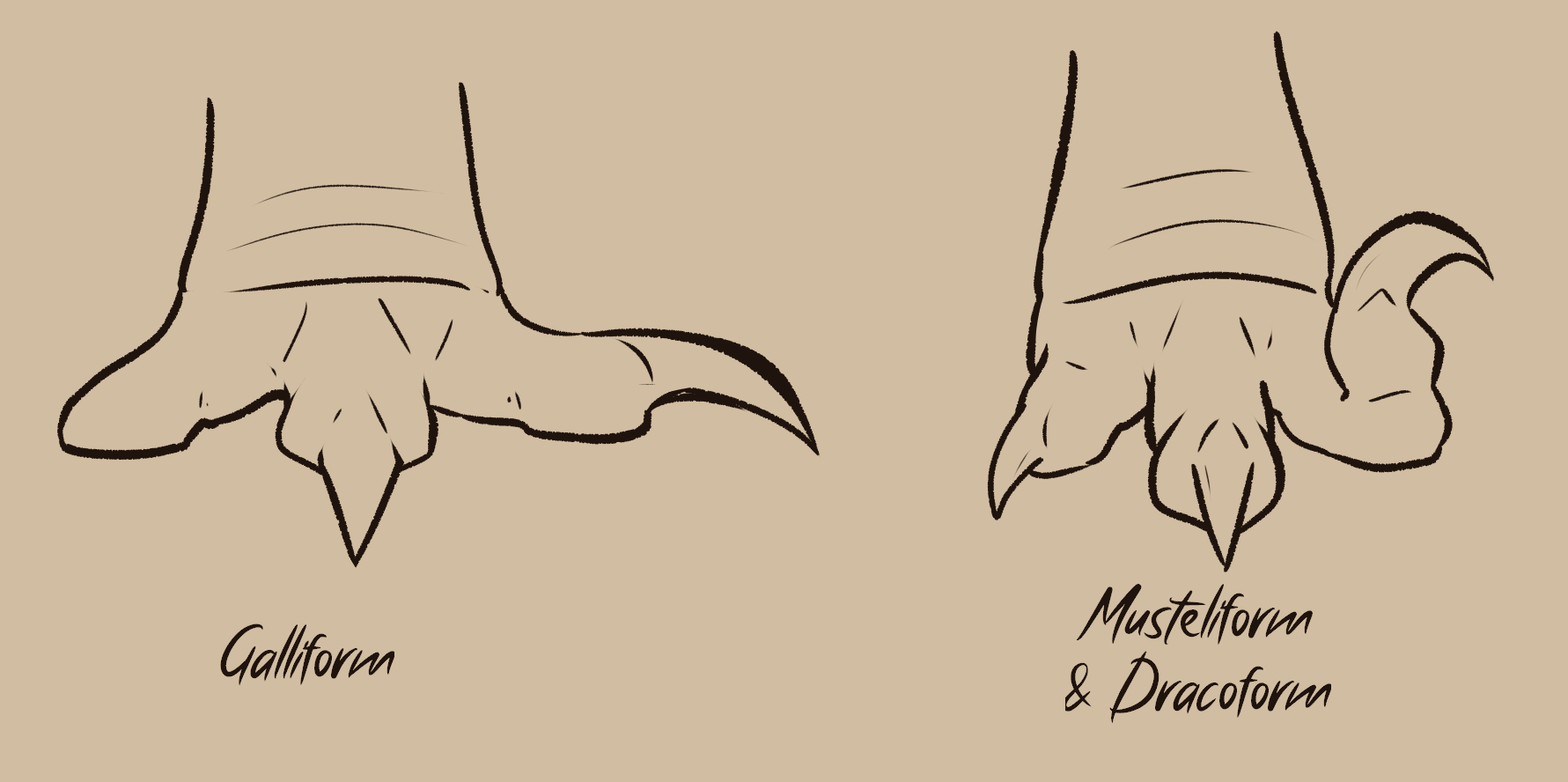
Fauns have relatively small,
flat, three-toed feet with a sickle claw on each foot. In galliform
lineages, the third toe lacks a claw and the first toe stays on the
ground. These sickle claws are common vectors of self-expression in some
faun cultures, with paint, carving, and piercings being a few among the
many types of body modification for their toe claws specifically.
Tails
Faun
tails vary in length from a short feathery stub to a long, decorated
tail fan. This feature variation is purely cosmetic differences, though
it is theorized that the long tail fan is ancestral to their species. As
fauns chose to walk in more upright postures, they gradually lost their
long tails. Fauns with long tails are often still seen as preferring to
stand or walk horizontally, similarly to a dromaeosaur.
Organs and Bones
Fauns have large
lungs and specialized air sac systems throughout their body. Their
respiratory system extends to their bones, which much like birds are
hollow. They are lightweight for their size, with their air sacs and
hollow bones giving them the ability to be swift and agile even with
their awkward proportions.