While rules and regulations vary across events and even countries, there are a few that are universal regardless of location. The universal weight classes for public events are as follows:
| Class | Weight |
| Wispweight | 0.33lb (0.15kg) |
| Antweight | 1lb (0.45kg) |
| Beetleweight | 3lb (1.4kg) |
| Pebbleweight | 15lb (6.8kg) |
| Lightweight | 30lb (14kg) |
| Faunweight | 60lb (27kg) |
| Middleweight | 150lb (68kg) |
| Heavyweight | 250lb (110kg) |
| Superheavyweight | 500lb (226.8kg) |
| Dragonweight | 1000lb (453.6kg) |
Most televised events vary between middleweight and superheavyweight in the southwest, though the northeast typically keeps robots within pebbleweight and middleweight for televised events. Ch'chkun and Dusk are the only known locations that will host events for dragonweight robots. Multi-champion dragonweight robots are often decommissioned from sport and enlisted into military service in Dusk, with a large payment to their teams as a prize for making a winning robot.
Universal Rules for Robot Building
- A robot must not enlist liquids, gas, smoke, EMPs, lasers, entanglement, or self-destruction weapons against its opponent.
- A robot must not be made of hazardous materials such as asbestos, glass, or foam.
- A robot must not be made of illegal materials such as soulsteel.
- A robot may not have any form of artificial intelligence or code on board.
- A robot must have an active weapon. Weapons are usually powered and remotely operated, a part of the motor system of the robot, but a full-body thwackbot or meltybrain can also count as a weapon without additional motorized weaponry.
- A robot may have up to three minibots, or be made of multiple smaller robots, but the total weight of the main robot and its minibots must not exceed the class weight limit.
- Spinning weapons must spin down from full speed to stop within 60 seconds if commanded to from the remote controller.
- A spinning weapon cannot weigh more than 1/2 the full allotted body weight.
- A robot may not use any form of magic in its build or in combat, unless it is a runebot in allowed regions, in which rules will differ.
- A robot that does not move via wheels [ie, via legs, brushes, shuffling, etc] is given a weight bonus of 50%.
- A robot must be able to exhibit controlled movement at a reasonable speed. Usually, this speed is a minimum of four miles per hour (6.4kph), but is allowed to be slower if the robot is smaller or has a non-wheel movement method.
- A robot may not be powered by an internal combustion engine.
- A robot may not employ dragonfuel as a fuel for engines, flamethrowers, or any part of the robot.
- A robot may not fly, but it may climb the walls if it and the arena is designed for that.
- A robot must not immediately begin to move when powered on.
Weapon Classes
Combat robot weapon classes are typically split into several groups. These groups do not affect how a robot is seeded in a tournament, and instead exist simply for categorization against other robots.
Spinning Weapons
Spinners are based around blades, cylinders, bars, drums, or discs rotating at high speed. Due to the effectiveness of a spinner to distribute high amounts of kinetic energy over a short period of time, they are one of the most popular forms of combat robot weapon and are easily available in stores and shops dedicated to selling parts for the sport.
Thwackbots and Meltybrains
A subset of spinning weapons, thwackbots and meltybrains rely on spinning blades or impact weapons without a dedicated motor for a spinning blade. These robots are known to be much more reliable long term, as they rely on the full-body spinning of the entire robot as opposed to a single blade, but they are not particularly known for their destructive power.
Flippers
Flippers apply large amounts of pneumatic or hydraulic power to rapidly send opponents flying horizontally or vertically across the arena. Most modern flippers are powered with hydraulics, which allow for powerful interactions without worry of running out of pneumatic gas; however, flywheel-based flippers have also been finding success in the north. Flippers tend to deal damage to their opponents via impact with the ground or with arena hazards, as large robot chasses are more susceptible to damage from their own weight hitting the floor.
Lifters
Lifters are another form of control bot that use a strong lifting arm, wedge, or claw to grab and get under its opponent and disrupt its motion. Lifters are not known to do damage to their opponents, and many are fitted with flamethrowers in order to deal small amounts of actual damage to their opponent.
Crushers
Crushers utilize a weapon that has a single point of contact to provide extreme levels of pressure onto an opponent. These robots are also under the control bot umbrella, and some have been infamous for getting suck in their opponent's armor due to metal splintering under the pressure.
Hammers
Hammers use pneumatic or electric systems to swing their weapon onto an opponent from above, which is useful for disrupting internal components and dislodging motors and wires. Hammers are not especially effective at external damage, though some "pickaxe" variants can pierce through armor.
Flamethrowers
Flamethrowers are rarely a weapon on their own, instead usually being a secondary weapon to a control bot such as a lifter or crusher. Flamethrowers typically employ pure butane or mixtures of butane and oxygen, creating a small but powerful flame that is capable of cutting through tough metals. Unlike earthan combat robotics, it is rare for Cenaran combat robots to deploy huge red flames for showmanship purposes as the messier ignition systems are much more of a hazard.
Runebots
Runebots are a rare class of robot that are allowed to use magic in combat. These robots have ignition runes set inside their chassis, with various exit points for projectiles and other spells to leave the robot. As projectiles are typically finite in standard combat robotics, runebots tend to spec into projectiles or much showier flamethrowers due to the lack of required ammunition. Runebots are only allowed in Alumanate City, Suneil, and Neo Hawa events, making their appearance rare but noteworthy.
As runebots are a unique and new class of combat robot, they are often subject to their own extremely strict rules.
- Runebots must not break any of the normal build rules.
- Runebots may not use explosive, corrosive, or destabilizing magic that renders its opponent inert.
- Projectiles fired by runebots must be easily cleaned up after a battle, or must disappear on their own.
- A runebot may not use ice or dry ice in its magic.
- A runebot may not use soulfire or any Soul magic under any circumstances.
- A runebot may not use magic that destroys or damages the arena floor via plants, stone summoning, etc.
- A runebot may not use transformation, matter manipulation, or psionic magic.
- A runebot using physics manipulation can hold their opponent in the air for a maximum of ten seconds, before giving them time to fight back.
- A runebot may not manipulate time.
- Rune usage must be coded to be finite, and a runebot must have a secondary active weapon.
Universal Battle Rules
Depending on the location and host of the event in question, match rules for combatants and staff will also vary. However, there are some rules that have been universally standardized by official tournaments, and they are as follows.
- Matches are three minutes and thirty seconds long.
- Both robots must engage with each other at least once every twenty seconds, through touch or weapon contact. If the match goes too long without engagement, it will end and come to a judge's decision.
- Robots can pin their opponent for up to ten seconds, before they must release and back off at least three lengths of their own robot.
- If a robot is not showing controlled movement, they must be counted out within ten seconds. The counter does not resume from where it left off if they regain controlled movement and lose it again later.
- If a robot is unable to release its opponent due to physical damage, the match must be stopped and a judge's decision made.
- If a robot is stuck on a piece of the arena, or stuck upside down and unable to self-right, it is given one free unstick by a house robot.
- Both teams must be given the option to tap out at any point, for any reason.
- If there is a lipo fire or the box is filled with smoke from a lipo fire, the match must be stopped for repairs and the area around the arena must be evacuated.
- If the arena is significantly breached or damaged - ie the walls are broken, the floor is broken, the ceiling is breached, etc - the match must be stopped for repairs.
- After a minute and a half, the house robot can be turned off via a dial switch on its back. Turning off the house robot does not stop the match or award a win, but a bonus prize is given to any team who can accomplish it.
House Robots
While not present in every local competition, all standardized events [except superheavyweight and dragonweight class battles] will have at least one house robot whose purpose is not to disrupt the battle, but assist combatants in the case one is stuck. House robots typically take on the "brick" shape, and are twice the weight of the competing fighters. These house robots will have a lifting arm that they can use to flip over robots that have been stuck on their backs, and will otherwise move battlers off of offending obstacles that they may be stuck on.
A popular "bonus prize" is to turn off the house robot, which some control bot battlers have dedicated their designs to being able to do. By turning the switch on the back of the house robot, it will be powered off, and can no longer help either robot for the rest of the match. The prize for doing this is a small trophy and cash bonus to the entire team.
Disrupting the house robot in other ways, such as flipping it over or breaking it with hammers or blades, is another way to prevent it from helping their opponent. While these methods do not pay a bonus, they are entertaining, and are allowed on the basis of it being humorous and exciting to watch the brick get flipped.
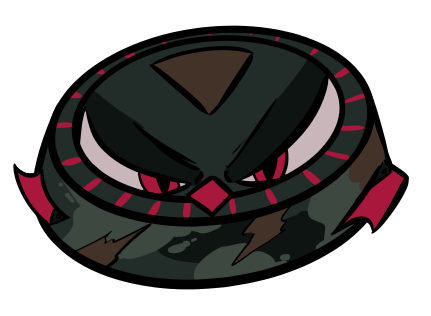 Bog Griffin