The T250 is a Gatling-style 37mm rotary cannon with six barrels, used exclusively in the T249 Vigilante self-propelled anti-air system. While the SPAA itself did not generate that much interest (as it is really just another M113 with a massive gun Macgyvered onto it), the T250 did spur enormous curiosity between Oceanykan and Soviet engineers. When a T249 was captured and smuggled to the island nation, courtesy of the Viet Cong, they were ecstatic to witness such an enormous and awe-inspiring weapon. At a maximum rate of fire of 3,000 RPM, the T250 can empty its 192-round magazine in less than four seconds. An alternative fire mode of 120 RPM is available for ground support.
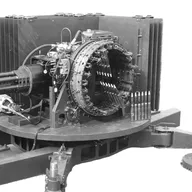
T250 Rotary Cannon
Abilities
Common Attributes - Mechanical
Auto
This weapon is fully automatic, either inherently so or by the presence of a selective-fire mechanism.
EFFECT:
This weapon can fire more than one shot each time it is used. Each subsequent shot has a progressive penalty.
Automatic weapons are considered STABLE when they're mounted on a vehicle, tripod or turret. This is different from the Stabilised SA.
- Point Blank Range - No penalty.
- Close Range (≤10m / 2sq) -> -1
- Short Range (≤50m / 5sq) -> -2 (STABLE: -1)
- Average Range (≤200m / 10sq) -> -3 (STABLE: -1)
- Medium Range (≤500m / 20sq) -> -5 (STABLE: -1)
- Long Range (≤1000m / 50sq) -> -5 (STABLE: -3)
~ Beyond this point, automatic fire is unfeasible without a STABLE firing platform. ~ - Very Long Range (≤2000m) -> (STABLE: -3)
- Extreme Range (>2000m) -> (STABLE: -5)
Common Attributes - National
Van Fleet Loads - American Artillery (CW)
During the Korean War, General James Van Fleet continuously demanded up to five times the regular artillery shell expenditure of American batteries in the harshest fighting. These "Van Fleet loads" would prove devastating against any target, and the procedure was used again numerous times during the Cold War in a myriad of proxy conflicts, particularly the Vietnam War.
EFFECT:
Up to 3 times per Engagement, this cannon may Reload without expending a single Action Point (AP).
[ ]
[ ]
[ ]