The McDonnell Douglas F-4 Phantom II is an American twin-seat supersonic fighter aircraft. Originally developed by the US Navy to serve as its next generation air superiority fighter, the F-4 Phantom exceeded most of its expectations in trials and was subsequently adopted by both the US Marine Corps and the US Air Force; the latter eventually became its most prominent user. It can reach an impressive top speed of Mach 2.2 and has an incredibly advanced electronics suite, by default including the AN/APQ-120 aerial interception radar, but capable of mounting an AN/ASQ-153 Pave Spiker laser designator pod, an AN/AVQ-26 Pave Tack electro-optical targeting pod and an array of electronic warfare pods. The Phantom distinguishes itself by being the first "missile fighter", designed around utilising contemporary air-to-air missile designs such as the AIM-7 Sparrow or the AIM-9 Sidewinder. When this did not turn out to be the "wonder weapon" that the US Armed Forces expected, losing out to North Vietnamese MiGs in close-quarters dogfights, F-4 Phantoms were fit with 20mm M61 Vulcan rotary cannon gunpods in the most common iteration of this fighter, the F-4E Phantom II. Despite being designed as an air superiority fighter, this aircraft has sufficient thrust to carry an enormous number of ground attack armaments, including nuclear bombs.
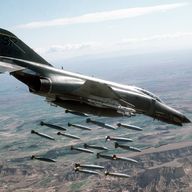
McDonnell Douglas F-4 Phantom II
Abilities
Common Attributes - Mechanical
Radar Systems
This vehicle is equipped with radar systems, allowing it to see far beyond what the Eyeball Mk. I can, even in adverse weather conditions or complete darkness.
EFFECT:
This vehicle is equipped with long-range radar, allowing it to detect enemy units far beyond Extreme Range. However, that is far from its only use:
- If the radar system is marked as (Missile Guidance), it can be used to target them with a Smart Munition.
Common Attributes - National
AirLand Battle - American Aircraft (CW)
In the 1960s, with advances in military communications, it became feasible for small units to have aerial support on standby 24/7. As American troops became more reliant on Close Air Support (CAS) missions, this became an integral part of their warfighting doctrine, later codified as AirLand Battle.
EFFECT:
This unit gains a Very Easy DM to its hit rolls when attacking an enemy unit which has been Spotted!