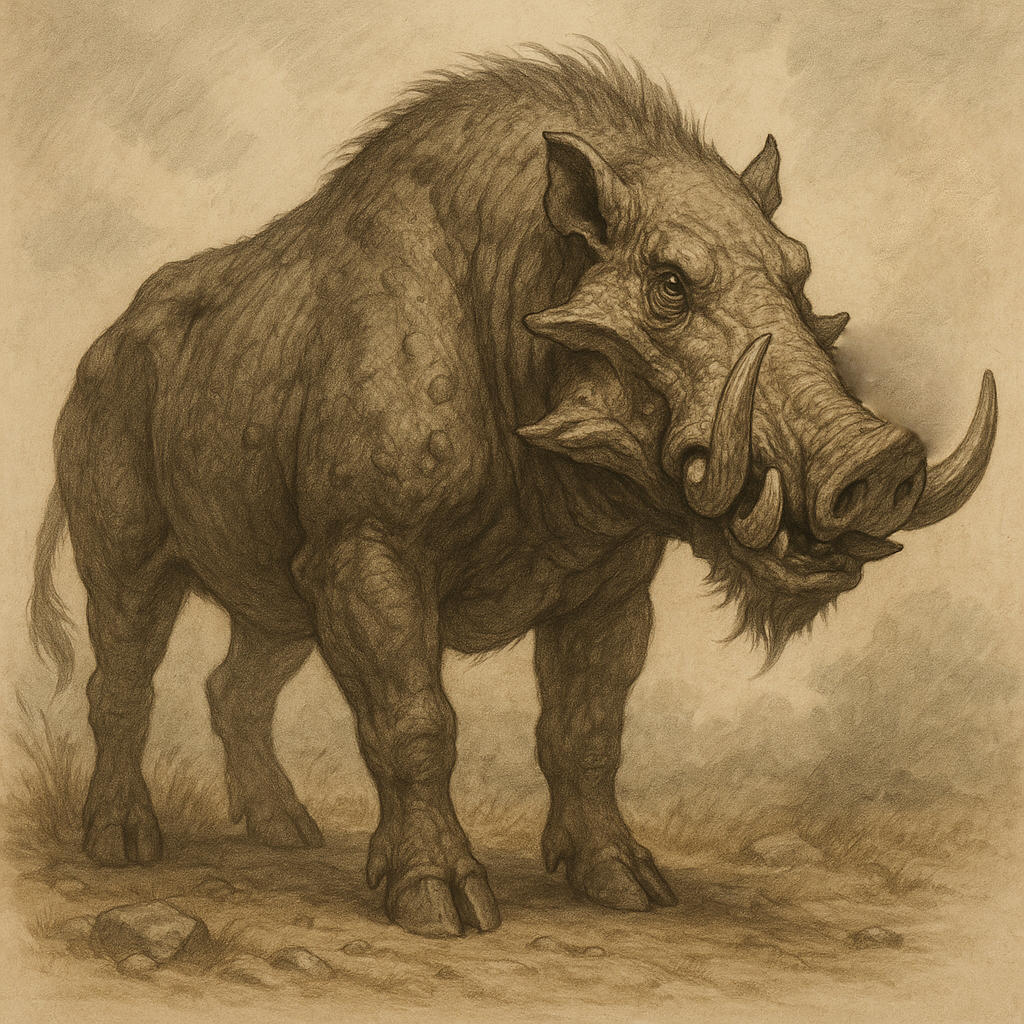
Wartusks are formidable, thick-skinned quadrupeds native to the rugged lowlands and foothills of the Bifrost Isles. Resembling massive, tusked boar-like beasts with thick barrel chests, they are descended from an ancient and savage lineage of megafauna—creatures often referred to in myth as "the spawn of stone and thunder."
Standing nearly shoulder-height to a Goliath and weighing well over a thousand kilograms, Wartusks are most known for their gnarled, protruding tusks—hence their name. These tusks, which grow from both the upper and lower jaws, vary greatly between individuals, curving upward, outward, or even twisting together in a display of strength and maturity. Wartusks also sport reinforced bone ridges along the sides of their heads and snouts, further protecting them during fights or heavy labor.
Physical Traits & Behavior
- Hide: Their hide is leathery and covered in bristled fur that ranges in color from slate-grey to mud-brown. It’s notoriously tough and can deflect glancing blows from blades or arrows.
- Temperament: Despite their fearsome appearance, domesticated Wartusks are loyal, intelligent, and capable of understanding basic commands. Wild Wartusks, however, are territorial and aggressive.
- Diet: Omnivorous by nature, they consume roots, carrion, and tough plant matter. Their strong jaws can crush bone, and their tusks are occasionally used for digging through frozen earth.
Uses in Society
Across the Bifrost Isles, Wartusks serve as a versatile species—occupying the roles of mounts, pack animals, and even livestock:
- Mounts: Among the Goliath Tribes and some Wood Elf rangers, Wartusks are used as battle and travel mounts. Though slower than traditional horses, they are far more resilient in snow, rocky terrain, and combat.
- Pack Animals: In Muspelheim and other agrarian settlements, Wartusks are used to pull sleds and plows, transport goods through difficult terrain, and assist with heavy farming tasks.
- Meat & Leather: Though only culled when necessary, Wartusk meat is a valuable source of protein in harsh winters, and their thick hides are used to produce durable leather goods, especially armor and travel gear.
- Cultural Symbol: Wartusks are often depicted in tribal totems and tapestries as symbols of endurance, strength, and unyielding spirit.
Breeding and Varieties
Breeding Wartusks is a specialized trade among certain families in Muspelheim and Vanaheim. Lineages are tracked carefully, as certain bloodlines produce tusks better suited for combat or endurance.
- Frosttusks: A smaller, furrier variant adapted to colder climates and higher altitudes.
- Ironback Wartusks: Bred for labor, these have broader backs and shorter legs, ideal for hauling.
- Warbred Tuskers: Selectively bred for aggression and used by elite cavalry, known for their flaring tusks and violent ramming charges.
Lore and Superstition
It is said that the first Wartusks were tamed by the Goliaths under the watch of Odin himself, who admired their stubborn will. In some villages, it is customary to offer newborn Wartusks a carved rune stone to “ward off the wild spirit,” ensuring a docile temperament. Others believe the more crooked a tusk, the stronger the bond it will form with its rider.