1. Creatures

Conashellae

Terrain: Sand or silt wastes

Frequency: Common

# Appearing: 2-24

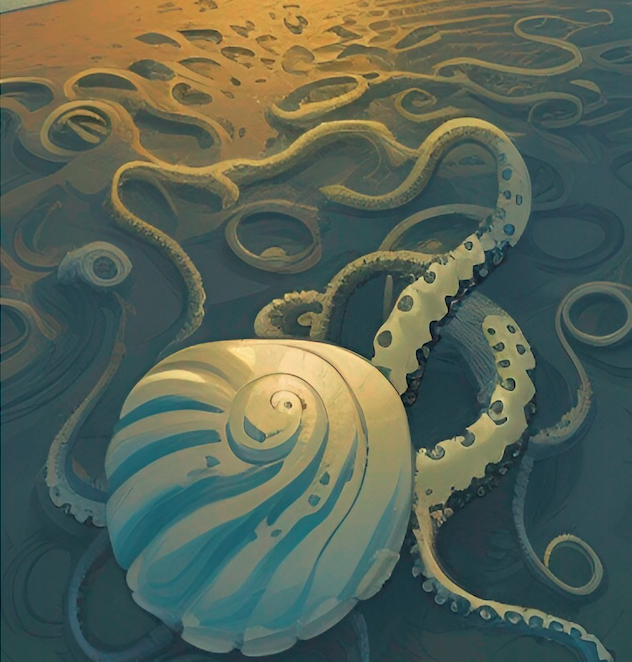
Conashellae, or shell-diggers as they are frequently called, are usually found in the sandy wastes and silt seas of Athas. They range from 3” to 15” in length, and all have the same seashell caraapace covering their bodies. Only their undersides have vulnerable. exposed flesh. The only other visible feature on the connshellae are two rows of pseudopods on the creature’s front. The top row are soft and highly dexterous; these serve as sensory organs. The lower row have the same soft appearance, but they are pointed and bone-hard. These are used to burrow through the sand and silt.

Kanka is built by just the two of us. Support our quest and enjoy an ad-free experience for less than the cost of a fancy coffee. Become a member.

Combat

Conashellae are timid creatures, preferring to flee rather than fight. They will do their best to avoid or escape any threat, but if they are cornered, they can defend themselves. The lower row of pseudopods are capable of grasping end pinching, like a crab‘s claws. The ends of the pseudopods come to a point, and also can be used to strike at probing hands. The manner in which the conashellae break down their food also may be used as a defense. A sac, located at the base of the pseudopods secretes a substance that has a high content of salt and is mildly corrosive. The liquid is normally used to break down the plants and minerals into a pulpy mass 50 they can be consumed.

Habitat/Society

Conashellae are burrowing creatures, protected from the harsh environment by never going above the surface of the land. Their diet consists primarily of plankton. salt. and water. They feed by burrowing into and around a source of minerals or plants. secreting their digestive juices, then absorbing the pulpy mass slowly through pores in their undersides. Conashellae can be found in small groups or schools, burrowing continuously. During the day, they are never seen closer than 8” to 12” below the surface in sand, and never closer than 6” in silt. At night. they rest just below the surface. about 1” to 2” deep. Conashellae spawn in spring and late fall. each female producing between one and three dozen eggs. The eggs are buried in the soil of their hunting grounds. about 5” deep. It is not known why the eggs are never accidentally eaten during feeding hours. However, the rancid odor they produce when uncovered prior to hatching may be part of the reason. Hatchlings appear three weeks after the eggs are laid. and the young begin feeding immediately. The growth rate of the creatures is unknown.

Ecology

Conashellne do not deplete the sand and silt of minemls. Their digestive process breaks minerals into base components, expelling the leftovers. This by-product is a liquid concentrate that doubles the mineral content in its wake. The connshellae is a viable food source. Its ?esh can be boiled and eaten, and the juices inside the creature can be used as a water substitute. The juice from one conashellae represents one-third of the normal water requirement for humans and demi-humans; one-eighth the water require ment for halfogiants. The juices and flesh also abate some of the effects of dehydration, replenishing the body minerals lost through sweat and exertion. The carapace of the connshellae are prized by some tribes, such as the feral halflings. ‘l‘he shells are used as ornaments. household items. and tools. Some of the renegade slave tribes have utilized the shells as weapons. honing the whorls and edges to a slicing sharpness. When thrown. these shell weapons do similar damage to the thrikreen’s chatkcha. If used as a hand-held weapon. the shell strikes like an obsidian dagger.