Kot-Thou
Description
Appearance
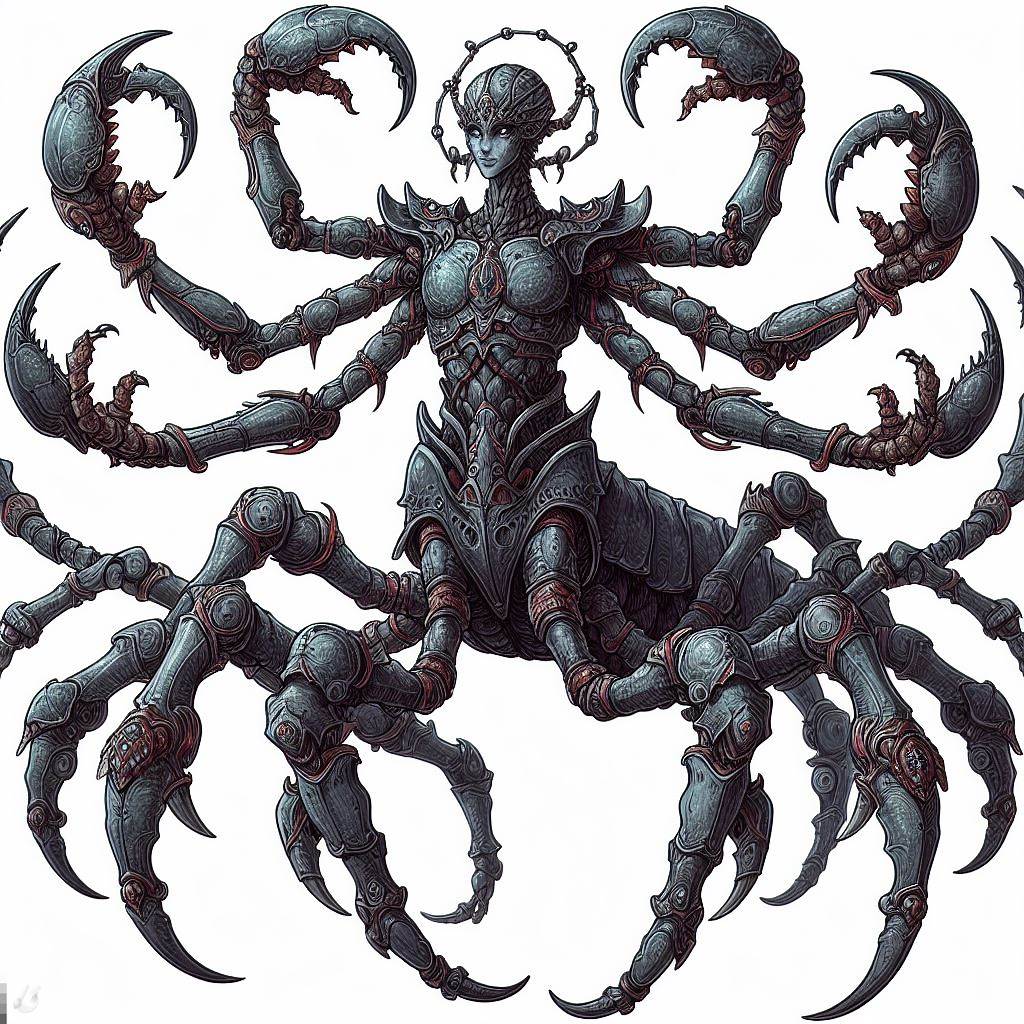
Kot-Thou manifests as a monstrous amalgamation of man, scorpion, and spider, embodying the very essence of poison and disease. His form is both terrifying and awe-inspiring—a humanoid torso with chitinous exoskeleton, multiple arachnid limbs extending from his sides, and a scorpion's tail arcing over his back, tipped with a deadly stinger dripping with venom. His eyes are multifaceted like those of an insect, glowing with a sickly green light that pierces through the shadows. His skin is a mottled gray-green, resembling the color of decaying flesh or stagnant swamp water.
Personality
Kot-Thou is an enigmatic deity with a complex personality. He is neither wholly malevolent nor benevolent but operates in a cycle that reflects the natural ebb and flow of diseases and plagues. He unleashes waves of sickness and blight upon the world, causing death and disaster wherever he walks. However, this is followed by periods of remission, during which entreaties and prayers for respite are answered, and his influence wanes. This cyclical nature makes him both feared and respected.
Unlike deities driven purely by malice, Kot-Thou views disease as a natural part of life—a force that brings balance by culling the weak and fostering resilience in the strong. He is indifferent to the suffering he causes, seeing it as a necessary process. His interactions with mortals and other deities are marked by a detached curiosity, and he is known to be unpredictable and inscrutable.
Symbols
Scorpion and Spider Motifs: Representing his dual nature and his dominion over venomous creatures.
The Serpent Entwined Around a Withered Tree: Symbolizing death, decay, and the cyclical nature of life.
A Skull Dripping with Poison: Signifying disease and mortality.
Colors of Gray-Green and Purple-Black: Reflecting the hues associated with decay, poison, and his priesthood's vestments.
Biography
Background
Kot-Thou is a deity whose influence has waxed and waned throughout history in an unending cycle. Known as the Poison Lord and the Plague Bringer, he is blamed for all manner of ailments, from common sicknesses and devastating diseases to brackish wells and failing crops. When Kot-Thou unleashes waves of death-bringing blights, societies are thrown into chaos, and mass prayers and offerings are made to appease him. Once the plagues subside, his power slowly declines as people forget their vulnerability, only for the cycle to begin anew when complacency sets in.
His role in the pantheon is that of a necessary evil—a force that tests the resilience of life and brings about change through adversity. Some myths suggest that Kot-Thou was born from the first sickness that befell the world, emerging as a manifestation of the fears and suffering of mortals. Others believe he is an ancient deity from a time before recorded history, embodying the primal forces of decay and transformation.
Worshipers
The followers of Kot-Thou are a mysterious and often misunderstood group known collectively as the Kotar. They typically wear ragged gray-green robes, which they wash but never repair, symbolizing the inevitability of decay and the acceptance of imperfection. High-ranking members often bear ritual scars or tattoos covering their bodies, marking their dedication and endurance.
The Kotar are both feared and sought after. They sell various poisons, antidotes, and medicines, possessing extensive knowledge of toxins and diseases. They travel across Avada in search of new ailments and afflictions, not only to spread Kot-Thou's influence but also to understand and master the forces of sickness. They are known to spread rumors about Kot-Thou to boost his reputation and keep the fear of his plagues alive.
Despite their association with disease, the Kotar often treat those afflicted by sickness and perform burials for the dead, believing that managing disease is part of their sacred duty. They devote much of their lives to building immunities to various poisons and diseases through inoculation and magical means. This makes them invaluable to paranoid members of high society, such as wealthy merchants and rulers, who hire them to test their food for poison or to protect them from hidden threats.
In times of plague, the Kotar may be simultaneously persecuted and beseeched. Some view them as the cause of sickness, while others see them as the only hope for a cure. Their dual role as both harbingers of disease and healers creates a complex relationship with the communities they encounter.
Rituals and Practices
The Kotar conduct rituals that involve the use of venoms and poisons, both to honor Kot-Thou and to build their own resistances. Initiations often require the ingestion of controlled doses of toxins, symbolizing trust in Kot-Thou's protection. Ceremonies are held in places afflicted by disease or decay, such as abandoned villages, swamps, or areas where plagues have recently subsided.
Prayers to Kot-Thou are both pleas for mercy and acknowledgments of his power. Offerings may include poisonous plants, venomous creatures, or crafted toxins. In times of widespread illness, communities may hold public rites to appease the Poison Lord, seeking relief from his afflictions.