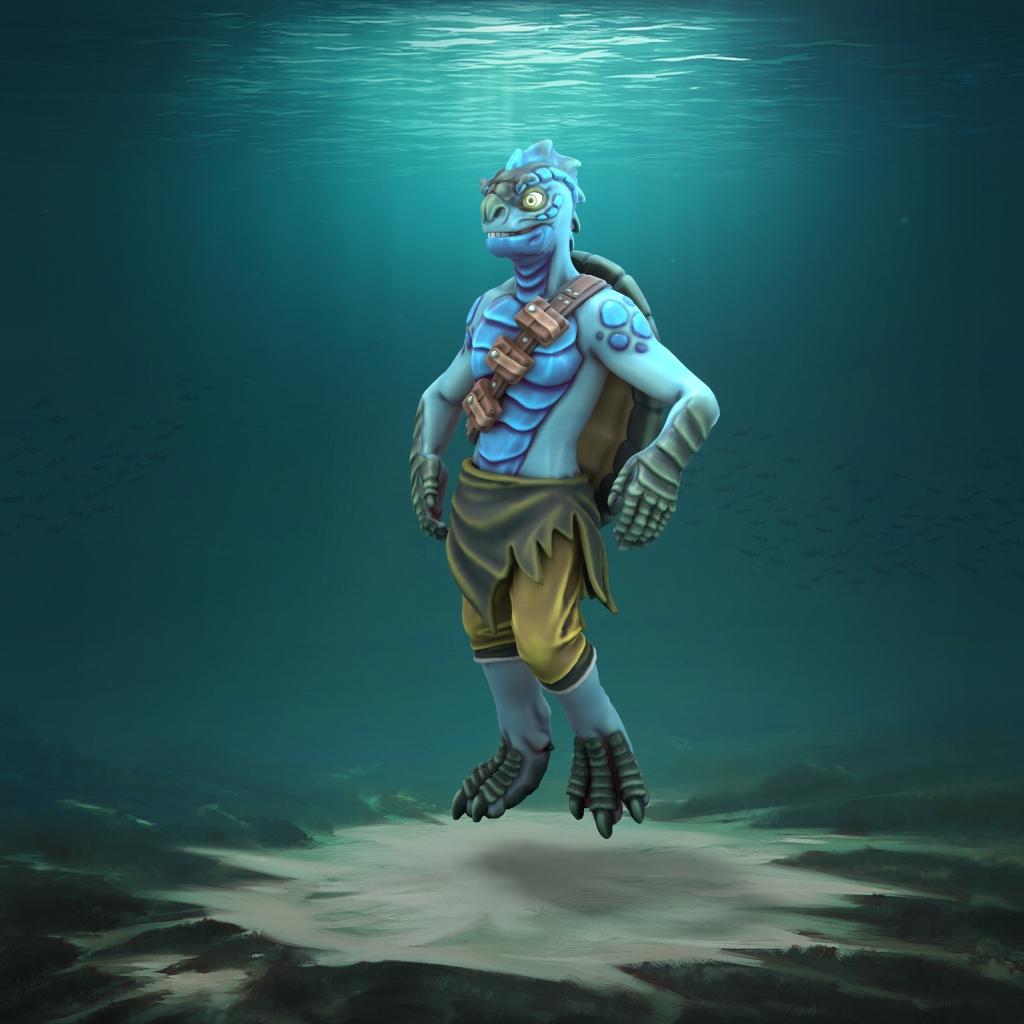
Sea Tortles are extremely rare, and though they technically live above the water, not in it, a true sea tortle will only step foot on dry land a handful of times in their lives. When they are born, when they have their own children, and occasionally when they die. They swim exceptionally well, are awkward on land, and live in carefully hidden communities inside sea caves and coves along deserted beaches.
Their isolationism is clearly due to the fact that they do not truly belong to the waters. All others who wish to live in the embrace of Wiksah do so in community. pulling towards safety and security for all. The Tritons may be proud, but at least they pull their weight. The sea tortles do not.
Of course, they are very few in number and cannot survive easily under the surface nor be comfortable on land. Perhaps it is best to just let them be as they wish? They do no harm and trouble no one.