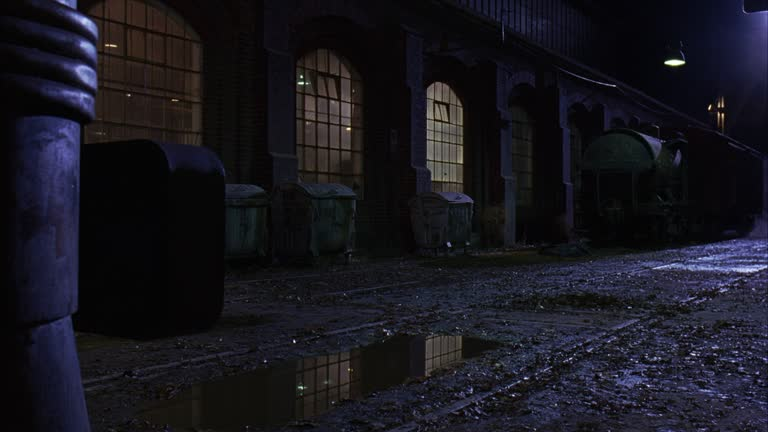
The Iron Yard sits in the bones of a forgotten industrial complex near the Harlem River, a scrapyard-turned-fortress where rust and ruin serve as both camouflage and warning. By day, it looks like an abandoned tangle of girders, corrugated steel, and crushed vehicles piled high against the skyline. By night, the place breathes — shadows stretch unnaturally, lights flicker without wires, and the sound of chains clinking carries farther than it should.
The approach to the Iron Yard is through a gap in the fence, marked only by a half-burned barrel kept perpetually lit. From there, visitors thread through corridors of stacked iron and rusting machinery until they reach the heart of the yard: a vast clearing lined with upright girders, like the ribs of some long-dead beast. Here, the Bronx holds court. The Iron Yard is not subtle — it is raw, bloody, and designed for intimidation.
At its center, a ring of scorched steel drums and repurposed factory equipment forms the assembly ground. This is where Carthian firebrands rally, where challenges are issued, and where the Black Court occasionally convenes when judgment demands spectacle rather than secrecy. Graffiti coats the walls — layers upon layers of tags, slogans, and symbols, some painted in mortal hands, some in Kindred vitae. Old bullet holes pepper the walls, never repaired, a reminder that the Iron Yard is as much battlefield as meeting place.
The Iron Yard has no throne, no dais, no polished stone. Authority is carried by the loudest voice, the strongest fists, the will to survive in plain sight. Unlike the Archivum, which whispers order, the Iron Yard shouts chaos. It is Elysium, yes, but only barely — violence simmers beneath the surface, and the fact that guns and claws rarely come out here is a matter of consensus, not respect.