Kanka is built by just the two of us. Support our quest and enjoy an ad-free experience for less than the cost of a fancy coffee. Become a member.

Hounds

Hounds are a domesticated species of cetacean that are one of the three most popular animals kept as pets worldwide. They have five toes tipped with hooves, long snouts, beak-like lips, and high-set eyes that give them a penchant for swimming and hunting in the water.

Being canine analogues, hounds are often deployed for much of the same tasks that earthan canines would be. Hunting, guarding, digging, dueling, pest control, showmanship, companionship, among many others. Hundreds of breeds of hound exist on Aurus, all around the world, with many bred for specific tasks or appearances over the many thousands of years that they have been domesticated.

It is estimated that hounds have been domesticated for up to 20,000 years, long before the Great Dragon War, and theorized that fauns were the first sophonts to tame them as guardian animals and companion hunters. As stickmen and dragons met fauns and came to Cenara, many of them would also tame and domesticate their own hounds for their own purposes. Stickmen largely bred hounds for dueling and companionship, while dragons similarly bred them as guardian animals for their hoards and homes. 

It is estimated that 52% of all households on Aurus are hound owners. 43% of stickman households, 76% of faun households, and 32% of dragon households are known to be home to at least one hound. 

Sorcerers are not known to keep hounds as pets, due to other companion animals such as owlcats being native to their home environment. Some households in Neo Hawa do keep hounds as pets, but the Khartes-native owlcats are much more common.
Cabeça-de-tochas

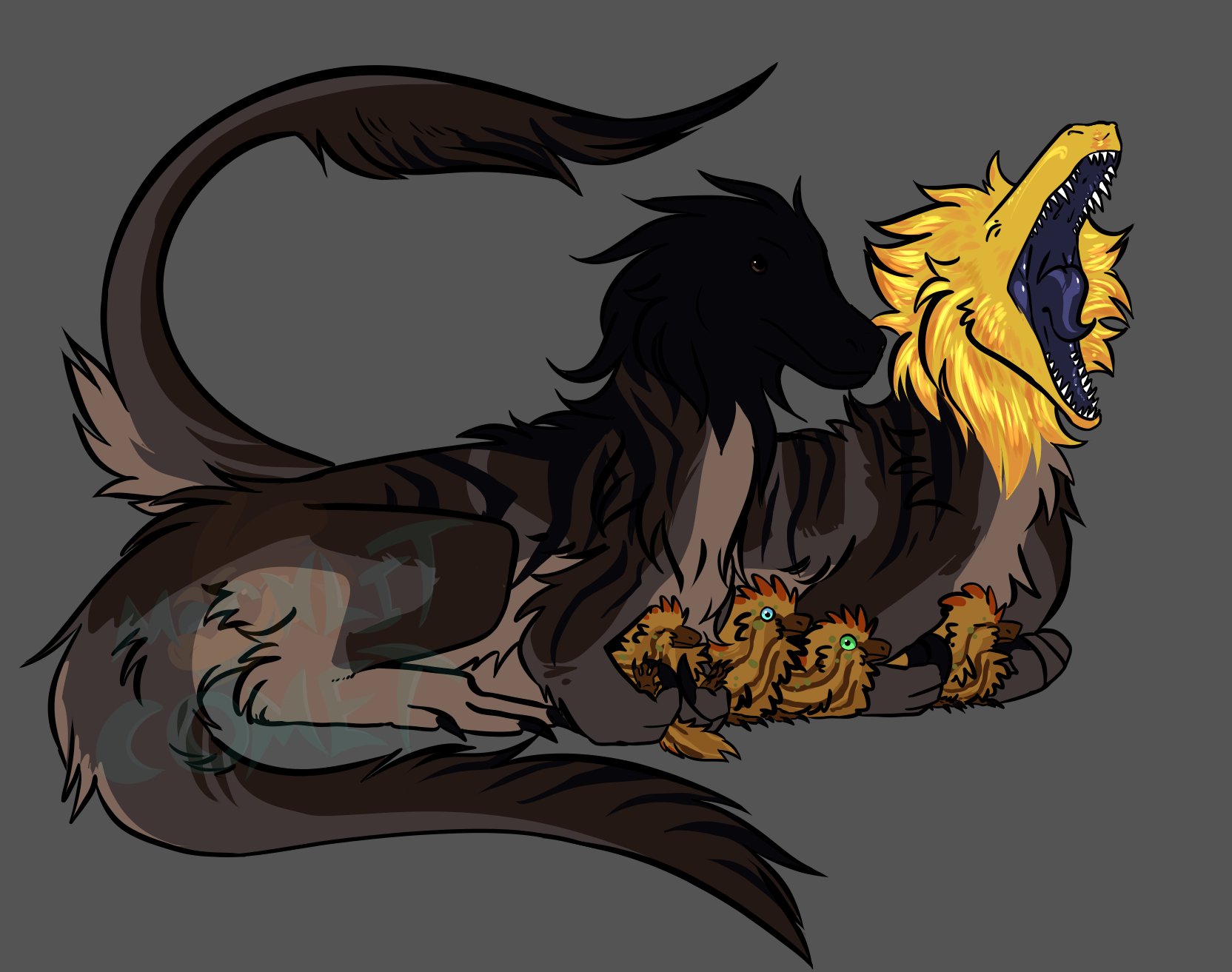
9e7f29f8-21f8-40e0-ad98-3ec85a7c18d0.pngA domestic mated pair of cabeça-de-tochas, one female and one male in breeding plumage. With them are their four young chicks. The male is typically not present for rearing chicks in wild cabeça-de-tochas, but domesticated ones show a peculiar trait of being more amicable towards each other.
Phosphosaurus moros, roughly translating to light-bringing lizard of death, are also known as Torch-heads or Cabeça-de-Tochas. They are herrerasaurids that originate from Vishmia. "Torch-head" is the Common name, and a literal translation of its Vishmian name. It gets its common name from its body appearing like a burned-out torch, with a combination of coal dust and soot coating its feathers as well as naturally all-black feathers and skin on its face. Its scientific name comes from its pyromaniac nature, which has led to many stickman deaths and a well-earned fear of this predator.

They are big, cunning pyromaniacs. Cabeça-de-tocha are known to be extremely cruel and intelligent, having levels of intelligence rivaling that of young stickmen and thus seem to be capable of understanding malevolence to an at least simple degree. Cabeça-de-tocha prefer their food cooked, so they will frequently light small forest fires and roast any animals living inside. They are also sometimes known to hang around fire-breathing dragons, occasionally becoming companions or pets in exchange for promises of delicious cooked meat.

Dragons aren’t as known to domesticate animals as stickmen and sorcerers are, due to their natural state of being quite solitary, but there are a few settlements that raise animals for the sake of meat and animal products, livestock guarding, and crop care.

The animals most known to be domesticated by dragons are cabeça-de-tochas in Canavera Town. Despite not changing much in appearance from their wild counterparts, domestic cabeça-de-tochas are much friendlier and more affectionate, even being willing to work in groups and live in colonies when their wild counterparts are solitary. They are irreversibly genetically changed from their wild ancestors, and a proposed problem is raised from the idea of domestic cabeça-de-tochas escaping, becoming feral, and breeding with wild populations to create more social individuals. Such colonies could pose problems with increased forest fire dangers.

Cabeça-de-tochas are essentially the guard hounds of Canavera Town. Being large carnivores, they taste foul, so their meat isn’t of high value to breeders and famers. They’re excellent ratters, being intelligent animals that know how to use smoke and fire to flush out prey. As such, residents of Canavera Town use their speed and intelligence to eradicate rat nests, as well as protect food livestock such as honks from predators. Because cabeça-de-tochas are relatively small compared to a honk, they don’t view them as much of a threat, and can coexist peacefully.

Thrashers


9e7f2ad7-5fb1-4b90-89a3-5214a4155907.png

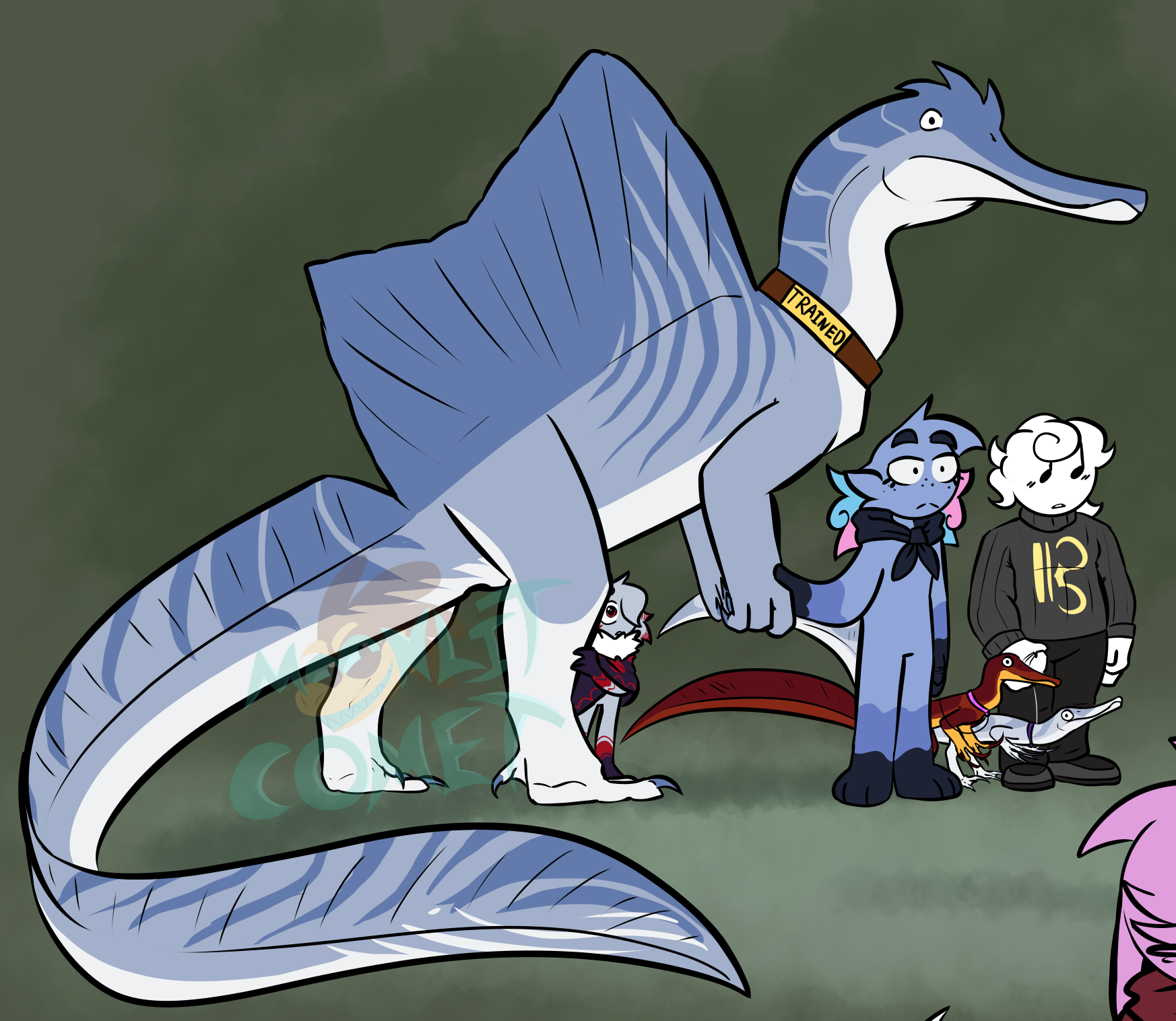
An image showing a young adult river thrasher, known as Sea Salt, and its two hybrid (half spangled thrasher) offspring. It is shown guarding three children, with one of the children holding its hand.

Thrashers are a small genus of spinosaurid dinosaur that are mostly known to be solitary and wild animals. However, following fostering and raising attempts by a trained veterinarian, it has been discovered that thrashers respond well to training and can be protective of stickman individuals. Thrashers are by no means domesticated, but they are easily tamed if raised from infancy. They are noted to have intelligence rivaling that of a seven year old stickman child. River thrashers are notable in their ability to detect seizures in individuals up to an hour before they occur.

There are four known species of thrashers; River thrashers [Spinosaurus cyhus] are the most studied in captivity and respond the best to training, whereas spangled thrashers [Spinosaurus aegis], arcane thrashers [Spinosaurus arcanus], and canyon thrashers [Spinosaurus petras] are not known to be as amicable towards stickmen or present the ability to detect medical conditions as well as river thrashers do.