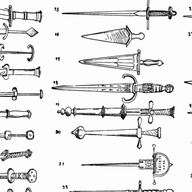
Melee Weapons
Dory
A long spear (about 7–9 feet) used primarily by hoplites (citizen-soldiers). It had a leaf-shaped spearhead and a butt-spike called the sauroter ("lizard-killer").
Xiphos
A short, double-edged sword used as a secondary weapon. It was often used in close combat when the dory was lost or broken.
Kopis
A heavy, single-edged curved sword or cleaver. It was excellent for powerful chopping blows, especially from horseback.
Makhaira
Similar to the kopis, but more versatile in size and curve. It was a single-edged blade used for slashing.
Labrys
A double-headed axe, more symbolic or ceremonial in later eras, but possibly used in Minoan or early Mycenaean combat.
Spatha
Originally a Roman term, but some Greeks adopted longer, straight swords similar in design, particularly in later periods.
Ranged Weapons
Gastra (or Gastraphetes)
Toxon
The Greek bow, typically a composite bow used by archers, especially in light infantry or on horseback in allied or peripheral forces.
Akontion
A light javelin used for throwing. Peltasts (light infantry) used it for hit-and-run tactics.
Sling (Sphendone)
A leather or woven pouch sling for hurling stones. Often used by skirmishers from poor or rural backgrounds.
Word count: 198
Kanka is built by just the two of us. Support our quest and enjoy an ad-free experience for less than the cost of a fancy coffee.
Become a member.