Glassworking is a mysterious art to most Hârnians and its practitioners are sometimes presumed to use magic. Glass is most commonly encountered in the form of expensive tableware, mirrors and lanterns, and bottles for luxury perfumes, exotic spices, and imported spirits. Glass jars, flasks, and tubes are in demand from alchemists, apothecaries, and students of arcane lore. A few glassworkers are experimenting with grinding lenses and prisms useful to navigators, cartographers, and scholars.
Glass is generally the preserve of the wealthy. Nobles aspire to have goblets and wineglasses to complement their silver dinner service. Plain or stained glass windows are far too expensive for most people, but selected chambers in castles and temples can feature fine works.
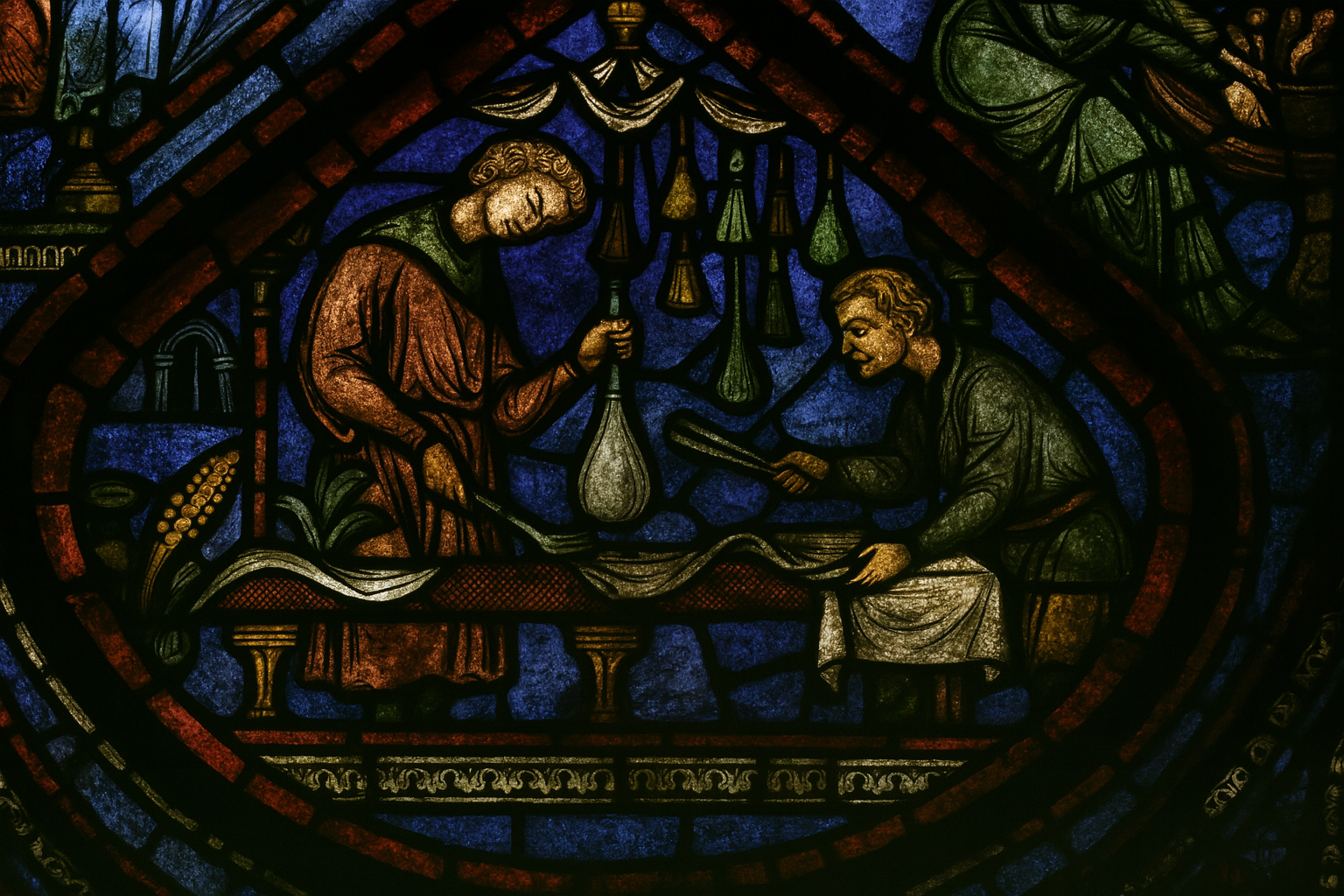
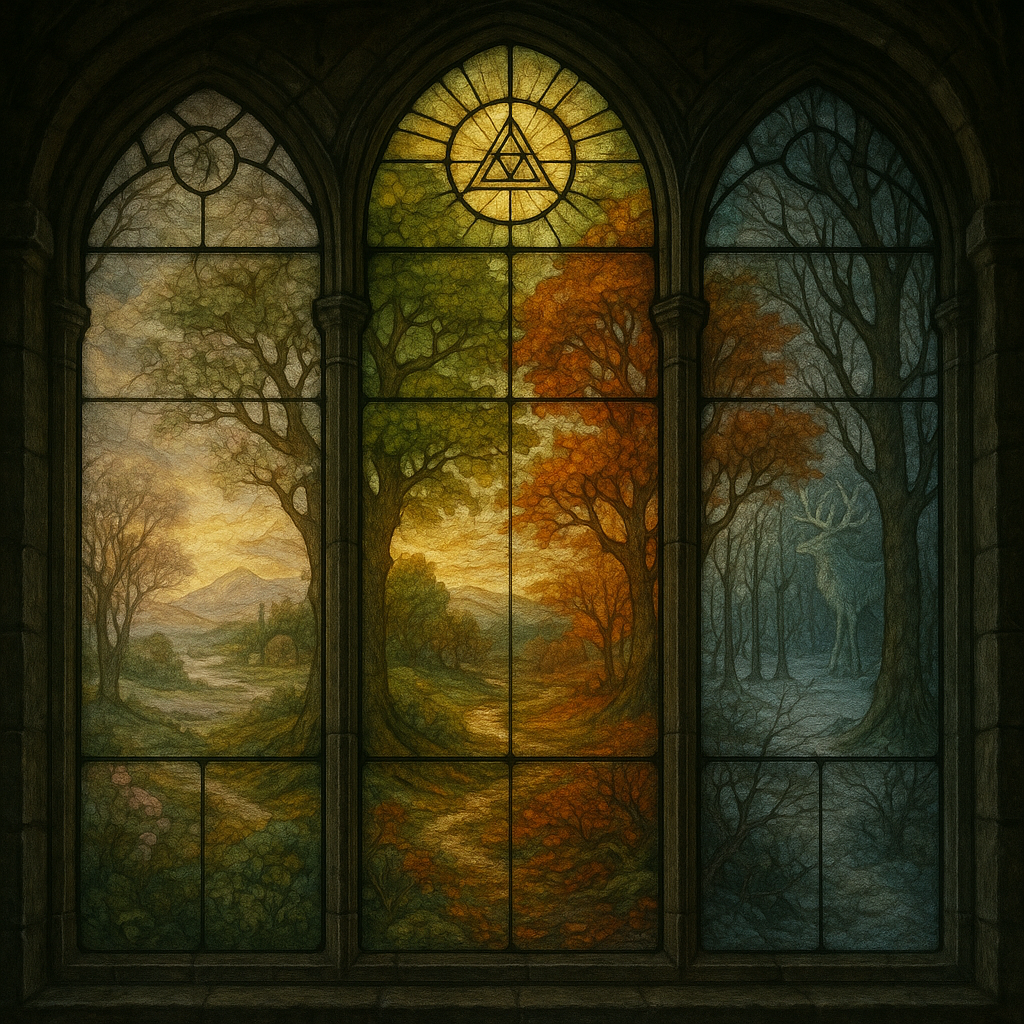
Stained Glass Window Spice Merchants in the Grand Hall of the Mangai of Livélis, the capital of Karejia.
Word count: 137
Organization of the Guild
The Hârnic Glassworkers’ Guild is less well organized than most, as it’s relatively few members are widely dispersed. Individual masters have considerable freedom to operate as they like.
An apprentice glassworker is expected to keep the furnaces at the right temperature, fetch materials and tools, and clean the shop at the end of the day. Journeymen learn how to make raw glass and the rudiments of blowing and forming glass. Journeymen often must travel great distances to find masters to teach them new skills. Masters are often very selective about their assistants and can choose from numerous hopeful candidates.
Setting up a studio as a new master glassworker is more difficult than in many other guilds. There are few available franchises and guild fees are exorbitant; £15–20 for a new franchise is typical. Starting costs of materials and equipment are high and demand for products is comparatively low. The rewards can be considerable, however. Masters of the Glassworkers’ Guild are well respected and able to earn a very comfortable and luxurious living.
Master glassworkers often develop their own interests and become particularly skilled in certain forms of their craft. A master crafter known for a particular style typically sees his or her work increase in value. They regard their techniques as secret, to be shared with very few or no one at all. This limits the overall speed of development of the craft and sometimes leads to skills being lost.
Word count: 241
The Elder Races
The Sindarin are considered to be the finest glassworkers on Hârn. They are renowned for the skill of their inventive glassblowers and engravers and the beauty of their colored glass windows.
Sindarin glassworkers use solid sheets of colored glass in their window designs, giving them great vibrancy and longevity. These often feature scenes from nature and abstract patterns. The shrine of Siem in Caer Elshavel is considered one of the finest examples of their work.
Using rare metal additives, the Sindarin produce a crystal-clear form of glass that sparkles like diamonds when ground, faceted, and polished. A set of cut-glass drinking goblets engraved with the royal arms and highlighted in gold is among King Aranath’s prized possessions.
Human glassworkers have been known to offer pieces of purported Sindarin work at inflated prices, but few of these were actually made in Evael.
The Khuzdul were once known for producing large flat panes of clear glass. Although this skill is now lost to them, the Khuzdul still make excellent glass pigments, a result of their advanced knowledge of alchemy and refining minerals.
Word count: 176
Making Glassware
Contrary to the belief that glassworkers use magic, the processes of manufacturing glass are mundane and fairly straightforward. Nonetheless, it requires a great deal of experience and skill to repeatedly produce a regular and aesthetically pleasing product.
Producing Glass
The basic ingredient of glass is silica sand. Most common sand is tainted with iron impurities that give the sand an orange color and produce glass with a green tint. Making colorless glass requires sand with very little impurity. The Sindarin are believed to source their sand from the Kald River estuary, but most “Evael Sand” offered for sale is from more local sources. Sand from certain stretches of the Eryn River is particularly suited to making glass and is widely used in Kanday and the Thardic Republic.
Soda ash and quicklime are added to the sand, typically up to a quarter by volume, to improve its working properties. Other substances can be added to color the glass (see page 3). The mixture is heated to very high temperatures until melted and fused, then put into a stone basin to cool.
Glassblowing
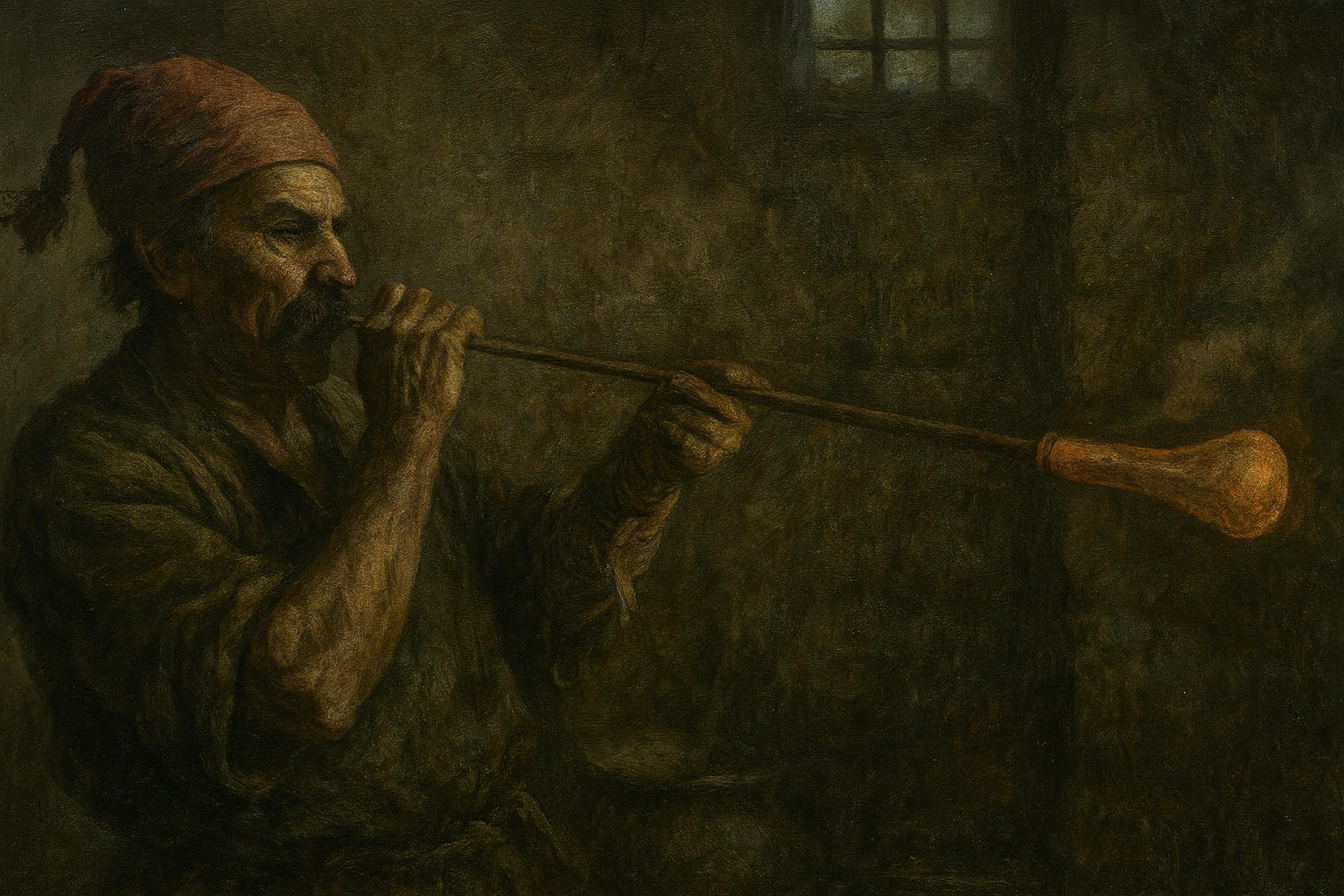
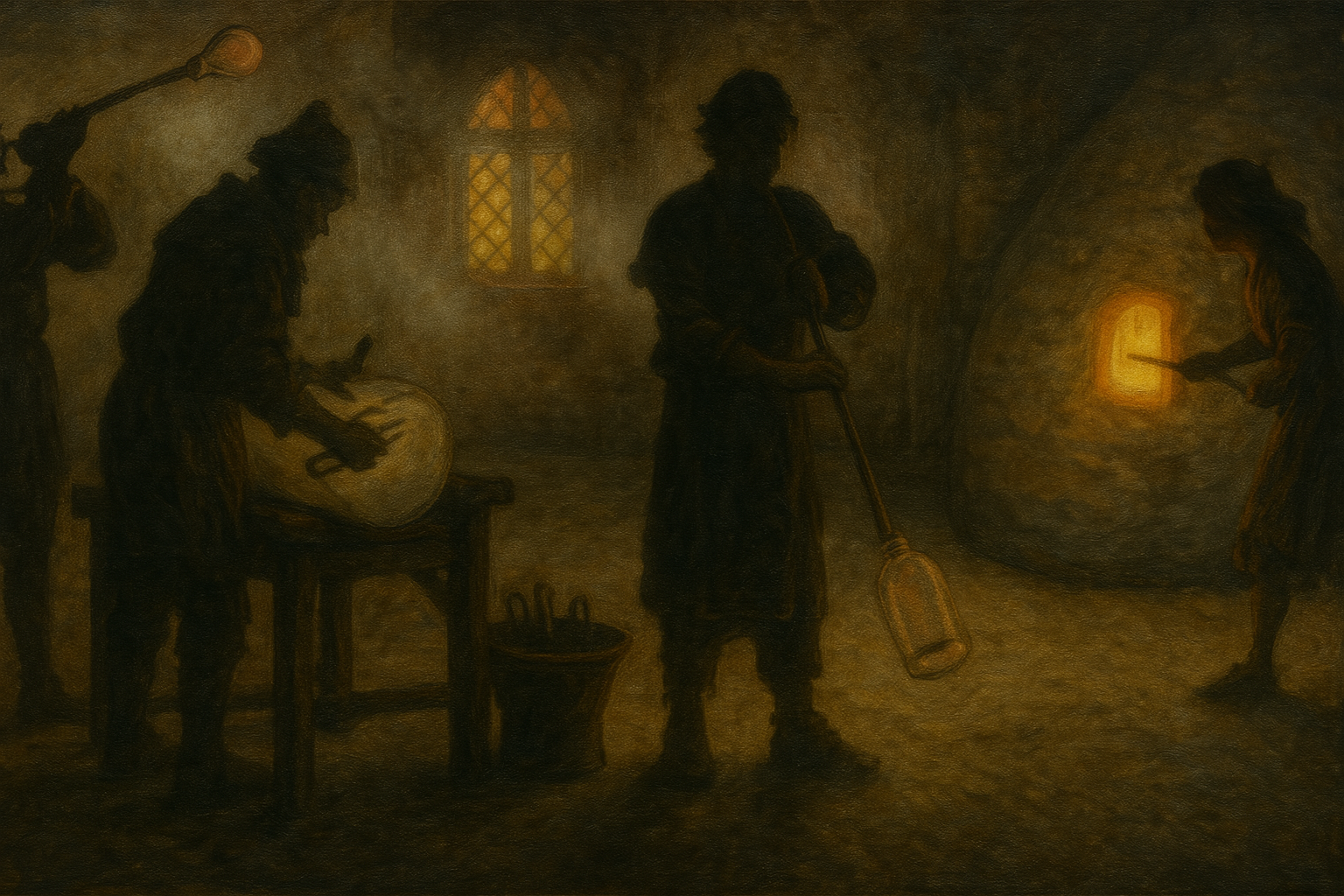
The majority of glass is formed and shaped by blowing. A blob of molten glass is placed on the end of a hollow iron rod and inflated by blowing. The glassworker shapes the piece by spinning the rod while applying metal tools and wooden blocks. The molten glass is also pulled to form features such as rims, feet, and handles.
Skilled glassworkers can combine rods of different colors to form bands or stripes. Colored powdered glass, mineral pigments, or even gold leaf can be added to provide surface decoration. Various effects can also be produced with pincers or knives or by rolling the molten glass on a patterned metal surface.
Producing sheets of glass relies on first blowing even cylinders. While still malleable, the cylinder is put on a flat surface of polished stone. The ends are cut off, the tube is cut lengthwise with shears, and the glass is carefully opened out into a flat pane before being allowed to cool. Very few glassworkers can make sheets larger than one foot square.
Skills
A starting glassworker has the following HârnMaster skills: Glassworking/4, Ceramics/3, Alchemy/2, and Script. Useful optional skills include Drawing, Jewelcraft, Masonry, Metalcrafting, and Woodcraft. They may have militia skills as appropriate (see HârnMaster, Character 27).
Materials
Glassworkers rely on secret “alchemical” recipes developed through trial and error and handed down through generations. Sand and the various compounds that are added to it can mostly be sourced from the Miners’ Guild, although exotic materials may need to be procured elsewhere. Finegrained stone for working surfaces and molds is essential.
Only the finest hardwood charcoal can be used to achieve the very high temperatures needed for working glass. This may need to be imported considerable distances from trusted suppliers.
Tools and Equipment
The primary tools of a glassworker are their long metal tubes, without which they cannot blow glass. They also require pincers, shears, knives, and other specialist tools for cutting and shaping. Many glassworkers learn the metalcrafting skills to make and maintain their own tools. Most also have a range of wooden and stone blocks and simple molds that they have made for themselves to suit their techniques.
Glassworking requires special equipment. A furnace is needed for fusing and melting glass, a kiln with glory hole keeps the piece being worked at the correct temperature, and an annealing oven is used to slowly cool the glass object so it does not crack.
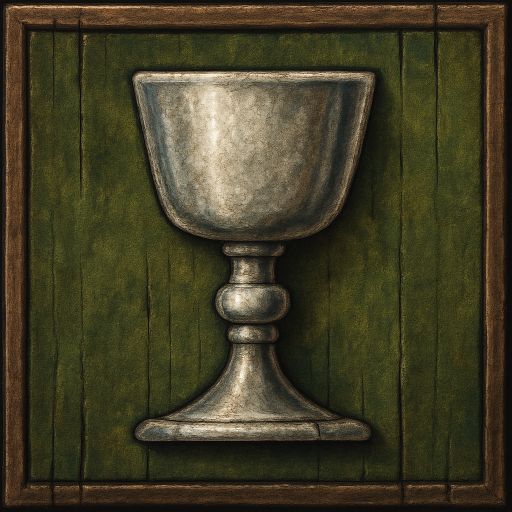
Guild Badge: Vert, a glass goblet proper
Word count: 587
Decorative Glass
Although most glass is produced for utilitarian reasons, some glassworkers specialize in producing decorative pieces commissioned by temples, noble clans, and wealthy and pretentious guildsmen.
Stained Glass
A stained-glass window is a mosaic of glass pieces held together by lead channels and fitted into a frame of wood or stone. The stone frame and tracery pieces are created by a mason, but the rest of the work is the purview of the glassworker. The glassworker designs the piece in consultation with the client and the mason. A full-sized drawing is often made on wooden boards or cloth for approval, then used as a pattern during the manufacturing process.
After a design is finalized, the glassworker produces the basic sheets of glass. These most commonly have a thin layer of colored glass on a clear glass base; solid colored sheets are rarely used. The basic sheets are cut to the required shapes using a hot metal iron, and painted decoration is applied using vitreous paints. The pieces are fired again to fix the designs, then joined using channels of lead (known as calmes) soldered together. The finished design is secured in the frame.
Temple commissions are generally for pieces illustrating deities, demigods, saints, demons, or stories from religious lore. These are meant to be easily recognizable by believers but can be hard to understand by outsiders. Nobles often request pieces that glorify themselves or their ancestors. Windows for castle chapels often aim to achieve both goals. Landscape scenes depicting the four seasons in separate small windows are popular. Some guildhalls boast a stained-glass window in the main meeting chamber or feasting hall. These typically feature scenes of the trade but may incorporate elements honoring a valuable patron.
Sindarin glassworkers tend to avoid narrative or illustrative pieces. They prefer more abstract designs based on nature, using a blend of strongly colored glasses to form complex and beautiful patterns.
Reliquaries
Glassworkers may be commissioned to craft reliquaries to hold a temple’s cherished sacred relics. These range from simple wooden boxes with an etched glass panel in the lid to elaborate constructions of glass, precious metals, and gems. Such items often require the glassworker to collaborate with members of the guilds of jewelers or woodcrafters. Although commissions of this sort can be lucrative, a master may produce such a piece and donate it to his own local temple as an act of devotion.
Decorated Bottles
Perfumers, apothecaries, and temples may seek to purchase highly decorated bottles of various sizes, colors, and unusual shapes. These are used to promote rare scents, warn of dangerous drugs, or contain blessed liquids such as blood, oil, or water.
Fake Gems
A few glassworkers have taken to producing particularly intensely colored glass, which they cut and polish and sell to equally unscrupulous jewelers to pass off as real gemstones.
Additives
A variety of materials, including powered metals and ores, can be added to glass to give it color or other effects. Recipes are considered trade secrets and their development is a form of alchemy. A master can experiment with novel ingredients over many years to produce new effects through trial and error.
These substances can be sourced from the Miners’ Guild or chantries of the Guild of Arcane Lore. A few specialist mercantylers trade in small quantities of rare materials from across Hârn and Lythia. The additives most commonly used on Hârn include:
Asbole, a blue-black powder made from a rare mineral, yields glass of a deep vivid blue. It is known only to the Khuzdul.
Auric Salt is another additive of Khuzan manufacture. It is made by dissolving gold in aqua regia and produces glass the color of rubies.
Brimstone produces yellow to red tints.
Cuprum, or red copper ore, yields glass of a turquoise color.
Iron Pan, a natural mix of sand and iron compounds, is added to produce green.
Litharge is added to increase sparkle.
Magnes can be used to disguise impurities and make clear glass. It is unknown outside those who have studied with the Sindarin.
Soda Ash lowers melting temperature and increases workability.
Quick Lime increases waterproofness and durability.