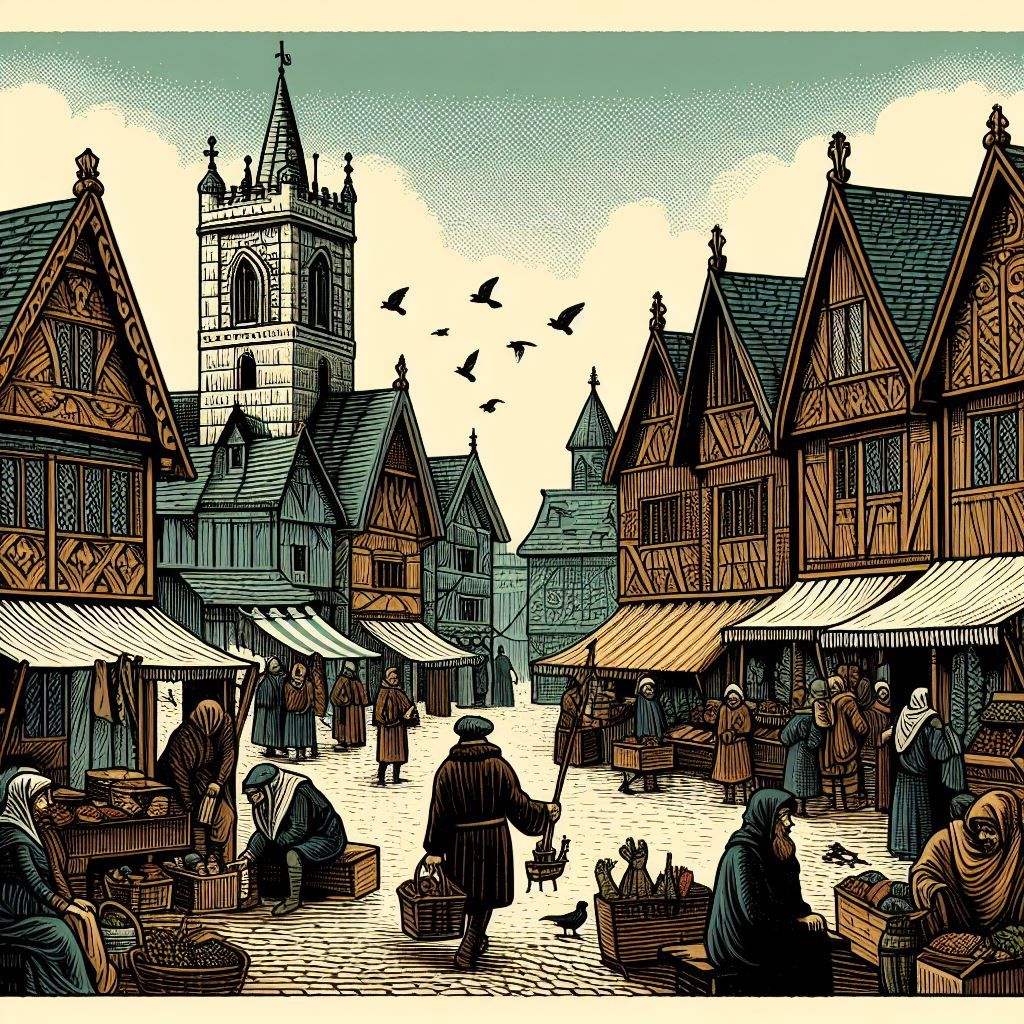
Whether the plan is to lease, rent, or buy, the way to find a place to live is to look for signs on buildings, ask residents in the desired locations, or consult with a litigant. Some buyers want quiet neighborhoods; others prefer the hustle and bustle around markets and gates.
Neighborhoods
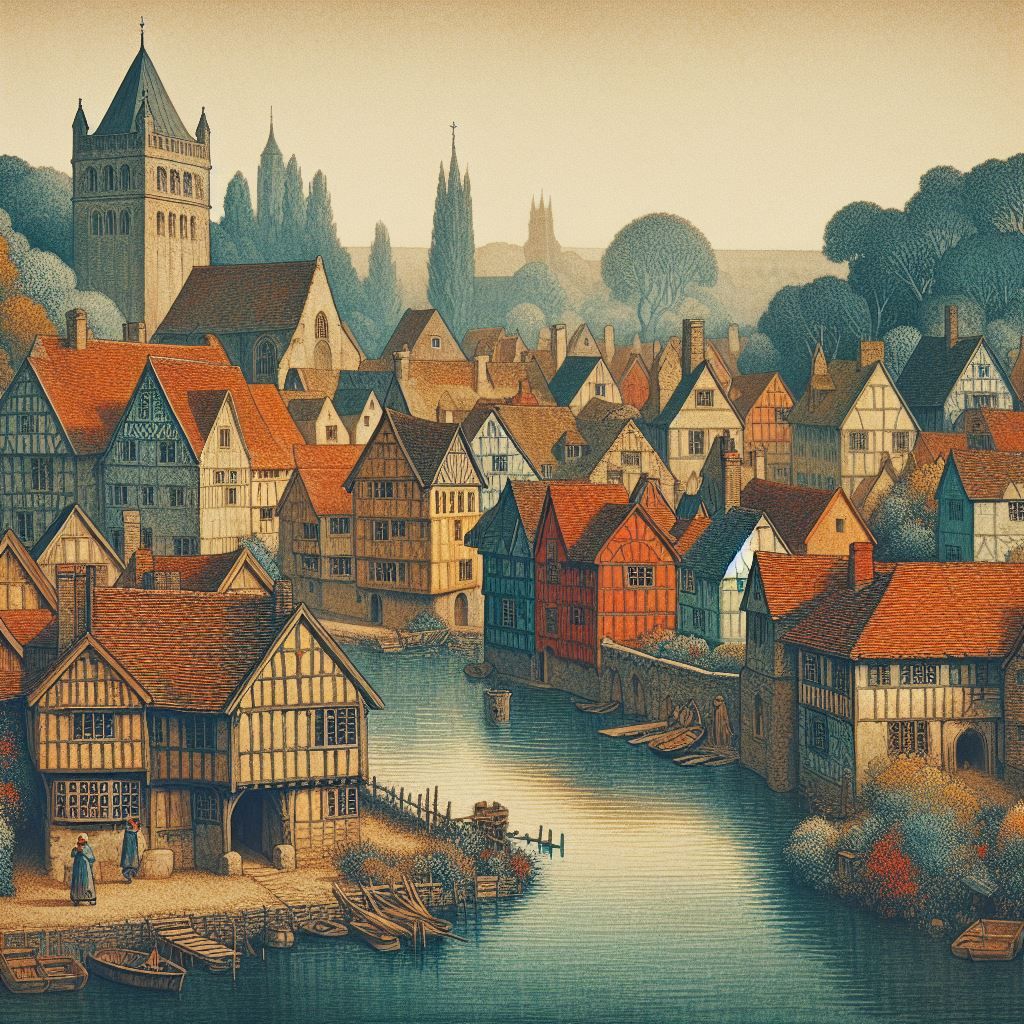
Larger towns consist of neighborhoods or quarters. The urban poor, who make up most of the population, tend to rent rooms in multi-story tenements in slum districts, typically low-lying areas around docks and rivers or areas farthest from the market and city gates. Middleand
upper-class neighborhoods tend to be upwind, in higher parts of town, closer to public squares and markets, and with wider streets.
Better neighborhoods have special security, such as extra town patrols, private guards, or understandings with the Lia-Kavair. If the characters can protect themselves, they may not mind living amid neighbors who earn a living by recycling other peoples’ valuables and body parts.
Lot Values
The size and shape of a lot can be designed by the GM or read off the local map (if any). Most lots are rectangular. Values are based on square footage and neighborhood and tend to be highest within walled towns. Suburban land values outside town walls but still within civic jurisdiction, are 30–70% less.
A lot’s basic value per square foot, according to its neighborhood, can be determined using the Real Estate Values table. Inflation is not a major factor in long-term property value. Prices do fluctuate in the short and medium term and show gradual gains over decades and centuries. GMs should take historical, political, geographical, agricultural, and other factors into account when haggling over home prices. For reasonable fees (about 3d), litigants will give advice on the market situation.
While vacant lots within town walls are hard to find, PCs may be able to acquire an empty lot to build a house of their own design. If there has recently been a fire or war, or if the town is fairly new or has just extended its walls (a natural part of growth), there may be one or more empty lots here and there.
Older and poorly made buildings also fall down from time to time, possibly knocking down a few neighboring houses in the process.
REAL ESTATE VALUES TABLE
Neighborhood
| Lot per Sq.Ft.
| Building per Sq.Ft.
| BQF
| Availability per Mkt Sz
|
Slum
| 2f-1d
| 1f-2f
| 0,5
| 1d8-1
|
Poor Quarter
| 1d-2d
| 2f-1d
| 0,8
| 1d6-1
|
Middle Class
| 2d-4d
| 1d-2d
| 1,0
| 1d4-1
|
Good Area
| 4d-6d
| 2d-3d
| 1,2
| 1d3-1
|
Best Area
| 6d-8d
| 3d-4d
| 1,5
| 1d2-1
|
Prices: Assume typical Building Quality Factor (BQF) for the neighborhood. The high price range applies when property is scarce, the low end when there is surplus. High quality houses may (GM discretion) exist in poorer areas, and vice-versa. Home prices are determined by adding lot and building prices.
Availability: The die roll is made per Market Size (Mkt Sz) for each class of real estate. Hence, in a town of Mkt Sz 4, there are 4d8–4 houses available in slum areas. The GM can modify a town’s Mkt Sz to reflect economic, health, political, or military situations. Such adjustments also affect price.
|
Demolition & Renovation
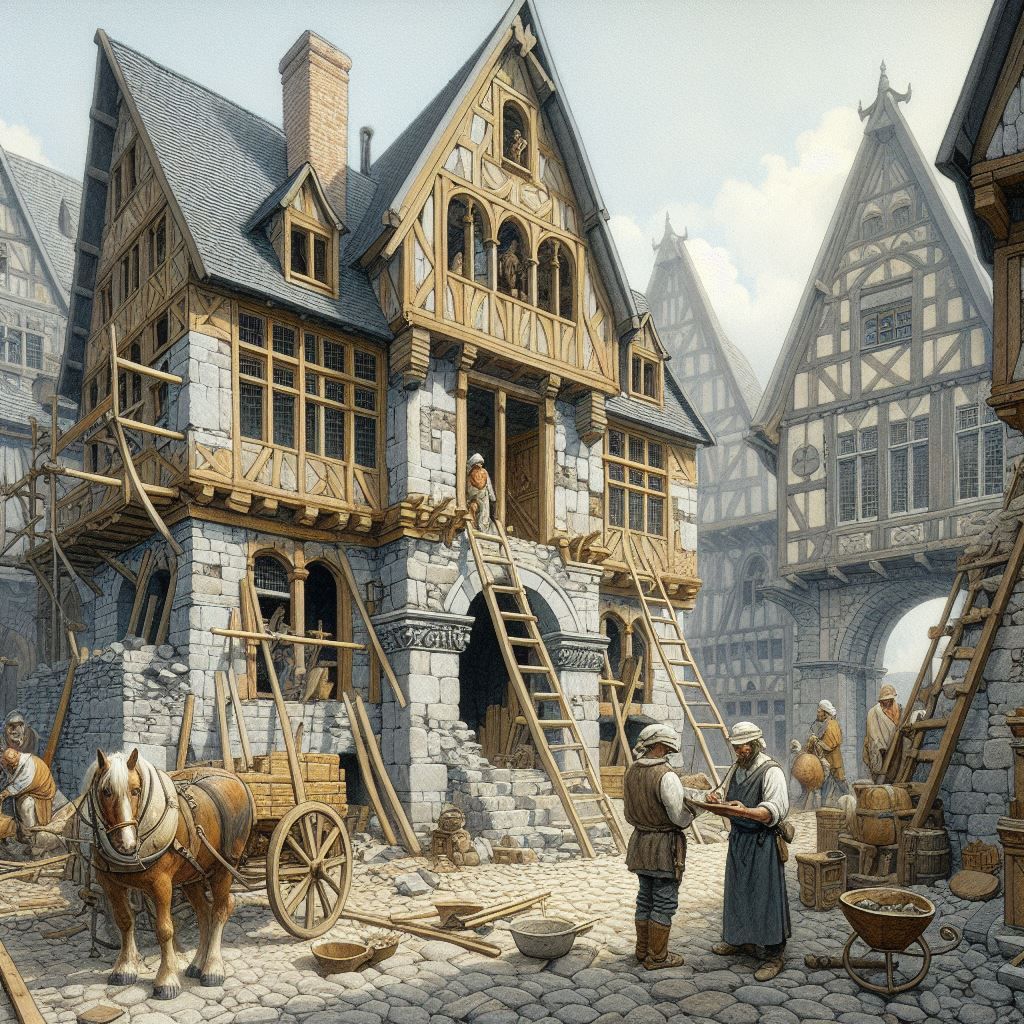
Medieval folk do not move house very often, so cityscapes evolve slowly. Many of the buildings are centuries old. Characters may have to demolish or renovate an existing house if they hope for decent living space. The cost of demolition for any building is generally about half the cost of constructing a slum of the same square footage. Renovation, either to improve a building’s quality or to add space, is rarely cheaper than building. Laws in many settlements require that masons perform all demolitions.
Lot Value Fluctuation
The value of a lot is not easily changed by the owners alone, although a whole neighborhood that upgrades itself, or neglects maintenance can modify its lot values. GMs who develop lot values for settlements where PCs live will produce an dynamic, interesting situations.
The GM can use the Lot Value Trends table to modify neighborhood lot values by on a monthly or yearly schedule. Divide the town into neighborhoods and modify lot values for each neighborhood according to random factors and known trends.
LOT VALUE TRENDS TABLE
1d100
| Lot Value Trend
| Month
| Year
|
01-02
| Bust (Collapse in Prices)
| -1d3%
| -3d6%
|
03-10
| Rapid Decline (Mild Panic)
| -1d2%
| -2d6%
|
11-30
| Slight Decline
| -1%
| -1d6%
|
31-69
| Little or No Change
| ---
| +/-1d3%
|
70-90
| Slight Improvement
| +1%
| +1d6%
|
91-98
| Major Improvement
| +1d2%
| +2d6%
|
99-00
| Boom (Rampant Speculation)
| +1d3%
| +3d6%
|
Trend Roll Modifications: Maximum modification is 1 (boom and bust are always possible). If positive factors exceed negative ones, add 1 to the Trend Roll, and vice versa. With this system, the GM can establish and maintain price per square foot for each neighborhood. The following are some factors that may affect land prices (the Trend
Roll):
1. Property values in adjacent neighborhoods.
2. Political situation (usually applies to whole town).
3. Landlord or speculator buying or selling in the area.
4. Decline or improvement in building quality or condition.
|
Building Size
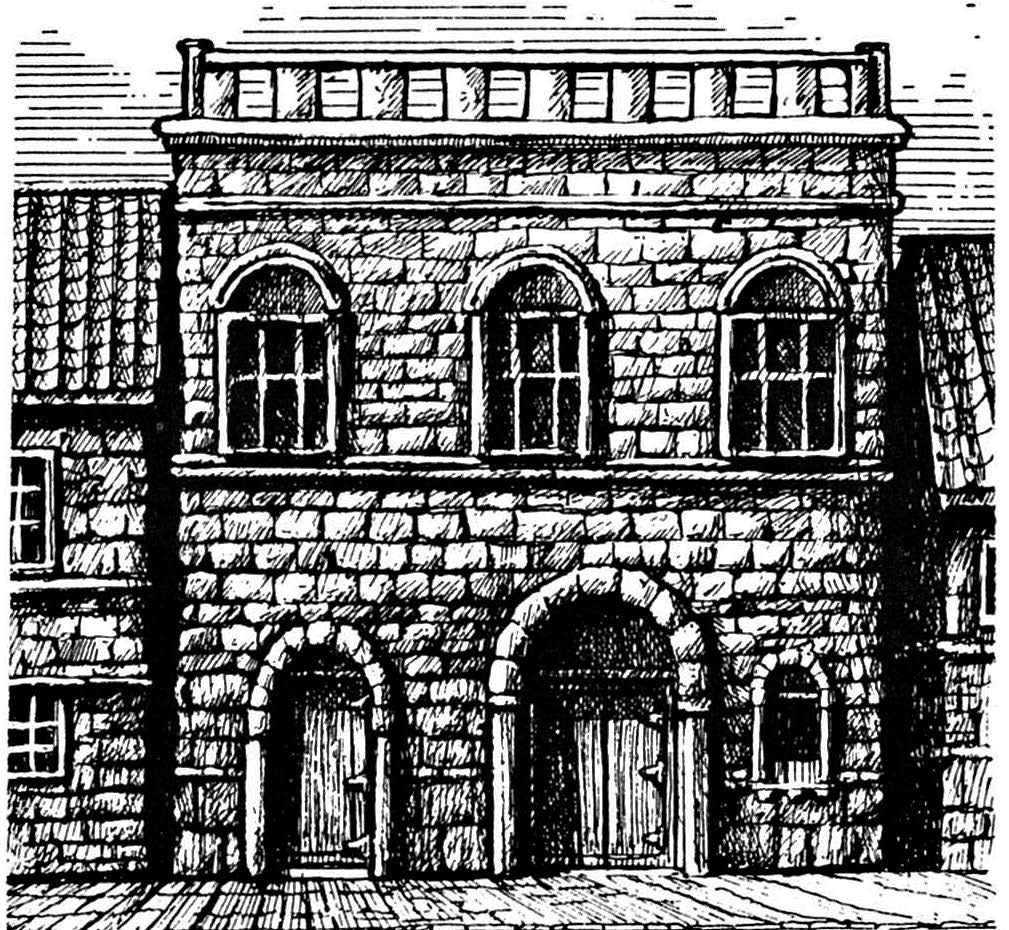
The typical urban building covers its whole lot and shares common walls with its neighbors. Gardens are reserved for the wealthy. Local maps do not show building height, which may be set by the GM or randomly generated on the Building Height table. Roll ldl00 plus Market Size, plus or minus 10 depending on neighborhood (poorer areas tend to have more multi-story buildings, rich people are less inclined to climb stairs).
A 30×40 foot structure has a footprint of 1,200 square feet; if it has three floors, its square footage is 3,600. A “half-floor” can range from a quarter to three quarters of a floor, probably an attic (cellars are rarely lived in). When the shape, footprint, and number of floors are known, GMs can easily create floor plans. Knowing the neighborhood and building quality, the basic value of the building can be easily determined.
The tables below describe an average slum building. Its footprint and lot size are 600 square feet and it has 3½ floors. Inside, it is divided into three 600 square foot dwellings rented to three families, and a “half-flat” in the attic occupied by a single person (or very poor family).
Description
| Area
| Value
| Taxes
|
Lot
| 600,0
| 450,0d
| N/A
|
Building
| 2100,0
| 787,5d
| N/A
|
Total
| N/A
| 1237,5d
| 99d
|
Rent Summary
| Area
| Rent
|
Ground Floor
| 600
| 80d
|
First Floor
| 600
| 96d
|
Second Floor
| 600
| 82d
|
Attic
| 300
| 42d
|
Total
| 2100
| 300d
|
The landlord is paying 8% property tax on an assessed value of 1237.5d, for a total of 99d per year. As an average landlord, he sets his total rents to bring in about three times his total taxes (on both the building and lot), in this case, 3d more. The total rent for the building is divided among the tenants roughly in proportion to the size of their flats. In practice, his assessed taxes would probably be lower than the amount given, as would rents.