This tale is a mix of fact and speculation. It is well known throughout Kaldor and elsewhere.
In 442, Ledril Meleken, the third earl of Qualdris, married Torlyne Odas, the beautiful daughter of a wealthy vassal knight. She was a gentle woman of great renown for her service and pious devotion to the Church of Peoni. Ledril was a valiant knight and a wise and generous lord and the match was regarded as perfect.
Torlyne bore two sons, Madrin and Arvan, and a daughter Jayal. The boys grew into honorable knights of fine standing and Madrin, the eldest, won renown in tournaments. He traveled widely to broaden his knowledge of the world that he might, “better serve his father and his people”. In 471, he visited Western Hârn at the court of Sylud, the Corani Emperor.
When Madrin returned home to Qualdris in 473, he was a changed man. Where before he had been cheerful and ready with kind words, now he was moody and prone to fits of anger which gradually grew more and more frightening.
Madrin came to believe that his mother was betraying his elderly father, and went so far as to accuse her of adultery with the Baron of Nubeth. Madrin became so obsessed with the notion that his father forbade him to speak Torlyne’s name in his presence.
One morning in Morgat, Torlyne was found abed with her throat slit. A search of Madrin’s chamber uncovered a bloody dagger. Protesting innocence, Madrin cut down the guards sent to arrest him and fled, never to be seen again.
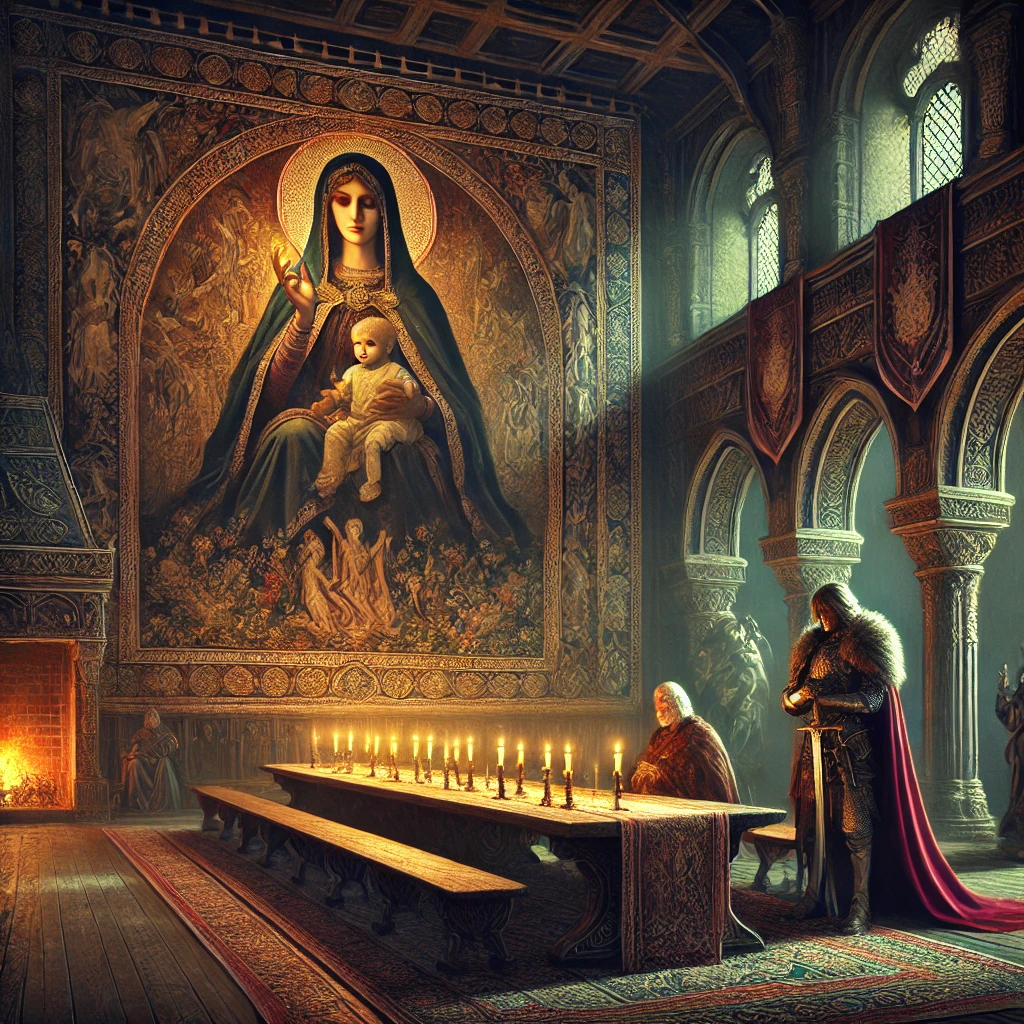
Ledril, beset with grief, commissioned a tapestry depicting his gentle wife ministering to the sick. Finished about a year later, the tapestry was hung in the great hall, where it hangs to this day. On the first anniversary of Torlyne’s murder, her pale face took on a red tinge, and this strange occurrence has repeated each year since, for two and a half centuries.
Madrin's elder brother, Arvan, who succeeded his father, never believed in his brother’s guilt. He made several attempts to find the real murderer, but learned nothing except that his mother was murdered during the Night of Shadows, the holiest period of the Navehan calendar.