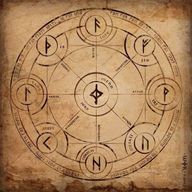
 Runecasters enhance their mystical prowess using the supernatural power of runes, an ancient practice that originated before the existence of the first languages. Runecasters can be found among any society that has a deep tradition of more ancient, less refined magics.
Runecasters are empowered by their understanding of runes that are older than any mortal society. Most runecasters were taught by older masters who wished to preserve their art, but such instructors never do more than put a runecaster’s feet on the right path to runic insight. Runes cannot simply be known or memorized, they must be understood in their totality.
| Subclass Ability | Bard | Cleric | Wizard |
| Runecasting | 3rd | 2nd | 2nd |
| Glyph Mastery | 6th | 6th | 6th |
| Permanent Glyph | 8th | 10th | |
| Master of Runes | 14th | 17th | 14th |
Runecasting
Starting at 2nd level, you know and can invoke the power of runes. You know a number of runes equal to your proficiency bonus (rounded down), chosen from your tradition. (see below) You always have access to their rune bonuses. In addition, every day you can invoke one rune power for each rune you’ve learned, provided you meet any other requirements such as a minimum level. If a rune has a level requirement, you must be at least that level in this class to learn the rune. If a rune requires a saving throw, your Rune Magic save DC equals 8 + your proficiency bonus + your spellcasting modifier.
Glyph Mastery
At 6th level, you gain the ability to cast glyph of warding a number of times each day equal to your proficiency bonus without expending a spell slot. You can also cast this spell using any spell slots you have.