Drops:
- 1d6-5 kg of Insect Meat
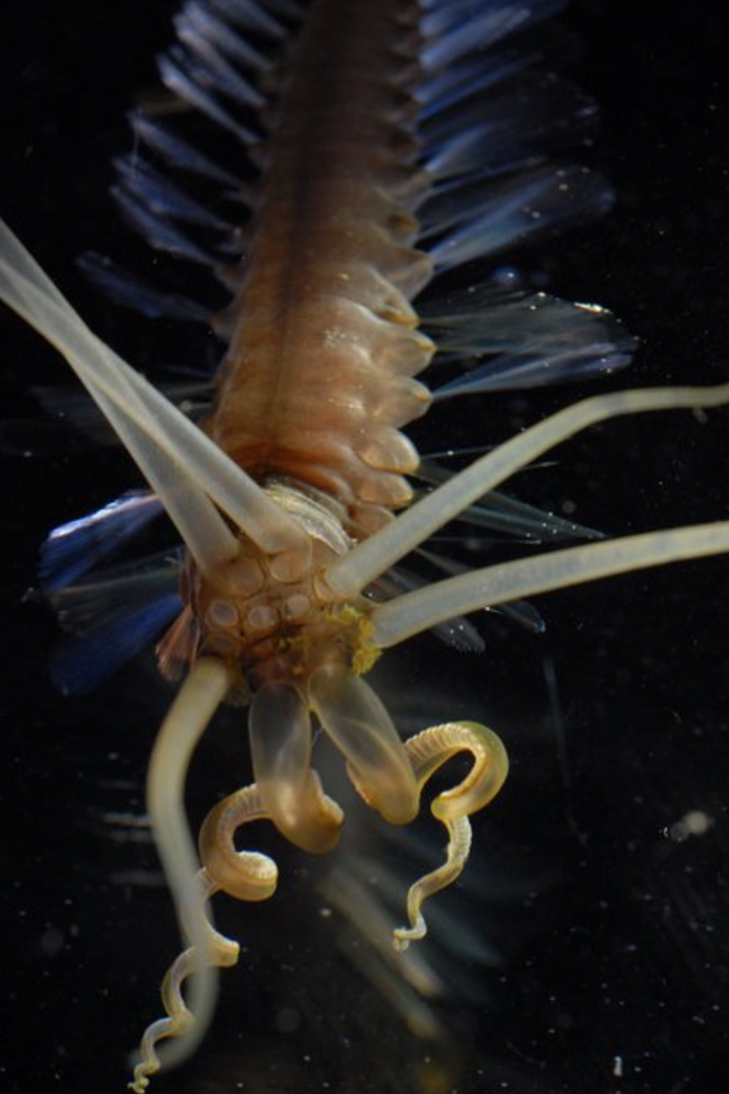
The headworm is an invertebrate arboreal parasite that inhabits Oceanyka’s humid, northern canopies. Unlike many of the continent’s more overt predators, the headworm relies on a migratory reproductive cycle that sees high concentrations of the species shifting across various jungle patches, depending on their prey's luck (or lack of it) more than anything else. These invertebrates are famously patient, clinging to the underside of thick foliage and waiting for a warm-blooded creature to pass beneath them. When a victim is detected, the parasite drops with startling precision, utilising a series of chitinous hooks to anchor itself firmly to the base of the neck. Within minutes of contact, the creature burrows through the dermal layers to latch onto the spinal column, injecting a cocktail of neuro-suppressants that effectively severs the host's higher cognitive functions while maintaining their basic motor skills.
Once the host is compromised, the headworm begins to deposit clutches of eggs directly into the cervical tissues, while simultaneously flooding the host’s bloodstream with a hormone that triggers an insatiable hunger. The victim, now a mindless vessel, wanders the jungle or stumbles back into human settlements in a desperate search for protein, often targeting their own kind to fuel the parasite's demands. The headworm’s influence suppresses the body’s natural digestive process, transforming all nutrients into muscle and fat, with the residue being fed to the larvae. Its immune system is also compromised, allowing for the eggs to hatch. The young larvae will now travel to the digestive tract to feed on the food that the host is gorging on. Over the course of several weeks, the host undergoes a grotesque physical transformation, becoming morbidly distended as muscle and fat are rapidly synthesised and packed around the midsection, where the larvae can feast. After approximately a month of gorging, the host's body eventually expires from a combination of internal organ failure, starvation, or a very bloody eruption of the abdominal cavity. This expiration serves as the signal for the young to burrow their way out, finding themselves within a nutrient-dense environment, protected by the remnants of the host’s hide, where they feed and develop until they are mature enough to crawl back into the canopy and begin the cycle anew.
Historically, the response to a headworm infestation has been putting entire swathes of rainforest to the torch, a tradition that has evolved into the modern deployment of Special Pathogen Response and Eradication Division cremation squads, or if they aren't available, a bunch of very brave lads with flamethrowers. Because the headworm is relatively fragile before it achieves a secure latch, preventative measures are the primary defence for those traversing the northern territories. High, rigid collars of reinforced fibre or leather, and wide-brimmed headwear is considered essential gear in these parts, regardless of the sweltering heat.
Drops: