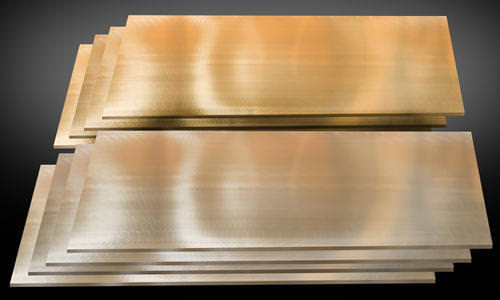
Munition steel is an informal alloy produced not from mined ore but from Oceanyka's Ultisol Soil, the distinctive iron-rich red earth that covers large portions of the continent's interior. This soil contains elevated concentrations of iron oxides, along with traces of copper, bluetrite particulate, carbon from organic matter, and a variety of other impurities deposited over millennia. In the Late Middle Ages, Oceanykan craftsmen discovered that carefully heating and reducing this soil could drive off most of the non-metallic content, leaving behind a crude but workable metal.
The result is genuinely difficult to characterise. Munition steel is light, moderately tough, malleable, and electrically conductive, a combination that no single conventional alloy reliably produces at this price point. However, its exact properties vary unpredictably from batch to batch, reflecting the natural inconsistency of its source material. A piece of munition steel armour might stop a blade that a seemingly identical piece would not. This unreliability has historically limited its use to applications where failure is inconvenient rather than catastrophic: body armour, hand weapons, tools, and simple structural components.
Use in firearms and vehicle hulls has consistently proven too dangerous. A munition steel receiver can perform flawlessly for a while or crack under a single firing cycle. A program in the 1950s discovered munition steel tank hulls are unreliable against projectiles, and in some cases, can shatter over a short period of time due to engine vibrations.
The name derives from the historical concept of munition armour; cheap, mass-produced protection issued to raised troops rather than purchased by professional warriors. In the Oceanykan Late Middle Ages, this was precisely what munition steel was for: arming levies quickly and cheaply, accepting that quality was secondary to quantity. The tradition persists in informal use; munition steel is still the material of choice for anyone who needs something metallic and cannot afford better.
Unlike other algeochemical products, munition steel is readily exported to the outside world in great quantities, where it has found numerous applications in light industry.