
CAPE YORK
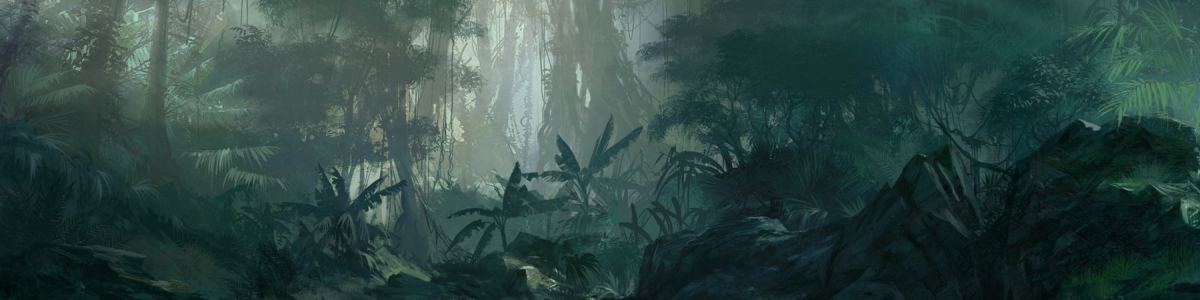
The Federal Region of Cape York occupies the northeastern edge of the continent, a lush, volatile expanse wedged between the surging Coral Sea and the languid tides of the Gulf of Carpentaria. Dominated by tropical rainforest in the north and monsoon forests through the centre, the landscape begins to fracture into mountainous rainforests and savannahs as one journeys southward. Year after year, the entire region is bathed in the seasonal fury of the Australian Monsoon, making Cape York one of the rainiest places in all Oceanyka.
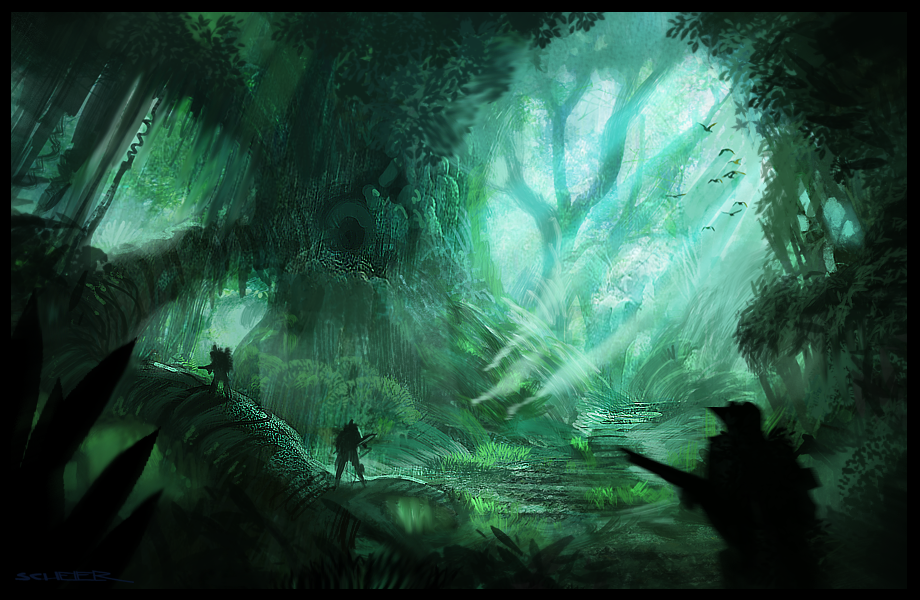
Geographically, the region is defined by Cape York itself, a natural barrier to Oceanyka's east coast since time immemorial. Its coastline clings tightly to the northern half of the Great Barrier Reef, whose vibrant but treacherous waters have been both protector and prison to the region’s sailors. Westward, the Gulf of Carpentaria has long served as a centre of maritime commerce and a gateway to northern Oceanyka’s trade routes, The Goldlines. The land rises dramatically in the south, where the Great Dividing Range begins to rear its ancient peaks. There is something unnatural about the jungle here. Warpstone, the mutagenic element buried deep in Oceanyka’s soil, has soaked into the flora of Cape York more than in most places. Locals tell stories of strange beasts in the undergrowth and of entire expeditions lost to the jungle's embrace. Even the air seems heavier in these parts. Prolonged exposure to the deeper thickets can lead to delirium, vivid hallucinations, and, some whisper, a thinning of the veil that separates our world from a different one. Most wisely avoid venturing too far inland.
Yet humanity clings to the coast, and nowhere is this more evident than in Karnes, the largest and most important of the Free Cities, the most geopolitically important faction in the region. A gleaming sprawl of wealth and desperation, Karnes stretches along the coastline in neon-lit high-rise buildings, equal parts tropical paradise and capitalist dystopia. Inspired more by the vices of Miami and the feverish energy of South American metropolises than by any colonial legacy, Karnes is the heart of a confederation of ancient merchant city-states known as the Free Cities, now reformed into an anarcho-capitalist republic. Here, fortunes are made, squandered, stolen, or seized at gunpoint. Beyond Karnes, much of the Cape York Region remains rural, untamed, or both. The deeper inland territories are sparsely inhabited, save for tribal communities and wandering bands of hunter-gatherers. Ruins dot the jungle; ancient structures, long-abandoned shrines, and remnants of the Dow Bastions that once reached even this far north. The air hums with a forgotten past, and not all who seek its secrets return. In the mountainous southern stretches, fragments of old Dow citadels still cling to cliffsides, built in a time when their empires strode across Oceanyka's ranges.
Despite the region’s rugged terrain, it is not wholly cut off. Highways and railways snake through the rainforest, tenuous threads binding Karnes to the rest of the continent. Even so, the sea remains the lifeblood of commerce and communication, as it always has. The sailors of Cape York, masters of navigating the Reef's deadly labyrinth, once monopolised northern trade by sheer daring, long before iron-hulled ships levelled the playing field. In modern times, air travel has emerged as a vital artery, especially for reaching inland settlements or military outposts where no roads go.
Culturally, Cape York is a tapestry unlike any other. Waves of Aboriginal, Ferozen, Javanese, Papuan, Polynesian, and East Asian settlers have laid down roots here, later joined by British colonists and Europeans fleeing the chaos of the 19th century. This convergence created a diverse region where no single group dominates. Linguistically, Australian English is the lingua franca, but tongues like Paman, Oceanyka's most ancient Aboriginal language, dominate certain demographics, still echoing in sacred rites and old stories. Among the Ferozen, two dialects are equally prominent: Korgazmelikira, the guttural "Tongue of the Pirates," and Kurglagaki, the mellower "Tongue of the Mountains." Paman, meanwhile, is so old and singular that even other Aboriginal tongues struggle to parse it. Some of the continent’s oldest oral traditions exist only within its syllables.
The region’s spiritual life is equally complex. Christianity is widespread, Catholicism in particular, though it holds no monopoly. The Dreaming remains central to many Aboriginal communities, while Asterism continues to exert its influence this far north. Deep in the jungle, however, stranger cults persist, their rites and gods unknown to the modern world. Shrines dedicated to forgotten entities lie hidden beneath the vines, some bearing inscriptions that have baffled archaeologists and disturbed even seasoned scholars. In the wilderness, shamanic traditions survive, blending archaic Dreamtime cosmology with what some say is religious sorcery. These jungle mystics, often feared and revered in equal measure, supposedly tap into supernatural forces ignored or suppressed by the urban world.
Economically, the Cape York Region is a paradox. Karnes and the Free Cities are booming, hubs of industry and international trade with a service sector to match. Capital flows freely, but so does blood. The cost of wealth is inequality: in Karnes, shining towers loom over festering favelas, and beyond the urban edge, the countryside plunges into poverty. The coastlines produce vast quantities of cash crops such as sugar, coffee and tropical fruits, while loggers strip the jungle and miners delve into the earth for gold, tin, tungsten, and the ever-crucial bauxite used in aluminium production. The mines in the Great Dividing Range are some of the most strategically important in the entire northeast, and the Free Cities defend their charter with zeal.
Politically, the Free Cities are a haven for corporate power and anti-communist ideology. Their influence is mostly limited to the southeastern coast, while the rest of the region is a mosaic of autonomous villages, tribal councils, and ungoverned wilderness. In the Free Cities themselves, corporations like Mitsubishi Motors, the United Fruit Company, and the resurgent Dutch East India Company rule from boardrooms with the power of governments. The VOC, exiled from Europe, found new life in Oceanyka's anarchic corridors, rebuilding its fleets and armies under the guise of private enterprise. Ostensibly a republic, the Free Cities elect a President through popular vote. Yet there is no state infrastructure: every service, from waste management to water, is privatised. Unsurprisingly then, wealth and influence dominate every level of governance.
The only forces defending the Free Cities are the Free Companies, private armies under blood contract, capable of mobilising everything from infantry to aircraft in times of need. Their loyalty is to coin, but their contracts are solid. In this volatile realm, war is never far away. Paramilitary outfits, guerrilla cells, pirates, and foreign expeditions all rear their heads occasionally. NATO special forces operate discreetly from Karnes, using it as one of their few safe staging grounds on the continent. Their presence is tolerated by the corporations. After all, communism is bad for business.
Cape York is a green frontier: wild, wealthy, and brutal. It is the edge of civilisation, where fortune and madness walk hand in hand, and whomever walks into the jungle risks to intrude into the heart of darkness.