BOSPHORUS
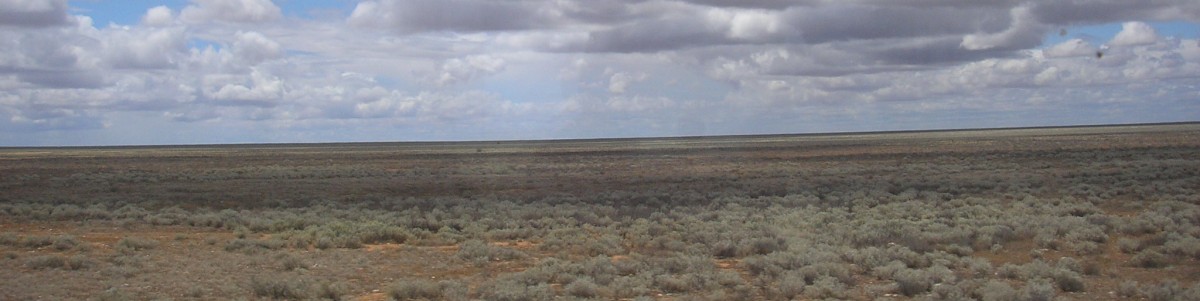
The Outback Territory of Bosphorus is a vast, sun-scorched expanse stretching across much of the Nullarbor Plain, marking a natural gateway between Eastern and Western Oceanyka. Consisting in its vast majority of steppes and semi-arid plains, it is a land of extremes: flat, harsh, and seemingly endless, save for the occasional geological oddity. Most notable among these are the “Splashies”, patches of volatile terrain where acid lakes bubble beside steaming geysers and fumaroles. Though inhospitable, this land has served for millennia as Oceanyka’s most reliable land corridor, linking its two halves more safely than the murderous deserts of the true Outback to the north.
Historically, Bosphorus has been the stage for some of the bloodiest and most mythic conflicts in the continent's long and tortured past. The Battle of the Nullarbor Plains (1810–1815) is etched into the collective memory as a war of attrition so brutal that over seven million died, paving the way for the Continental Collapse and eventual British colonisation. Long before that, the Bosphorus Crusade of 1550 saw Morlon of Toffia lead a crusading army of 200,000 across the desert, supposedly marching northwards and defeating the last necromancer-king of Oceanyka in a climactic battle that forever altered the spiritual and political map of the continent. These events are testament to Bosphorus’ role as both a crossroads and a crucible.
Today, Bosphorus remains one of the most ethnically diverse and politically ambiguous territories in Oceanyka. Its population is scattered and uneven, as its coastal areas host modest density, while the desert interior is dotted with self-governed villages, nomadic encampments, and mining outposts. The region’s dominant power is the Mercantile Union, a conglomerate of Oceanyka’s oldest trade guilds turned de facto government. From its capital, the sprawling City of Bosphorus, the Union orchestrates east-west trade, oversees its numerous subsidiaries, and leverages seaborne commerce to maintain global relevance despite the decline of overland routes. Though the wider world often views Bosphorus as a forgotten backwater, the Union’s shrewd diplomacy, particularly with emerging African and Middle Eastern nations, has kept it competitive in the shifting landscape of the Cold War.
Security is a patchwork affair. While the City of Bosphorus is protected by mercenary companies and PMCs in service of the Mercantile Union, the outlying territories rely on tribal warbands, citizen militias, and volunteers to maintain order. Raiders, highwaymen, and inter-guild rivalries pose constant threats to trade and life. The region’s militarisation is further underscored by the presence of the IV. Corps of the Oceanykan People's Army. Nevertheless, real power lies not with the central government in Cestlep, whose reach is minimal here, but with Chairman Roktzara Yrpezo, a Ferozen technocrat who governs the Mercantile Union with both vision and caution, wary of overextending his influence beyond the city’s sphere.
Economically, Bosphorus is a frontier land, poor in minerals, but rich in routes. Brown coal mining, coastal fishing, and inland ranching underpin rural livelihoods. The formal economy is almost entirely entangled with the Mercantile Union’s cartel-like structure, where trade guilds jealously guard their fiefs and occasionally wage shadow wars for dominance. The culture is comparably rugged: a “Wild West” ethos pervades everything from local fashion to cuisine. The City of Bosphorus is a cultural melting pot, drawing from Aboriginal, Ferozen, and Australian traditions, though its culinary staples are defined by what survives the desert: eggs, meat, milk, and cheese, with grain and vegetables imported from the greener regions.
Despite its roughness, Bosphorus stands as a testament to endurance. Its people, often born into less than favourable circumstances, continue to adapt to a land that history tried, and failed, to bury. In the heart of a broken nation, it remains a living bridge between the old and the new, the wild and the tamed, the mystical past and the cynical present.