In Oceanyka, natural selection has taken its course. After the Ferozen invasion most Aboriginal populations left were in a predicament. They had lost the fertile Murray basin and were forced to move to the western portion of the continent, passing through the Outback. They were thrown back into the harshness of the Oceanykan environment with none of the advantages they previously had as an organised society, many returning to nomadic lives. Through this excessively brutal process, the more warlike Aboriginal populations prospered, forming rigid and disciplined sedentary societies. But the Homo Ferozen tend to reproduce slightly faster than Homo Sapiens, and societies which could not match this numerical advantage were more likely to disappear. Only two things can increase population significantly; food, which is already abundant in Oceanyka, and medical care. So was born the Aboriginal, and later Oceanykan medical tradition.
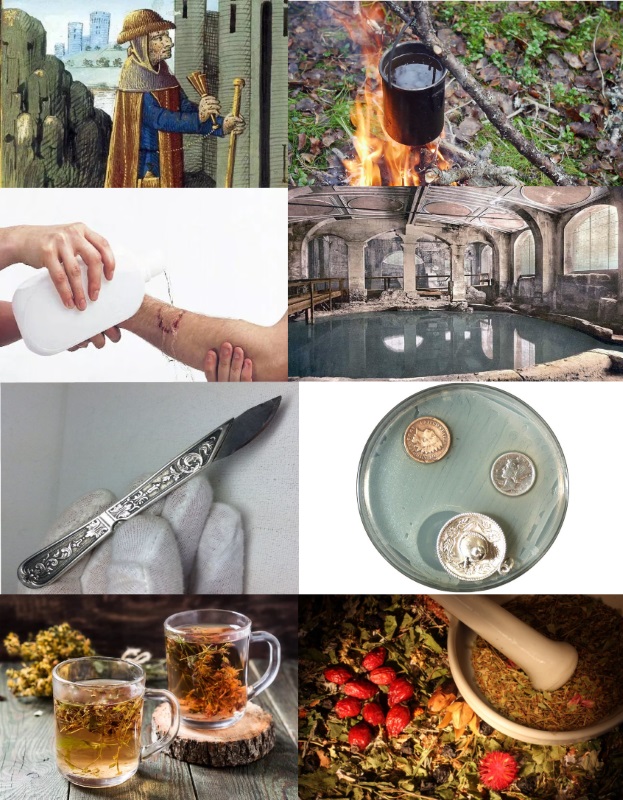
A large part of said medical tradition has religious origins. It was believed in most Oceanykan cultures that fire cleansed demons or other malignant entities. While this served to justify burning alive suspected witches and razing foreign villages, it also caused some coincidental findings. Because of its isolation, miasma as it was known in Eurasia never took hold as a popular belief in this continent, but it was believed that paranormal entities were behind diseases and that they could enter the body through ingestion, inhalation or wounds. This led to several accidental discoveries that would prove necessary to increase population numbers and survive Ferozen invasions.
The first was the discovery of boiling water. This was said to cleanse demons from water as they boiled up. While no one knows if they really did, what is certain is that this made water safer to drink, as microbes were killed by the searing heat. These empirical results were recorded and the practice of burning things for health continued. Next was the discovery of alcohol as an antiseptic. Alcohol was known to burn in fiery flames, so it was thought to include the essence of fire. While throwing the ancient equivalent of a molotov cocktail at a wound was known to produce unhealthy results, the use of non-flaming alcohol proved its worth when cuts that would have been infected with demons (or bacteria) would heal up fine after a few weeks. In a similar vein while pits of oil or alcohol ignited into an inferno weren't exactly beneficial, hot baths were found to be relaxing and surely demon-cleansing. Indeed keeping the body clean helped prevent some conditions related to filth.
Another religious origin for these traditions is in the metals silver and copper. While many metals had their own religious-cultural meanings (gold was synonymous with wealth, iron meant strength, uranium meant death, lead meant resourcefulness) silver and copper stand out. Copper was associated with protection, perhaps a cultural heritage from the bronze-age empires. Copper containers were found to prevent the fouling of water or sometimes even food, at least for a little bit.. Silver stands out even more, as it was and in many places is a holy metal. Silver utensils, medical and of daily usage, became a norm when its oligodynamic effects were observed and justified on its already religious status. Food eaten with silverware was less likely to cause an intestinal issue, and surgeries with silver tools were more likely to succeed without a later infection.
Like all societies in the world, both Aboriginals and Ferozen found which herbs were of medicinal value through trial and error. Those that were medicinal would have pronounced benefits, while those that were not could quickly agonise or kill the user; such a brutal trial process was vital for helping develop the continent's medical knowledge. Aboriginals were especially fond of herbal medicine, cultivating large amounts of .
Oceanyka is a very dynamic country. Surgeries, medical procedures, healing, etc. were all a lot more common due to constant warfare or environmental threats. As the Aboriginal societies with more advanced medical-religious traditions were more capable of fighting the Ferozen or themselves, they outgrew the other less enlightened ones. And so a tradition that could help survive the most dangerous continent on Earth was born and nurtured.