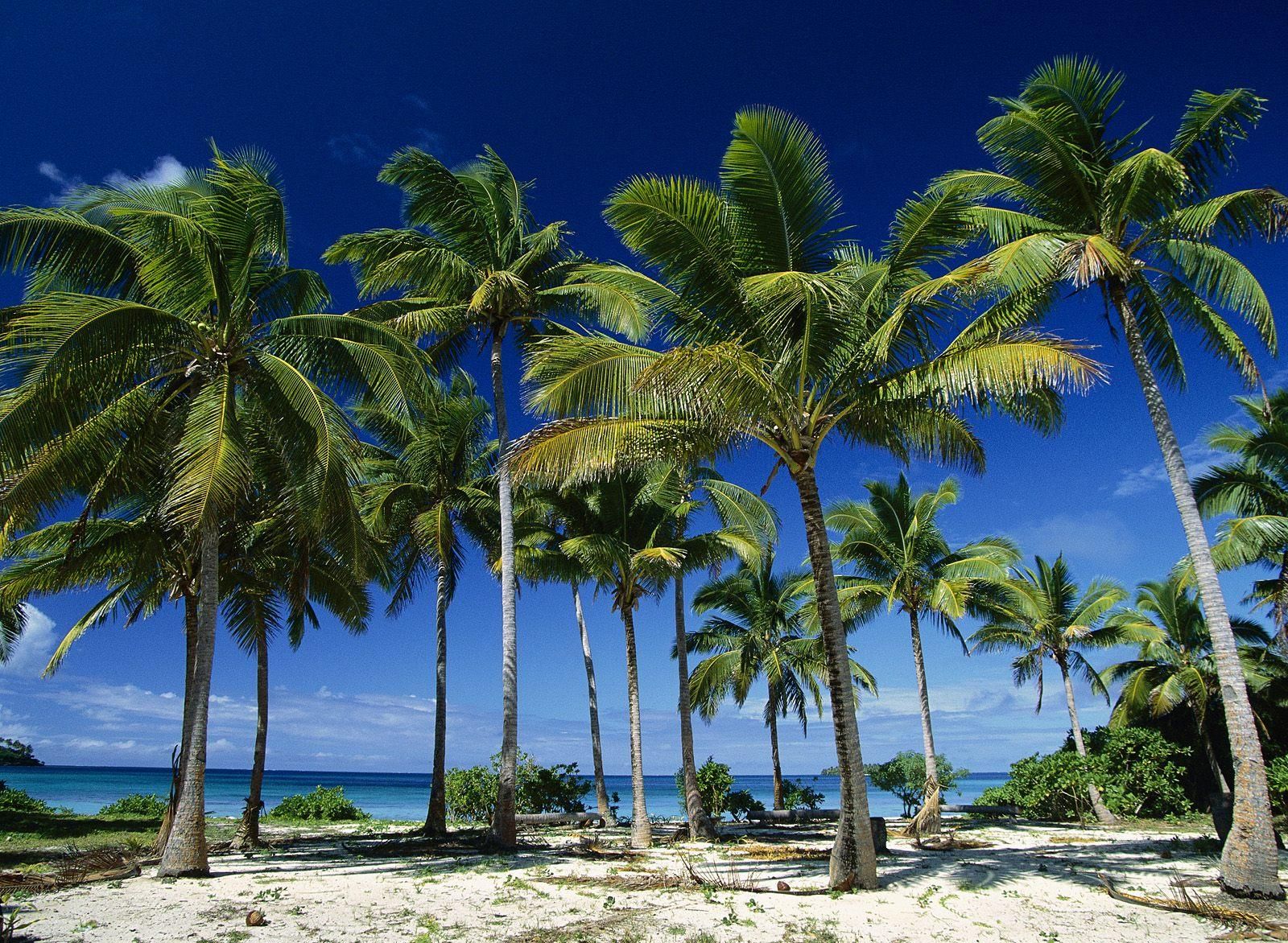
The coconut palm is a tropical tree renowned for its versatile fruit, the coconut. Cultivated in coastal regions with sandy soils and abundant sunlight, the coconut palm thrives in warm and humid climates. The tree's growth is marked by its tall, slender trunk topped by a crown of feathery fronds. Coconuts consist of a fibrous husk, a hard shell, and a richly nutritious interior known as the endosperm, which provides both coconut water and meat. Coconuts are harvested when mature and can be used for a variety of purposes. Their water, the clear liquid inside young green coconuts, is a refreshing beverage rich in electrolytes which was historically used to provide freshwater for sailors at sea. The coconut meat, when dried and grated, yields coconut flakes or is pressed to extract coconut oil, a versatile product used primarily for cooking in the Indo-Pacific region. Additionally, the coconut palm provides materials for shelter, fuel, and handicrafts, as well as natural fibres. Coconut palms are grown all across Oceanyka, a testament to the nation's millennia-old cultural and commercial intermingling with the Austronesians, who first domesticated it.