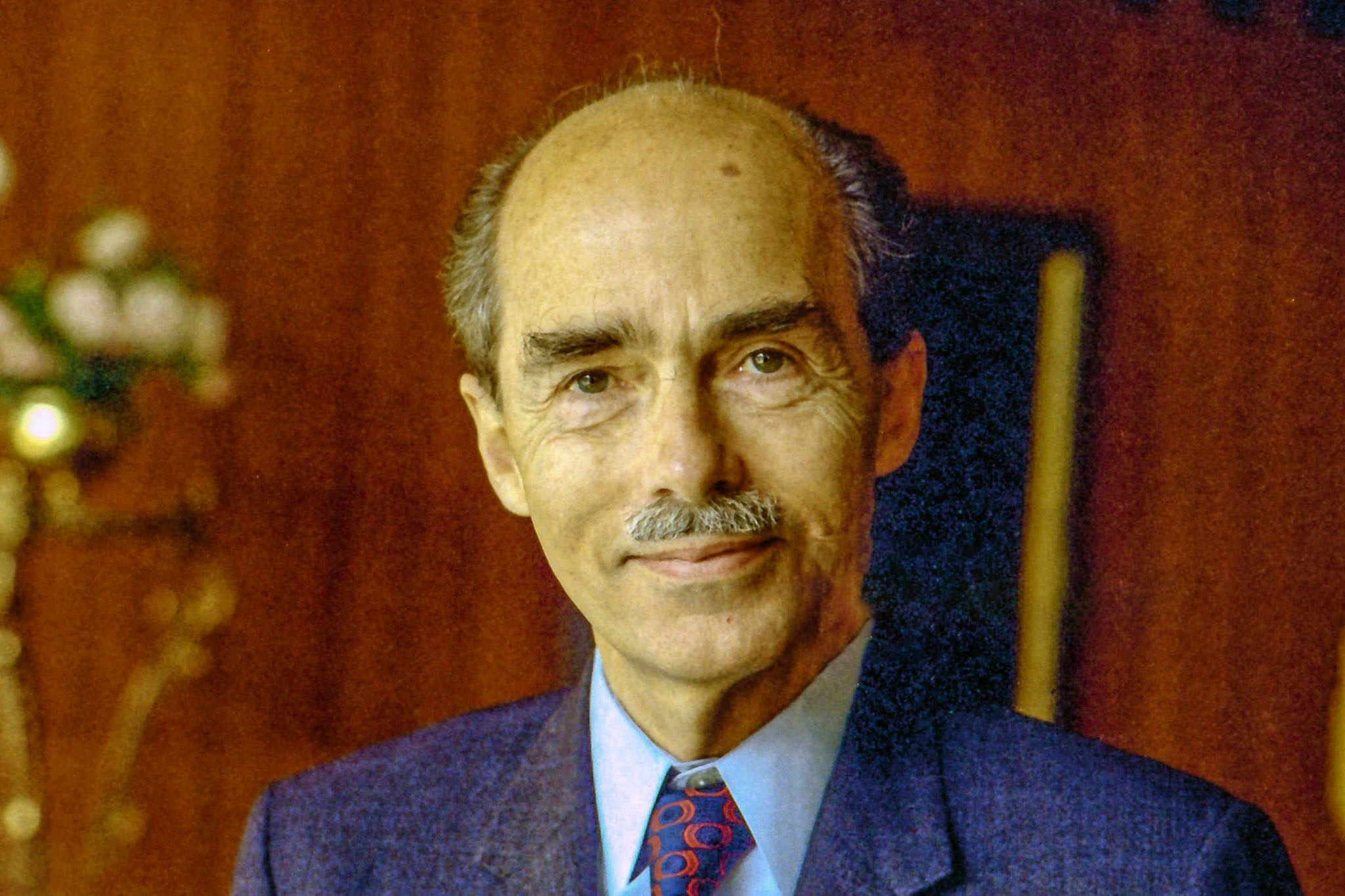
(B. 1912)
Born on November 20th, 1912, in Reichenau an der Rax, Otto von Habsburg-Lothringen is the eldest son of defunct Emperor Charles I of Austria. Though born into the splendour of an empire at its height, his early years were dominated by war, revolution, and the rapid disintegration of Habsburg authority. Witnessing the collapse of the Austro-Hungarian Empire during the Austro-Hungarian Civil War, the young Archduke grew up amidst the chaos of a world that seemed to have no place for the old nobility.
Following the Federal Decree of 1924, Otto and his family remained titular monarchs within the newly proclaimed Danubian Federation, a democratic federal empire wherein the Emperor was a constitutional figurehead. Throughout the unstable 1920s and early 1930s, Otto became a prominent public advocate for the principles of constitutional monarchy, federal unity, and democratic reform, while quietly opposing the growing tide of radicalism, both communist and ultranationalist, sweeping through Central Europe.
However, the rise of the Danubian Socialist Party and its eventual infiltration by NKVD assets culminated in disaster. In December 1938, his father was forced to abdicate, and the monarchy was abolished. Otto narrowly escaped arrest by fleeing to The Swiss Confederation, where he continued to lead the Habsburg cause in exile, tirelessly lobbying for the Federation’s liberation from Soviet influence.
During the Second World War, Otto became a symbol of hope for the Danubian diaspora, collaborating closely with the German, British and American governments, while formally leading the Danubian Liberation Army, made up of hundreds of thousands of Imperial Federal Party loyalists. As the tides of war shifted and Danubia was largely liberated by German forces, Otto returned triumphantly to Vienna in 1946. The Second Treaty of Versailles formally restored the monarchy, and Otto was crowned Emperor, though under a revised constitution that deeply limited royal power. In an unprecedented act of statesmanship, he accepted the title of Volkskaiser, or "People’s Emperor," pledging himself to uphold democracy, unity, and liberty above dynastic ambition.
Throughout the 1950s and 1960s, Otto worked hand-in-hand with the rejuvenated Imperial Federal Party, overseeing the reconstruction of a shattered Federation. He became a symbol of unity in a state divided along ethnic, linguistic, and historical lines. Promoting economic modernisation, fostering cultural autonomy among the federation’s diverse peoples, and advocating integration with Western Europe and the North Atlantic Treaty Organisation (NATO), Otto's reign helped transform the Federation from a battered battleground into one of Europe's most dynamic polities. He was also instrumental in forming the Euro-Gemein (EUG) as perhaps the most radical supporter of European Federalism amongst the continent's statesmen.
Known for his deep personal piety, fluency in over six languages, and unrelenting work ethic, Otto champions a vision of Danubia not as a mere relic of the past but as a beacon of hope in a divided world. Though constrained politically, his moral authority is immense, and he wields it with discretion and wisdom. Today, Otto von Habsburg remains one of the most beloved and respected figures in modern Danubian history the man who saved a dream once thought lost to the fires of war. In the mid-1960s, he has pursued a policy of detenté with the South European Pact (SEUROP), reestablishing limited diplomatic and commercial ties with his realm's estranged neighbours in a bid to isolate The Union of Soviet Socialist Republics, who the Habsburgs consider their real and greatest enemy.