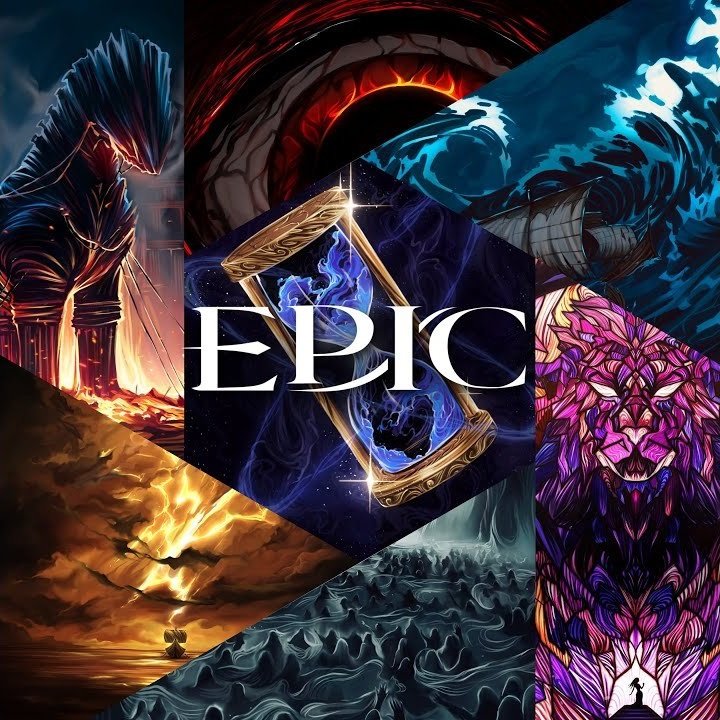
Exploratory Mission #2
For Exploratory Mission #2, your assignment is to examine how humans have used creativity and imagination to explore and understand their identity as a species, focusing on a particular work as a case study. Your directive is to experience the provided work, read the supplementary resources and complete an analysis output. You may conduct additional research to support your analysis as needed, or confer with an Archive Specialist (aka a Wofford librarian or instructor). Completion of EM #2 is recommended by October 18th, 2025.
Materials:
Case Study: EPIC
Supplementary Resources:
- Stephen T. Asma, “Introduction: Extraordinary Beings,” On Monsters: An Unnatural History of Our Worst Fears; available through the Wofford Library
- Stephen T. Asma, “Monsters and the Moral Imagination”
Suggested:
- Stephen T. Asma, “Why We Still Need Monsters," available on Moodle
- Stephen T. Asma, “Part 1: Ancient
Monsters,” On Monsters: An Unnatural History of Our Worst Fears; available through the Wofford Library
- Stephen T. Asma, "Monsterology: A Philosophical History of Monsters"
Mission Background:
Several hundred years before Aristotle wrote the Nicomachean Ethics, ancient Greeks were exploring questions about humanity through a what would become a key work in the canon of Western literature: The Odyssey. Attributed to Homer, though now considered to be the result of centuries of oral tradition passed down by storytellers before being written, the Odyssey tells the story of Odysseus, King of Ithaca, and his challenging journey home from the Trojan War.
The Odyssey has been adapted countless times in stories, movies, television, and song (including an upcoming motion picture to be released in 2026). For this Mission, you are going to analyze the adaptation EPIC (also known as Epic: The Musical). Created by Jorge Riverra-Herrans, EPIC is a musical retelling of The Odyssey inspired by anime and video games, told over the span of nine “Sagas,” or concept EPs, each presenting a different “stage” of the journey.
Riverra-Herrans recruited the cast of EPIC through TikTok auditions, and worked with artists and animators to create covers and animatic videos for each Saga. You can learn more about the musical and its creation on the EPIC Wiki, and listen to the official full album playlist on YouTube (and can find it on other streaming services like Spotify and iTunes). There are numerous videos where different animatics have been stitched together to present the entire musical as a full length film, as well as many more creations for individual songs.
Throughout the musical, Odysseus faces moral dilemmas where he must make difficult decisions about whether to “greet the world with open arms” or be “ruthless” in his encounters with various gods, monsters, and humans, in order to return home to his wife Penelope and son Telemachus. A key theme of the story is the question, “When does a man become a monster?”, introduced in the second song of the musical, “Just a Man”. Odysseus also interacts with several gods and goddesses throughout the story, and must decide whether to follow their advice or his own intuition as he fights to maintain his humanity while battling many non-human foes.
Mission Protocol:
As you listen to EPIC, pay attention to the lyrics and the narrative unfolding, and consider what the musical suggests about what makes someone a (hu)man, monster, or god. Create a description, definition, or set of criteria for each category, then assess at least three characters from the musical. You must analyze Odysseus, and choose at least one additional character from Set A and Set B.
Set A: Athena, Telemachus, Circe, Poseidon, Penelope,
Set B: Eurylochus, Zeus, Calypso, Hermes, Suitor (Antinous, Eurymachus, or Melanthius)
Evaluate and explain for each character if they are best understood as human, monster, or god, taking into account their entire character arc over the course of the musical (as appropriate). Which of your chosen characters best exemplifies “human” and why?
Think about what makes someone a human within the world of EPIC and compare that with our course materials and discussions so far. You should also take the Asda reading into account in your reflection. Share your thoughts about how this exploratory mission has influenced or changed your perspective on our course question, and/or if you think we need to adjust our inquiry any to take new insights from this mission into account.
You can complete this mission in any way that makes sense to you while fulfilling the directions provided: a written response, an audio or video recording, an artistic or creative work, etc. You should submit your response file to the Exploratory Mission #2 assignment in Moodle, which you will be able to find at the top of the page.