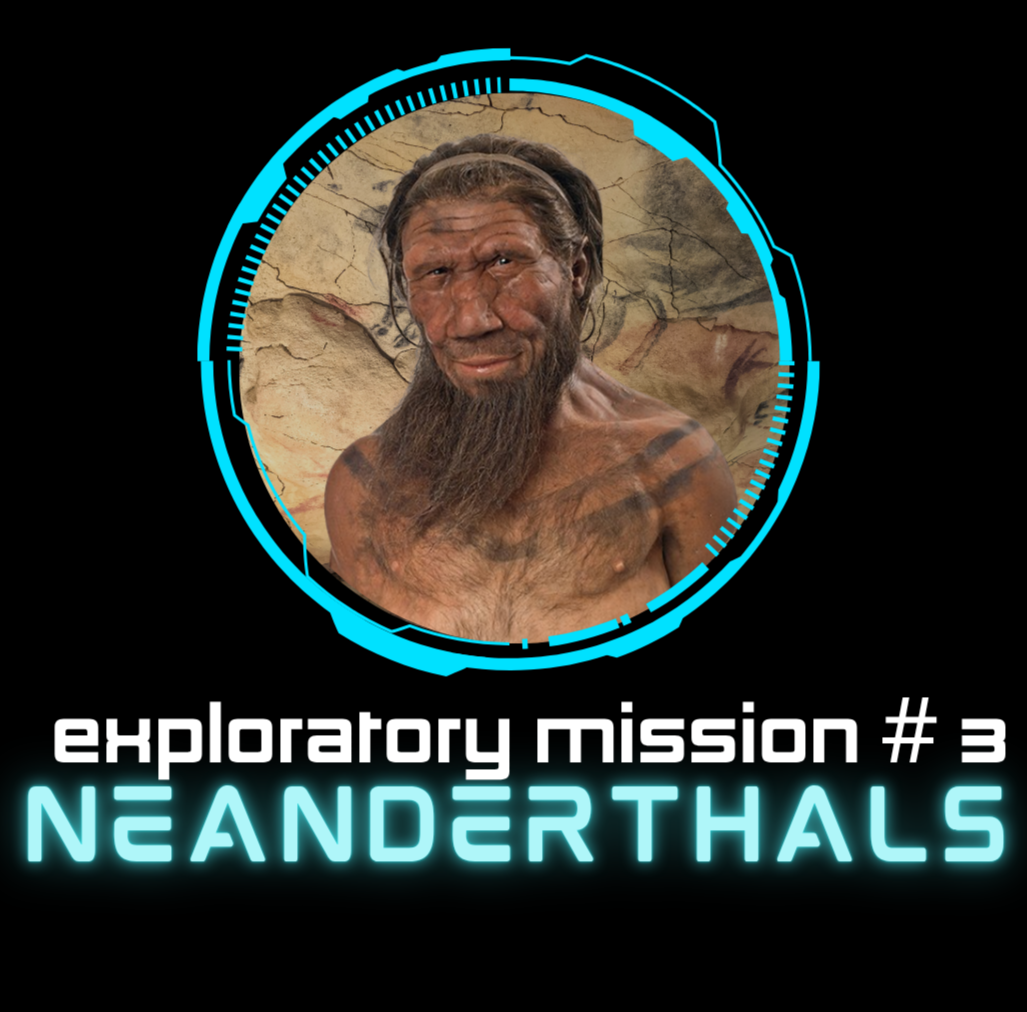
Exploratory Mission #3: Neanderthals
For Exploratory Mission #3, your assignment is to analyze the potential inclusion of Neanderthals as members of the human species. Your directive is to view the archival materials, conduct additional research, and complete a Species Adaptations and Membership Evaluation Report (SAME). You may also confer with an Archive Specialist (aka Anna Harkey, Ed Johnson, or a Wofford librarian). Completion of EM #3 is recommended by November 10th, 2025.
Materials:
· “Human: NeanderthalEncounters”, NOVA PBS [Documentary]
· Course Materials
Supplementary Resources:
· “Ice age fashion showdown: Neanderthal capes versus human hoodies”
· “Who Started the First Fire?”
· “Neanderthal: The First Artist” [Video]
Mission Protocol:
The Species Adaptations and Membership Evaluation Report [SAME] consists of three parts: Data Collection, Category Analysis, and Synthesis Reflection.
Section 1: Data Collection:
Watch the NOVA documentary, “Human: Neanderthal Encounters,” and take notes on the information you learn about the intersections and evolution of Neanderthals and Homo sapiens. You should review class materials and reflect on the discussions we had about Neanderthals with Dr. Harkey or Dr. Johnson and each other, and may also review supplementary materials provided above or collect additional materials.
For the SAME report, Section 1, summarize the data you have collected and identify key findings.
Section 2: Category Analysis
Using the data collected for Section 1, conduct an analysis of Neanderthals against each of the given prompts below. Your analysis should be comprehensive, supporting your assessment with explanations of your decision.
2.1: Physical Characteristics
What evidence do scientists have to include or exclude Neanderthals from inclusion as a member of the species designated “human”, according to biological species concept (i.e., a species is a group of organisms that can reproduce with one another and produce fertile offspring)?
2.2 Cognitive Capacities
What evidence, if any, do scientists have for Neanderthals’ capacities for each of the categories from our team workshop: Creativity, Emotions and Empathy, Language and Communication, Social Connection and Cooperation, and Tools and Technology? Provide and explain an example for each category that Neanderthals fulfill.
2.3 Teleological Function
Using Aristotle’s Function Argument, assess whether Neanderthals would fulfill Aristotle’s criteria for being human. If you do not have enough data to provide a definitive answer, explain your tentative answer and what kind of evidence would be needed to complete the assessment.
Section 3: Synthesis Reflection
For this section, you should synthesize—that is, bring separate parts together into a whole—your data and analysis from Sections 1 and 2, and use it to answer each of the following prompts.
3.1: Category Evaluation:
Evaluate whether Neanderthals should be considered members of the human species based on the criteria and theories in Section 2. Your conclusion(s) should be based solely on the data you collected and the analysis you conducted in Section 2.
3.2: Personal Reflection:
What is your reasoned opinion on the inclusion or exclusion of Neanderthals as members of the human species? In other words, considering the data and analysis so far without being limited to it, do you think Neanderthals were humans? Why or why not? This answer may or may not match your conclusions from the category evaluation.