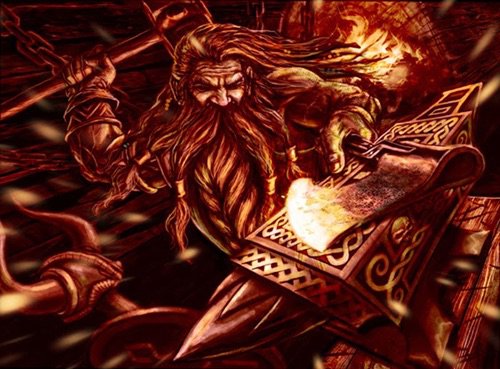
As a dwarven cleric, your connection to the Norse gods is as strong as the stone of your ancestral halls. Each deity offers a unique path, granting their followers distinct powers.
- Odin All-Father (Order, Knowledge, War): The All-Father, god of wisdom, magic, poetry, and war. Odin represents the strategic mind, the thirst for knowledge, and the courage to face any foe. Potential Domain Benefits: A cleric of Odin might gain access to spells of divination, knowledge, and strategic combat. They could receive bonuses to intelligence checks, wisdom saving throws, and abilities that enhance tactical prowess. At higher levels, they may even gain the ability to see glimpses of the future or inspire their allies with unmatched battle plans.
- Frigg (Life, Peace Twilight): The Queen of the Æsir, goddess of marriage, motherhood, and foresight. Frigg embodies the strength of the hearth, the protection of family, and the wisdom to see what might come. Potential Domain Benefits: Clerics of Frigg could receive spells focused on protection, healing, and divination. They may gain abilities that strengthen their allies' defenses, provide bonuses to charisma checks when dealing with family or community matters, and grant glimpses into potential futures, allowing them to avoid danger or guide their allies.
- Thor (Tempest, War): The God of Thunder, protector of Midgard (Earth). Thor represents raw power, unwavering courage, and the defense of the weak. Potential Domain Benefits: A Thor-devoted cleric might wield spells of thunder and lightning, gain bonuses to strength checks and saving throws, and have abilities that enhance their combat prowess. They could become a bulwark against enemies, able to withstand immense damage and unleash devastating attacks. They might also gain the power to control the weather, calling down storms upon their foes.
- Njörðr (Nature, Life, Order): God of the sea, wind, and wealth. Njörðr embodies the bounty of the ocean, the flow of trade, and the prosperity that comes from a harmonious relationship with the natural world. Potential Domain Benefits: Clerics of Njörðr might gain access to spells related to water, weather, and wealth. They could receive bonuses to skills related to seafaring, trade, and diplomacy. They might also gain the ability to create resources, find hidden treasures, or ensure safe passage for themselves and their allies on water.
- Freyr (Nature, Peace, Light): God of fertility, sunshine, and peace. Freyr represents the life-giving power of the sun, the abundance of the earth, and the joy of a peaceful existence. Potential Domain Benefits: A cleric of Freyr could wield spells of healing, growth, and light. They might gain abilities that enhance the fertility of the land, heal wounds quickly, and radiate auras of warmth and protection. They could also have influence over animals and plants, ensuring bountiful harvests and the well-being of their community.
- Freyja (Life, Light, Arcana): Goddess of love, beauty, fertility, gold, and magic. Freyja embodies passion, allure, and the potent magic that binds the world together. Potential Domain Benefits: Clerics of Freyja might gain spells related to charm, illusion, and healing. They could receive bonuses to charisma checks, become skilled diplomats, and wield magic that enhances beauty, inspires love, or protects against emotional manipulation. They might also have a strong connection to the fey, granting them access to ancient and potent magic.
- Loki (Trickery, Forge, Twilight): The cunning shapeshifter, god of mischief, lies, and fire. Loki represents the unpredictable, the subversive, and the potential for chaos to break stagnant patterns. He is the intelligence that finds loopholes, the charm that deceives, and the spark that ignites transformation. Potential Domain Benefits: Clerics of Loki could gain spells focused on illusion, deception, and subtle manipulation. They might receive bonuses to dexterity (Sleight of Hand, Stealth) and charisma (Deception, Performance) checks. They could gain abilities that allow them to create diversions, escape sticky situations, or magically alter their appearance. At higher levels, they might be able to sow discord among their enemies, reveal hidden weaknesses, or even temporarily twist fate in their favor through cleverness and misdirection. They are often the ones who find the "unconventional" solution to a problem, or reveal truths that others prefer to keep hidden.
- Hel (Death, Grave, Twilight): The chilling ruler of Helheim, the realm of the dishonored dead, the sick, and the aged. She is the daughter of Loki and the giantess Angrboða, making her a half-sister to the great Fenrir wolf and the Midgard Serpent. Her appearance is often described as half-beautiful, half-decaying, reflecting the duality of life and death. For most dwarves, reverence for Hel is not about worship in the traditional sense of seeking blessings for life or fortune. Instead, following Hel's domain is a stark, often somber, acceptance of mortality and the grim duty towards the departed. A dwarven cleric of Hel might be a keeper of crypts, a chronicler of genealogies, or a grim warrior who understands that death is a part of the great cycle, and sometimes, it must be embraced. They might be chosen for their resilience, their stoicism in the face of loss, and their unyielding commitment to the final resting places of their ancestors. They understand that every stone, no matter how mighty, will one day crumble, and every life, no matter how long, will eventually end.