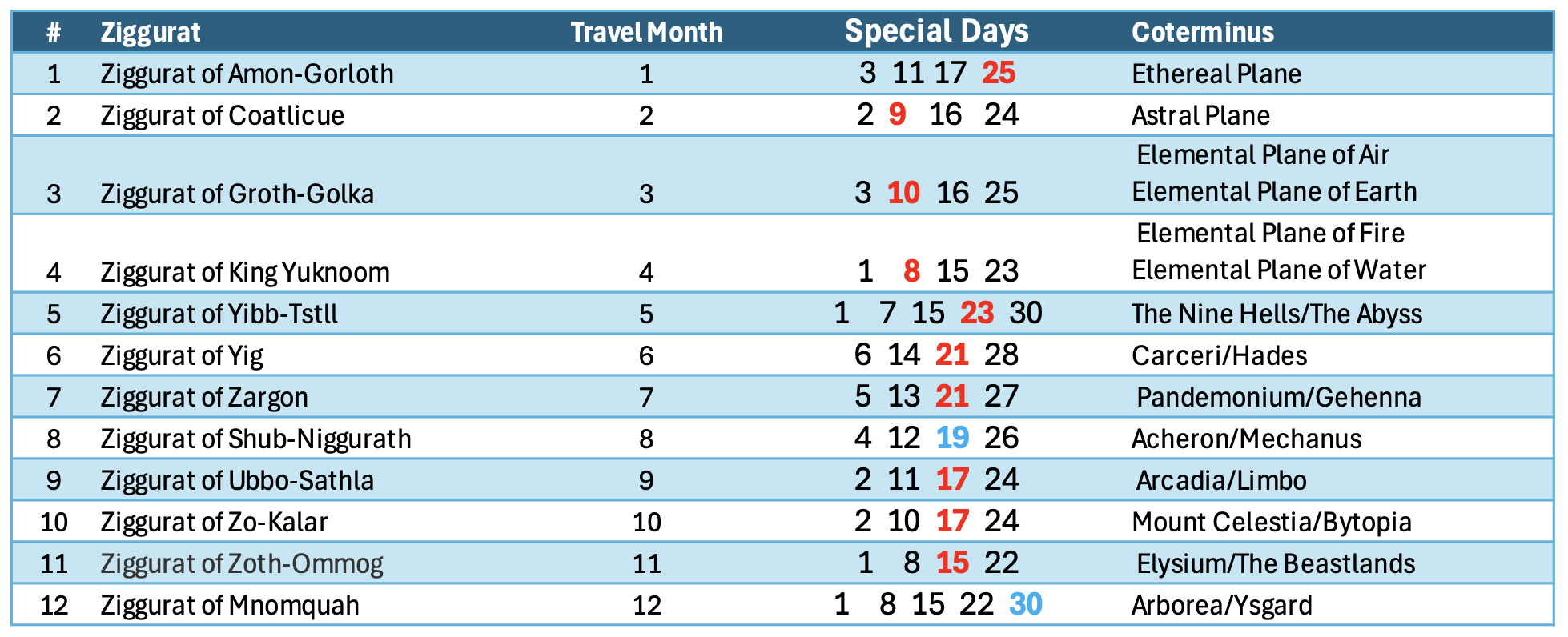
The Ziggurat of Groth-Golka: A Cursed Monument
Location: The ziggurat is 50 miles from Seregon on the old Kerkhof Route. The route is overgrown, but the railway bed is an easy landmark. The ziggurat was meant to be a tourist attraction before Amber Fever.
The Ziggurat of Groth-Golka stands as a towering, ominous structure deep within the jungle, shrouded in decay and madness. Once a sacred site for the Pterafolk, who worshipped the Great Old One known as Groth-Golka, the ziggurat was built to appease the god with daily sky sacrifices. Victims, plucked from the surrounding lands, were thrown from hundreds of feet in the air to splatter on the altar atop the ziggurat, their broken bodies a grim offering to the god.
Over a century ago, the ~Sentinels of Seregon launched a daring assault on the ziggurat, disrupting the Pterafolk’s cult as they attempted to summon Groth-Golka. A fierce battle erupted as the so-called god materialized, a towering, flightless bird with otherworldly power. The battle that followed was one of the most violent in Seregon's history, but the Sentinels were ultimately victorious, slaying the god. However, the corpse of Groth-Golka remains, a festering wound on the land that still corrupts the jungle around it.
The Corpse of Groth-Golka
At the summit of the ziggurat lies the corpse of Groth-Golka, an enormous, grotesque mass of hardened godflesh. Its massive body, once pulsating with divine power, is now a crusted, blackened shell that radiates a sense of death and decay. The god’s once powerful presence has been reduced to this festering heap, but the corpse retains some fragments of its former divinity. From its broken body seeps godsblood, a thick, black ichor that flows in slow streams down the steps of the ziggurat, pooling in dark, stagnant puddles at its base.
The ichor of Groth-Golka is filled with necromantic energy, poisoning the land. The Donderbeek River, which flows nearby, has become tainted by this godsblood, turning its once fresh waters dark and oily. Those who approach the ziggurat become violently ill, wracked with fever and delirium if they spend too long near the corpse, an effect believed to be tied to the polluting influence of the god’s remains. The air around the ziggurat is thick with an acrid, metallic smell, and the oppressive atmosphere makes even seasoned warriors tremble.
Twisted Landscape and Warped Reality
The jungle surrounding the ziggurat struggles against the corrupting influence of Groth-Golka's corpse. Vegetation near the corpse dies rapidly, and even the most resilient jungle plants grow blackened, twisted, and misshapen. These twisted plants have developed a sinister life of their own, often animated by necromantic energy to lash out at any who come near, their branches or roots acting as hostile appendages.
Reality itself has become warped around the ziggurat. Several of the ancient stone blocks that make up the structure now float in mid-air, suspended by some unknown, otherworldly force. These massive stones, some weighing tons, defy the laws of gravity, silently hanging above the steps of the ziggurat like silent sentinels of madness. A shattered dwarven axe, broken into a dozen pieces, also hangs suspended in mid-air, slowly rotating as if frozen in time. This eerie phenomenon is a clear sign that the very fabric of the world is unraveling in the presence of Groth-Golka's corpse.
The Altar of Groth-Golka
At the peak of the ziggurat, the once-sacred altar lies sundered, cracked and broken from the force of the battle between the Sentinels and the Pterafolk. It is stained with the blood of countless sacrifices, and though shattered, it still holds traces of dark power. Hovering above the altar are burning symbols in the alien language of R'lyehian, the script of the Great Old Ones. These floating words, thought to be the last words of Groth-Golka, writhe in the air like living things, and anyone who gazes upon them feels a deep, primal fear take root in their soul. The words defy comprehension, but they pulse with malevolent energy, driving those who attempt to read them to the brink of madness.
The Energy Well: A Tear in Reality
At the very heart of the death site lies the Energy Well, a terrifying pinprick tear in the fabric of reality itself. This well appears as a ten-foot-wide vertical vortex, a swirling mass of dark energy that hums with an otherworldly resonance. The well radiates necromantic power, corrupting everything within its vicinity. Black tendrils of energy swirl around it, and it emits an eerie, low hum that reverberates across the land.
No one knows where the Energy Well leads. It is a tear in the very foundation of existence, a gateway to somewhere beyond mortal comprehension. Though nothing has yet emerged from the vortex, those who approach too closely feel an overwhelming sense of dread, as though something immense and ancient is watching from the other side. The necromantic energy emanating from the well can be felt up to 10 miles away, corrupting the landscape and making it a dangerous and hostile region. Even seasoned necromancers are wary of drawing too near, as the energy could warp them beyond recognition.
Lingering Influence of Groth-Golka
Despite being dead for over 100 years, Groth-Golka's presence is far from gone. The necromantic energy flowing from the corpse and the Energy Well has turned the region into a dangerous and cursed land. Undead creatures, born from the corrupted godsblood, wander the surrounding jungle, their twisted forms animated by the last remnants of Groth-Golka's divine power. These undead guardians attack anyone who ventures too close to the ziggurat, as if still fulfilling the will of their long-dead god.
The Pterafolk, though driven from the ziggurat by the Sentinels, continue to live in the nearby hills, keeping a watchful eye on their fallen god. Some believe that they are plotting to resurrect Groth-Golka, collecting fragments of godflesh and godsblood in an attempt to restore their deity. The jungle cultists, driven mad by the necromantic energy, are rumored to perform strange rites under the cover of darkness, invoking the name of their dead god in the hope of rekindling its divine flame.
The Ziggurat of Groth-Golka is a place of twisted reality, necromantic corruption, and unfathomable danger. It serves as a grim reminder of the dangers of summoning ancient powers, with the corpse of a dead god polluting the very fabric of the world around it.