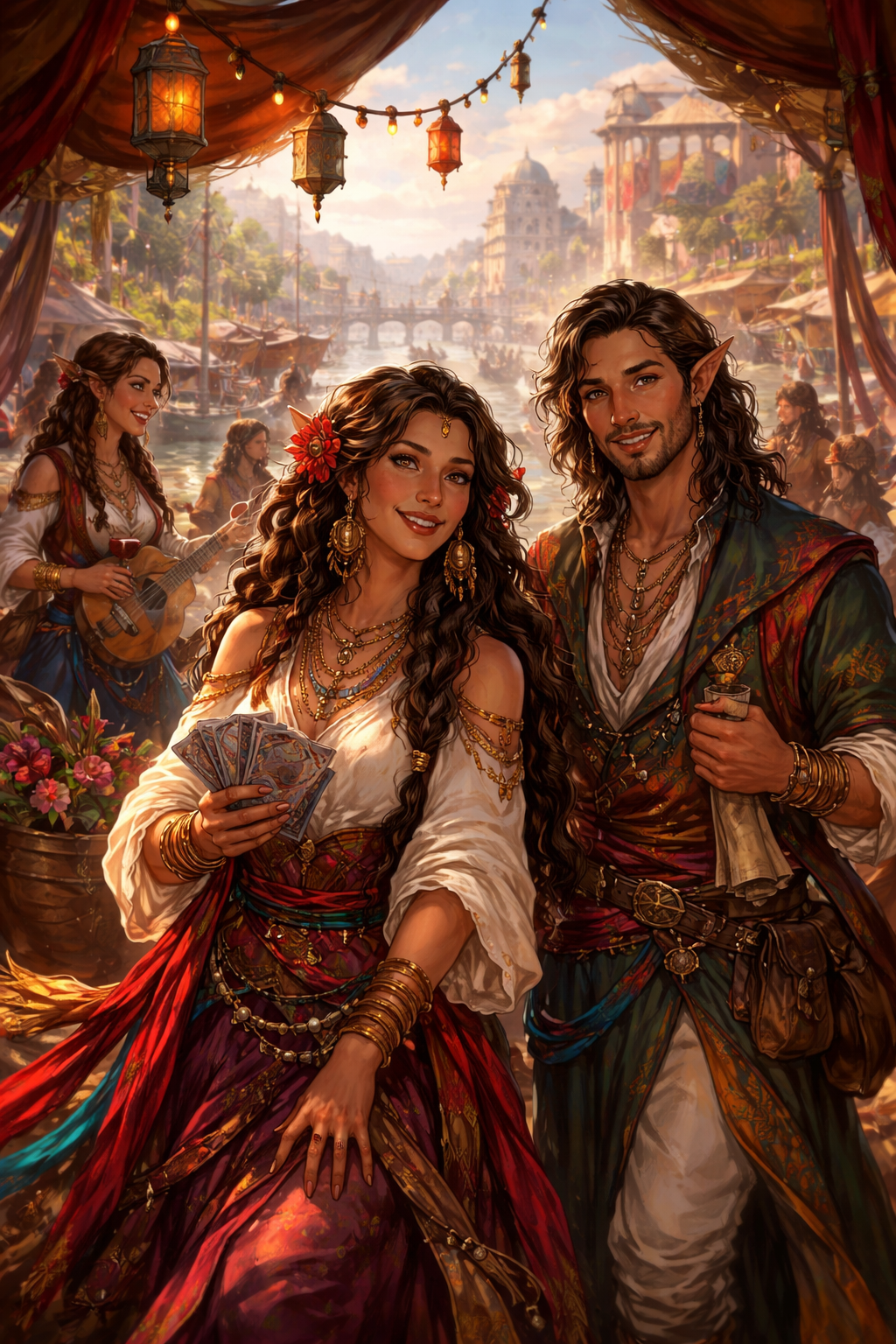
First impression
Velorians are the culture of circulation: river traffic, trade houses, traveling companies, festivals, and the soft art of making rivals cooperate long enough to sign a deal. They are common in ports, market towns, and anywhere introductions matter more than titles.
Physical characteristics
Velorians are diverse, but are often noticed for:
- Build: athletic and expressive; quick hands, quick smiles, quick exits.
- Skin: a wider range than many expect in the taiga—often warmer-toned from travel, river life, and southern ancestry lines.
- Eyes: lively and observant; many cultivate a “public face” that’s hard to read.
- Hair: frequently styled—braids, ribbons, shaved sides, bright cords—practical for travel but unmistakably intentional.
Dress and material culture
- Clothing: layered travelwear made stylish—bright sashes over wool, patterned gloves, embroidered caps, jewelry that doubles as currency.
- Tokens: calling cards, trade seals, favor-chits, and small gifts used to open doors.
- Performance: many Velorian households treat music and storytelling as social tools, not just entertainment.
Values and social habits
- Trade is a web: favors, introductions, marriages, and stagecraft.
- News is a commodity: not always true—always valuable.
- Public joy is political: festivals keep people loyal when winter makes them desperate.
What outsiders get wrong
- “They’re frivolous.” (No—morale and reputation are strategic resources.)
- “They’re untrustworthy.” (Networks require reliability, or consequences arrive quickly.)
Velorian in Guibacia (common roles)
Barge captains, merchants, brokers, interpreters, performers, festival organizers, diplomats-for-hire, innkeepers, and “fixers” who can secure permits when your papers don’t.