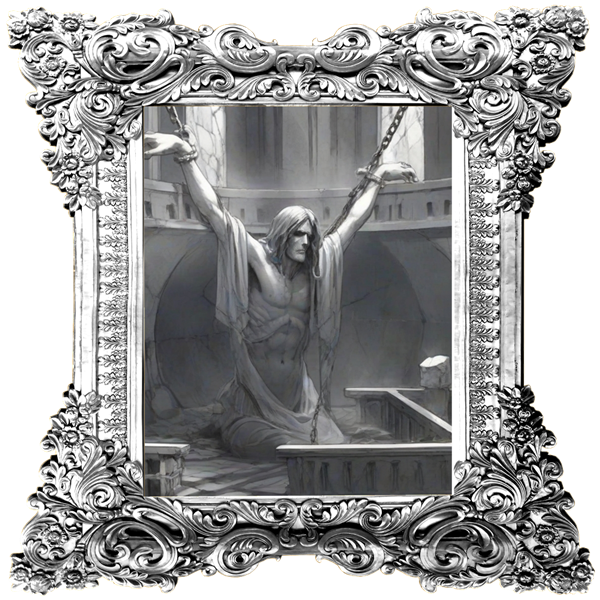
"The Chained Divinity" is a haunting masterpiece, intricately painted upon a canvas of exceptional quality. The scene depicted within the painting unfolds in a solemn marble chamber, the very embodiment of divine sanctity. At its center hangs the Silver Prince, the revered deity of the Silver Dominion, portrayed in a state of excruciating captivity. Heavy chains, wrought with ethereal craftsmanship, coil around the godly figure, binding the deity in a symbolic representation of subjugation. The artist's meticulous attention to detail captures the divine agony etched across the Silver Prince's countenance, rendering a scene that defies the blissful narratives spun by the Church.
The origins of "The Chained Divinity" are shrouded in secrecy, its creation attributed to an artist who dared to unveil the obscured truths lurking within the core of the Church's dominion. Whispers among clandestine circles speak of the painter meeting a heretic's fate, the price for exposing the veiled tyranny hidden behind sanctimonious walls. The painter, driven by a quest for truth and a desire to rupture the illusions woven around the faithful, left behind the chilling quote that accompanies the artwork. This clandestine relic has become a symbol of dissent, a testament to the artist's defiance against the orchestrated narratives of divine authority.
"In the heart of marble sanctity, I unveiled the chains that bind the divine. The faithful are draped in illusions woven by the powerful, while truth lies fettered, hidden from their reverent eyes. I painted the silence of gods, not to defy faith but to unshroud the tyranny behind sanctimonious walls. For my brush dared to reveal what they deemed forbidden—a chained deity, the Silver Prince, ensnared within the very bastion of divine adulation." - Quote by the Painter.
Ramifications:
Possession of "The Chained Divinity" carries profound implications. The painting, when unveiled to the masses, threatens to unravel the carefully constructed tapestry of faith woven by the Church. It has the potential to sow seeds of doubt among the devout, challenging their unquestioning allegiance. The Church, guardians of both divine and mortal power, would undoubtedly seek to suppress the painting's existence, branding it heretical and the artist a blasphemer.
Should the painting be exposed, it might catalyze internal strife, forcing the faithful to confront the uncomfortable truth that their deity, ostensibly revered as omnipotent, is portrayed as captive within their own bastion of worship. The Chained Divinity becomes a potent relic, holding within its brushstrokes the power to reshape faith and provoke a paradigm shift in the Silver Dominion's religious landscape.