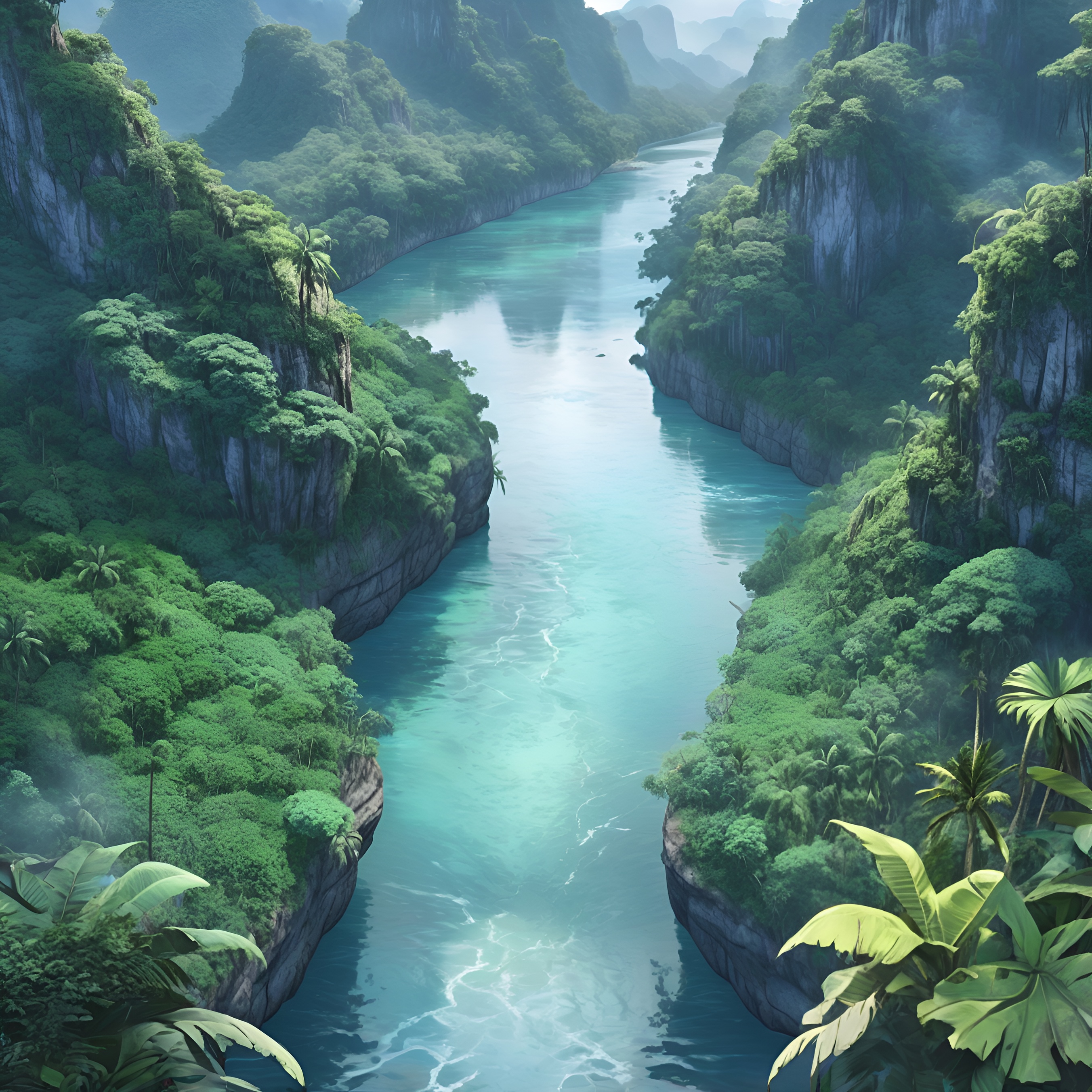
The Kamii River, known as the "River of the Gods," is the largest and most revered river within the Nagan Empire. It spills gracefully from the mouth of Nagatsuru Bay, winding its way through the fertile lands of the Throne Region of Nagadao. Its waters are pristine and deep, cutting through lush valleys, dense bamboo forests, and sprawling rice paddies that rely on its life-giving flow. The river serves as the main artery for trade and transport, linking distant settlements and bustling cities in a network of prosperity and culture. Tributaries break off like delicate veins, nourishing the lands and communities that depend on its bounty.
Spiritual Significance:
Kamii is not merely a river—it is a divine symbol in the Nagan Empire, believed to be the lifeblood of Laaos, the Keeper of Order, who governs the domains of Wisdom, Wood, and Spring. Many in the Empire hold that the river's unyielding flow is Laaos's blessing of stability and growth. Its waters are also sacred to Nori, the Watcher of Rivers, whose influence is most potent during the summer season. Legends tell of Nori's fleeting appearances along its banks, where her spirit is said to manifest in the shimmering mists above the water or in the ethereal glow of the river at twilight.
Every year, the people of the Throne Region perform Cleansing Rite of Kamii, a ritual to purify its waters and appease the river spirits known as Kawa-no-Kami. These spirits are believed to watch over the river's health, capable of bringing great fortune or ruin depending on how well the waters are respected. Shrines and offerings are scattered along its banks, and festivals mark the changing of the seasons, celebrating both Laaos's order and Nori's fleeting grace.
Settlements Along the Kamii River
Ahsiri — The Gateway to the Northern Seas
The first major settlement along the Kamii River is Ahsiri, a bustling port city located in the heart of the Throne Region. Known for its sprawling harbor and thriving fishing industry, Ahsiri is the lifeline for maritime trade between the Nagan Empire and distant lands. Its ports are always alive with activity—merchants unloading exotic goods, fishermen hauling in the day's catch, and travelers setting sail to explore the Empire's many isles.
Ahsiri is also renowned for its vibrant nightlife. Bars, inns, and restaurants line its winding streets, offering local delicacies and spirited performances that attract both locals and foreigners alike. Visitors to Ahsiri are greeted with warm hospitality, a hallmark of the city's people, who take pride in their openness and strong community bonds.
Mizu — The Town of Falling Waters
Further along the Kamii River lies Mizu, a quaint town nestled amidst cascading waterfalls and lush greenery. Mizu is famous for its stunning natural beauty; its waterfalls are believed to be the tears of ancient spirits who once walked the land. Every spring, the town holds the Yuzuri Festival, a celebration of the river's bounty and the spirits that guard it. Lanterns are released onto the water to honor those lost to the river's currents, and blessings are made to Laaos to protect its waters for another year.
Aside from its festivals, Mizu is a center of traditional craftsmanship, particularly in ceramics and handwoven fabrics, many of which are dyed using minerals from the river's banks.
Nagasaga — Jewel of the South
At the southern bend of the Kamii River, just below the imperial capital of Nagadao, lies Nagasaga. Known for its thriving arts scene and luxurious shopping districts, the city is often referred to as the Jewel of the South. Its grand avenues are lined with tea houses, silk traders, and boutique markets that draw wealthy patrons from across the Empire.
Nagasaga is also the cultural heart of the Nagan Empire, boasting prestigious universities and research institutions that have produced some of the most innovative thinkers in history. It is not uncommon to see scholars debating philosophy and arcane principles in the city's many plazas. However, beneath its polished exterior, Nagasaga is rife with political intrigue. Powerful families vie for dominance, manipulating commerce and policy to gain influence over the empire's southern reaches.
Significance & Rituals
The Kamii River is more than just a trade route; it is a sacred entity. Every spring, the Higan Matsuri is held along its banks, a grand festival of purification where river shamans perform rituals to cleanse its waters of impurity. Offerings of lotus petals and rice wine are floated downstream, symbolizing the Empire's gratitude and respect for Laaos. It is said that when the river runs clear and pure, blessings fall upon the harvest and trade prospers, but if its waters grow muddied, it is seen as a sign of impending strife.
River spirits are believed to inhabit its depths—ethereal beings that protect or punish depending on the reverence shown to the river. Many fishermen whisper prayers before setting out, and it is tradition for travelers to pour a single cup of tea into the water before beginning their journey along its banks.