Non-Playable Races

Humanoids & Monsters
Human? Demi-Human? Humanoid?
Among scholars of the Flanaess, species are broadly classified into humans, demi-humans, and humanoids, each with distinct roles and characteristics.
Humans are the most common race, typically forming the foundation of most societies and cultures within the realm. They are known for their adaptability and shorter lifespans, which often drives them to innovation, exploration, and ambition.
Demi-humans include races like elves, dwarves, halflings, and gnomes—species that are often long-lived and have unique abilities or affinities tied to nature, magic, or craft. They coexist with humans in many lands, often sharing similar values or goals.
Humanoids, however, refer to shorter-lived species with a human-like shape—such as orcs, goblins, hobgoblins, and gnolls—that are often portrayed as adversaries to humans and demi-humans. Traditionally, humanoids have cultures and societies that clash with those of the “civilized” races, embodying a spectrum of alignment but frequently leaning towards the chaotic or evil.
Historical enmity toward humanoid and monstrous races, in addition to surface-level challenges, complicates their experiences when integrating into the setting. Though the world has grown to allow more shades of grey between “good” and “evil,” classic animosities remain central to many interactions. The struggles between humans and orcs or goblins, as well as dwarves and duergar, are more than simple misunderstandings; they are rooted in a long history of conflict over territory, resources, and ideology. In campaigns adhering strictly to the world's traditions, these “evil” races, if allowed, are viewed with suspicion or hostility and carry an inherent social disadvantage within most civilized regions.
Conversely, the setting's human-centric structure has nuanced its social dynamics. Many non-human species live harmoniously within human realms, contributing to their economies and cultures. Elves, dwarves, halflings, and gnomes are frequently found in various occupations and can establish close, mutually beneficial relationships with humans. Nevertheless, while (most) demi-humans blend into the social structure of human realms, truly monstrous races rarely find acceptance, except in rare evil-aligned areas like the Great Kingdom, the lands of Iuz or the vile Horned Society.
Exotic Humanity
Rhennee — A minor human race called the Rhennee is found in the central Flanaess. These wayfaring people travel on river barges and are very clannish. Rhennee claim to have come to the Flanaess from another world and they do not trust outsiders. They have a bad reputation as thieves, but most are not truly evil.
Olman — The Olman is another minor race, known from the Amedio Jungle and Hepmonaland. This people once had an empire in the southern jungles, but it collapsed long ago and vanished. Olman are seen in the Hold of the Sea Princes as slaves.
Other Humans — Other human races (such as the Touv of Hepmonaland) are rumored to exist beyond the fringes of the Flanaess in every direction, but these folk are not well known at present.
Exotic Demi-Humanity
Other Dwarves — The dwarves are said to have evil counterparts in the derro and duergar (gray dwarves). These dwarves live deeper underground than the hill dwarves. The secrets that they harbor are better left unknown.
Aquatic Elves — Aquatic elves breathe water as well as air, and have webbed fingers and toes. They prefer temperate and tropical oceans and seas. Near the Spindrift Sound and Spindrift Isles, the aquatic elves are allied with the high elves.
Dark Elves — Drow, the evil dark elves, thrive in Under-Oerth. They trade with or war on other races there and on the surface, and are renowned as spellcasters.
Elf (Valley) — Valley elves are treated with suspicion by other elves for reasons not clear to humans. These unusually tall (up to six feet in height) elves live exclusively in the Valley of the Mage. They are known to practice unusual magic presumably taught to them by the Mage of the Vale.
Wild Elves — Grugach, the wild elves, live in tiny, isolated bands in the temperate forests. They are short like the high elves and very pale, but otherwise resemble sylvan elves.
Other Elves — Other olve (such as the Elf (Snow) of the mountains) are known to exist, but these elves are not well known at present.
Deep Gnomes — One important but scarce subrace of gnome, the deep gnomes (or svirfneblin) live far underground; these have gray, hairless skin and excellent heat-sensing vision, but little else is known of them, Some are rumored to magically command creatures made of living earth and rock. Svirfneblin are believed to be among the few good underground races.
Humanoids
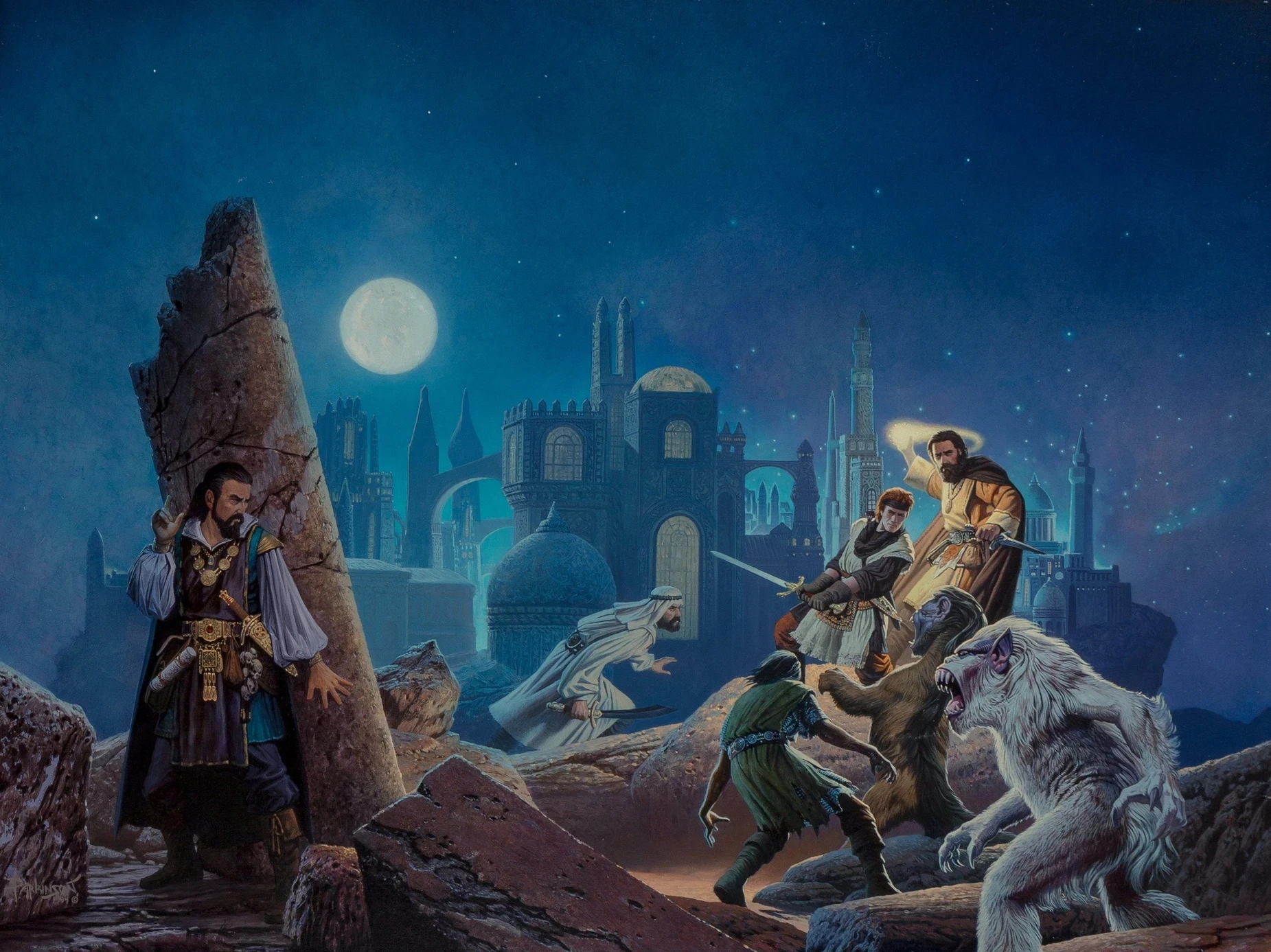
Humanoids are broadly defined as monsters that have two arms, two hands, at least two legs, and stand generally upright. They typically have their own cultures, societies, morals, values, and attitudes that vary greatly from the general human experience.
From a distance, within the folds of a hooded cloak, or obscured by deep shadows, humanoids can be mistaken for humans. Only on closer inspection and in the light of day are they immediately seen for what they are. They bear the general shape of humanity, but they have startling — and often times frightening — differences. Some are taller or broader than the average human. Others are smaller, frailer. Many have misshapen features, wicked claws and fangs, thick fur or long, dank hair. Humanity is one race; humanoid races are legion.
Children
Articles
There are currently no articles tagged with this tag.