via Verdant Wind Mercantile Company, currently placed in the company archives.
SPORE SAMPLE
09/04 7AE
13th of the First Umbral Moon, 4/7AE
Prepared by: C'laude Riegan
Introduction
Following the successful scouting and spore collection missions in the Yafaem Saltmoor, the purpose of this report is to present the results of the laboratory analysis of the spore samples obtained.
Methodology
Spore samples of funguar that were collected from ascocarps or conidiophores in the field by trained gleaners using sterile techniques to avoid contamination. Multiple samples were collected from different locations within the Yafaem Saltmoor, where the funguar is presumed to be endemic.
Unfortunately, lack of specialized containers preserving the aetheric charge of the sampled environment has proved damaging to the collected samples.
The collected spore samples were processed in a sterile laboratory setting. This involved carefully separating the spores from other fungal structures or debris using aseptic techniques to ensure purity of the sample.
A portion of the spore sample was placed on a microscope slide and observed under a compound microscope at various magnifications. Morphological characteristics of the spores, such as size, shape, color, and presence of any distinguishing structures, were documented.
The morphological characteristics of the spores were compared to existing taxonomic keys and descriptions of known funguar, including cordyceps and other pathogenic seedkin, to determine the closest taxonomic match. The taxonomic classification of the funguar was determined based on these comparisons.
A portion of the spore sample was inoculated onto a suitable growth substrate and subjected to various environmental conditions, including astrally, umbrally and neutrally aligned environments, to study the growth and development. Growth patterns, colonization rates, and other relevant observations were recorded over time. A select group of samples has been sent via courier to Sharlyan to conduct observation on suitable laboratory animals.
Finally, a research report was written, summarizing the methodology, findings, and conclusions of the spore study.
Taxonomic Classification
By form, function and the recovered fruiting bodies that has been identified as ascomata, the funguar can be classified as follows:
Kingdom: Bloodborn
Class: Seedkin
Genus: Cordyceps
Funguar samples entering dormancy and decay upon exposure to unbrally aligned aether serves as a distinction significant enough to separate the recovered specimen into its own species. For the purpose of this study the funguar will be further referred to as Yafaeleseed.
Dissection
(a hand drawn diagram is attached to the page; it has been drawn hastily but carefully)
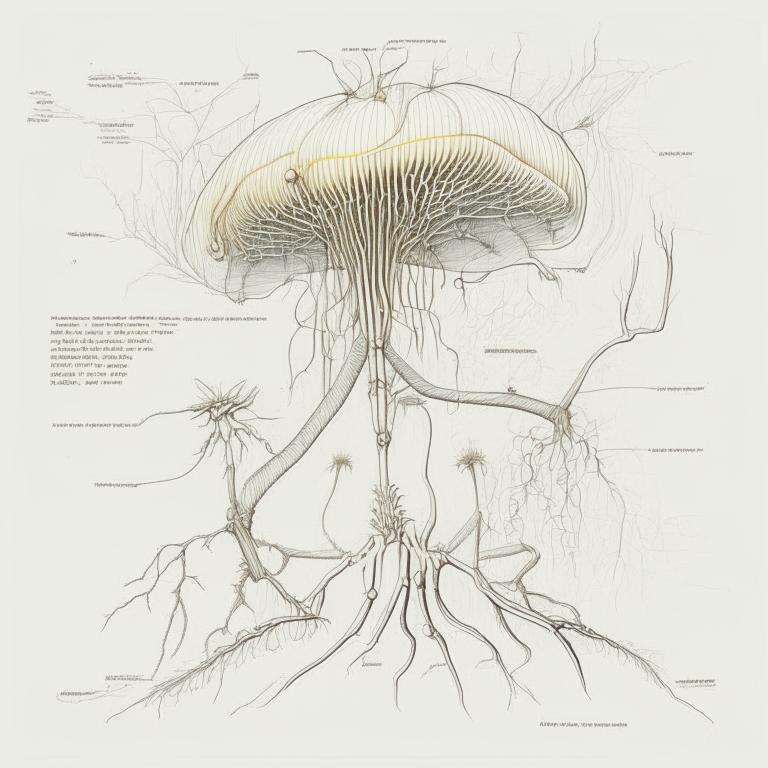
The fruiting body with intact mycelium connected to a chunk of a decaying Goobbue (or Gourmand) has been recovered from the flesh alongside the lymphatic system of the beastkin. The hyphae appear to be clustering densely around the aetheric nodes of the body. Unlike the other species of Cordyceps, the pores of hyphae appear to be diminished.
Spore Sample Study
None of the substrates with the exception of astrally aligned group have produced living colonies.
Control sample has been kept in an environment considered neutral as sampled by the Circle of Knowledge in Upper La Noseca circa 1560 6AE. This sample has produced no Yafaeleseed mycelia colonies and exhibited growth of contaminant funguar native to the region, none of which are known for parasitic relationships.
Umbrally aligned sample group has resulted in accelerated decay in the Yafaeleseed spores and diminished rate of growth of contaminant funguar, as expected of the environment.
Astrally aligned sample group has produced linear growth of Yafaeleseed colony, with no contaminant funguar found in the substrate. It should be noted that the net value of aetheric charge in this groups has decreased drastically compared to the unbrally and neutrally aligned groups.
There has been no notable difference in other categories of substrates. High salinity seems to be more preferable to the preservation of the spores and in astally aligned environment is a catalyst of the asexual reproduction cycle of the funguar.
Analysis
Given the astral aligned preference of the Yafaeleseed funguar, it is possible that those that have succumbed to fever upon inhalation for the spores have suffered from the defensive response of their bodies. Most pathogenic funguar in the history of man have adapted to "normal" aetheric balance of the body. Yagaeleseed might benefit from high fevers in its hosts as it reproduces well in astally aligned environments. For that purpose, first response to the infection should be in fighting the symptoms of the fever as to prevent mycelium formation.
Effective and immediate cure to the contamination can be in applications of aether that is deeply umbrally aligned.
In conclusion, while these species have seemingly remained contained within the moor, further study is absolutely necessary to determine the threat of the Yafaeleseed spread beyond Yafaem Saltmoor as well as its impact on the Saltmoor environment and its hosts. We must proceed with utmost care and caution as the funguar appears to be more violently pathogenic and fatal in comparison to its Cordyceps relatives.
(attached addendums document the study of the samples and the numbers behind the conclusions made in the report)