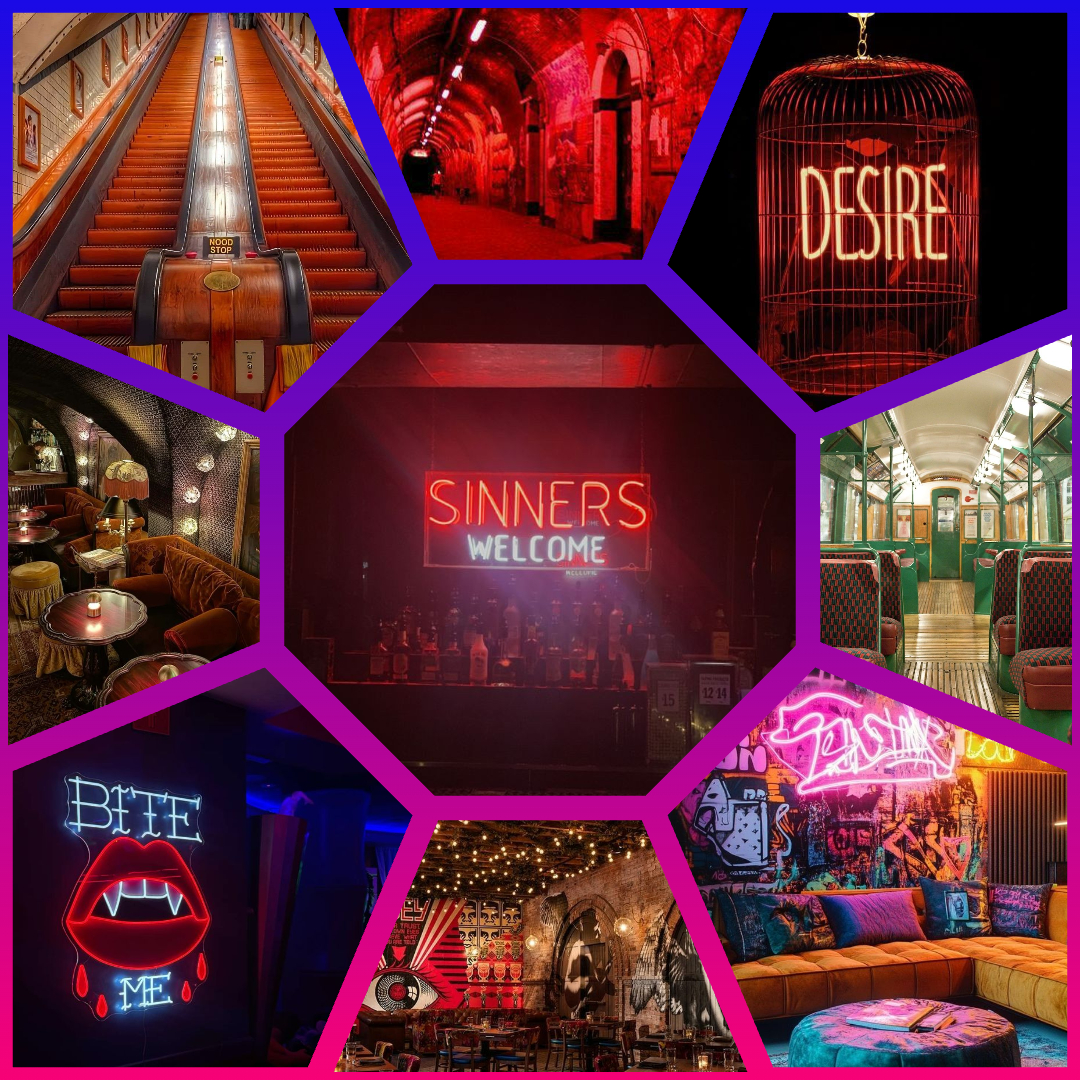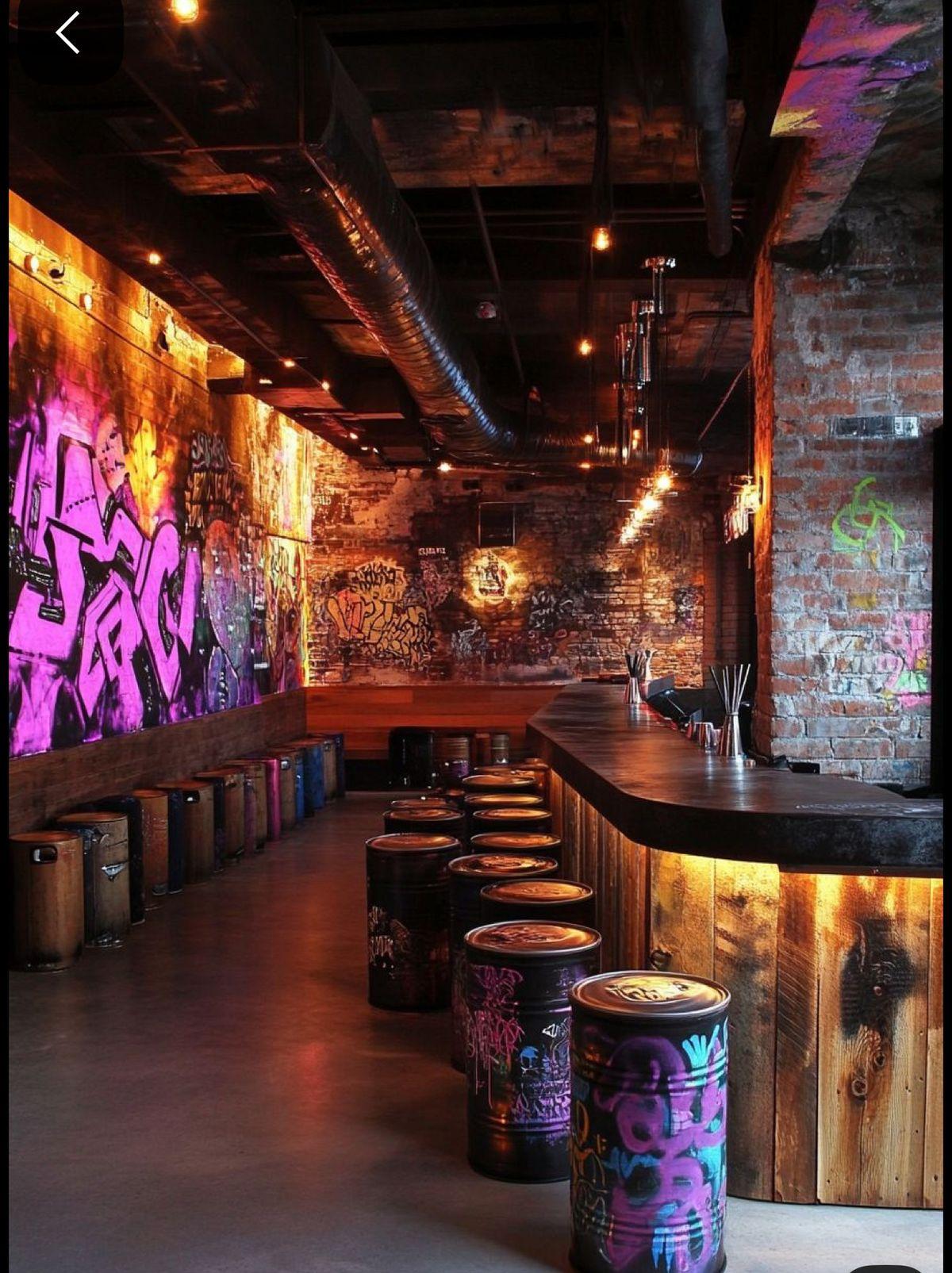
The bar is carved into an unused stretch of subway beneath the Bronx, a tunnel bricked up in the 1970s when rerouting made the line obsolete. Access is through a rusted maintenance hatch hidden behind a mural of graffiti tags, or deeper still through storm drains that reek of iron and algae. The approach itself feels like initiation — the air grows colder, carrying the scents of rust, mold, and faintly of copper.
The Arrival
Lighting: Stray bulbs strung along the walls give off a deep red glow, as though the whole place is submerged in blood. They flicker, unreliable, and cast long jagged shadows on tiled walls.
Sound: The constant drip of water echoes through the tunnels, mixing with slow ballads, uproars of drinking songs, and basslines leaking from the club proper — the kind of sound that feels more like a heartbeat than music.
Threshold: A set of warped subway doors, still mounted on their track, serve as the entrance. Above them, the faded subway sign has been painted over in crimson, scrawled with a sigil that looks like a train line map but bends impossibly.
- The Starlit Cage hides in a bricked-off stretch of the Bronx subway, a bar for those who thrive in shadows. Entry feels like a dare — down storm drains and rusted hatches into tunnels reeking of rust and copper, where red bulbs flicker like submerged heartbeats. Inside, gutted railcars serve as velvet-draped booths, cracked marble forms the bar, and bottles glimmer with liquor or blood in every shade. Vampires, thralls, and thrill-seeking mortals gather here, tended by staff in twisted MTA uniforms, while torch songs and starlit pop echo from a stage at the back. More than a speakeasy, it’s a sanctuary and a snare, a place where every glass poured and every whispered deal feels like a step deeper into the Cage’s living pulse.
Word count: 126