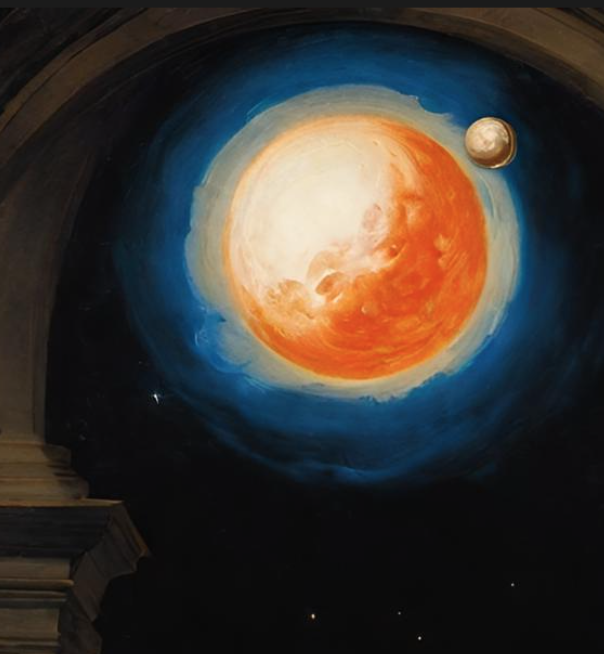
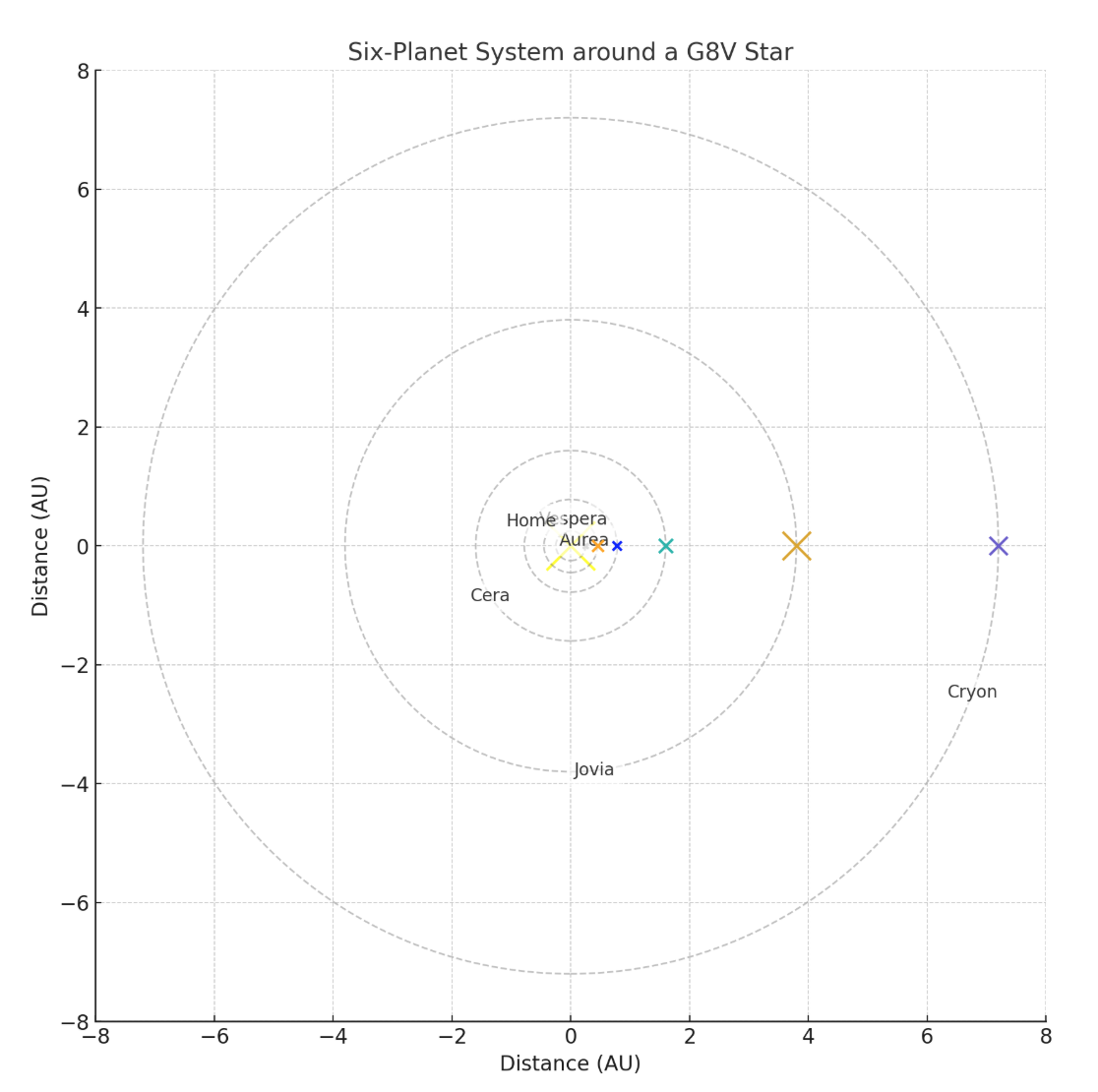
THE STAR SYSTEM A six-planet system orbiting a G8V yellow dwarf star slightly hotter than the Sun.THE SUNType: G8V main-sequence starMass: 0.90 M☉Luminosity: 0.60 L☉Temperature: ~5400 K (slightly orange in hue)Notable feature: A stable star with a long lifespan, ideal for fostering life.THE PLANETS (INNER TO OUTER)AUREA Type: Rocky, Mercury-likeOrbit: 0.25 AU (hot, close-in)Size: 0.35 R⊕ · 0.2 M⊕Notes: Scorched surface, thin or absent atmosphere.VESPERAType: Super-Earth, volatile-richOrbit: 0.45 AUSize: 1.5 R⊕ · 4.5 M⊕Notes: Thick atmosphere, possibly greenhouse-dominated; could resemble a “hot Venus.”HOMEType: Temperate, habitable-zone worldOrbit: 0.78 AU (year = 265 days)Size: 0.92 R⊕ · 0.78 M⊕Stellar Flux: ~99% of Earth’sClimate: Earthlike, mild greenhouse keeps liquid water stableMoon: Selene — about 0.8 lunar mass, 350,000 km away, stabilises Home’s tilt and drives strong tides.Notes: The home of the world of MiradoriumCERAType: Mini-NeptuneOrbit: 1.60 AUSize: 2.2 R⊕ · 8 M⊕Notes: Hydrogen–helium envelope over an icy/rocky core; possible exomoon system.JOVIAType: Gas giant, Saturn-classOrbit: 3.8 AUSize: 9 R⊕ · 127 M⊕ (~0.4 M♃)Notes: Ring system possible, numerous moons.CRYONType: Ice giant, Neptune-likeOrbit: 7.2 AUSize: 3.7 R⊕ · 47 M⊕Notes: Cold, methane-rich atmosphere, deep blue hue. Word count: 172
US English UK English Português do Brasil Deutsch Français Español Other languages Italiano Polska Pусский Slovenský