
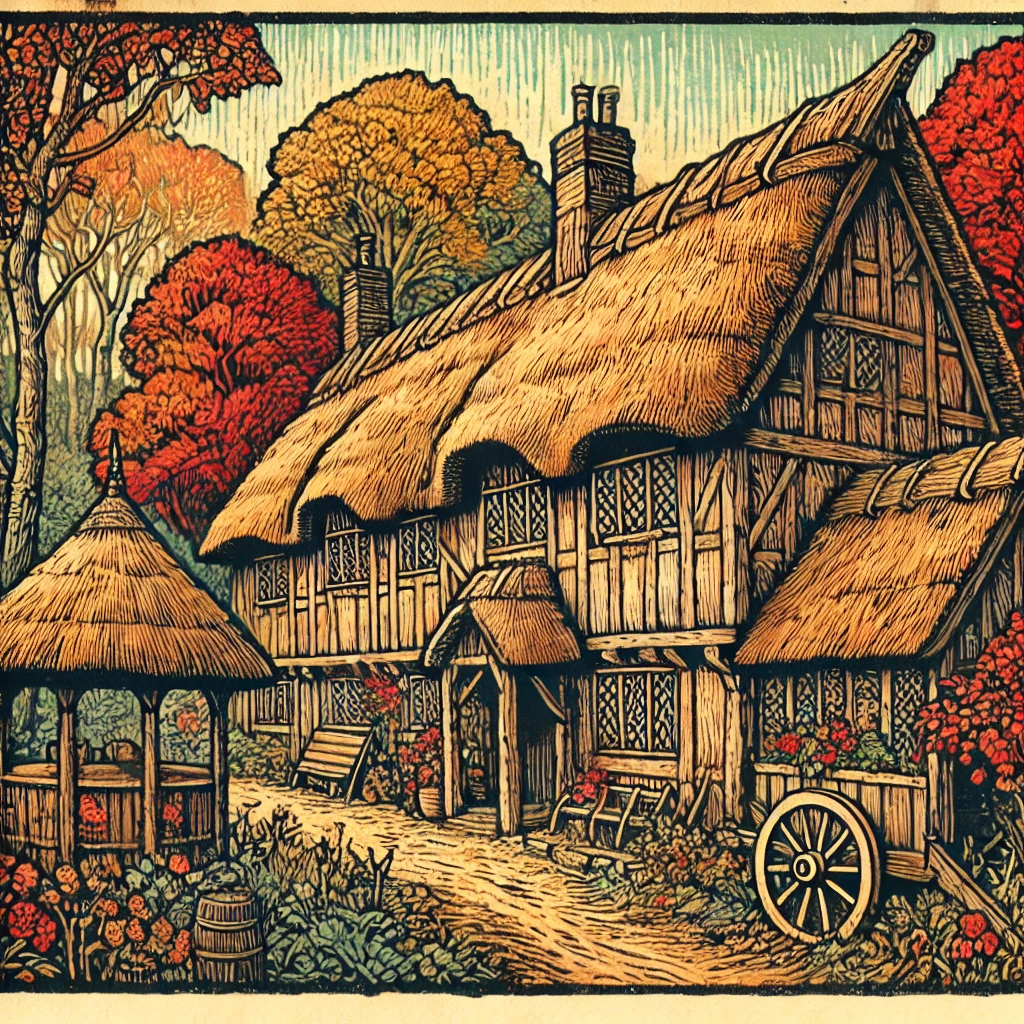
 Throughout western Lythia, the Innkeepers’ Guild has a monopoly over the operation of inns and taverns. The masters of this guild are mostly well-respected and influential guildsmen, partly because of the high profile of their establishments in a community and not least because of the covert links between some masters and the
 The inns and taverns of the misty isle do their best to cater to the culinary demands of their guests. Travelers will quickly find that both the variety of meals available and their price will vary with the season. Cooks employed at many inns can claim to rival the importance of master brewers.
Urban cooks rely on local guildsmen to supply a large portion of a kitchen’s basic needs. Millers provide flours, bread, and pies from specialized bakeries. Chandlers supply spices, sauces, and smoked and salted meats. Rural and smaller urban inns often purchase fresh livestock from local manors and from patrons seeking to barter—a dozen fresh eggs for a meal, a chicken or goose for drinks. Some inns have agreements with the local lord to purchase fresh venison from the lord’s Master of the Hunt.
Even with a ready supply of foodstuffs, a cook can have a difficult job preparing meals. A cramped kitchen with poor lighting, a rush-littered floor with a sparking fire, and guests endlessly attempting to nibble from cooking pots all serve to distract a cook. A wise cook is well armed with a long wooden ladle to sample their work and to beat unsolicited tasters. To this weaponry can be added a set of sharp knives and hooks, and a small whetstone is hung from the belt.
A well-equipped kitchen has a mix of iron, brass, and copper pots, molds, graters, slotted spoons, and turn spits, and a pedestal and mortar to grind spices. Crockery for baking and trenchers, platters, and pitchers for serving are handled by the scullery lad in most inns and taverns.
Menus
Because most traveling folk prefer meals of recognizable fare, inns and taverns sell common, similar dishes, complemented by seasonal produce and local delicacies. Hârnic travelers know what foods they enjoy, and avoid things exotic, strange, or overtly expensive.
Pottages are universal meals served at nearly every inn and tavern across Hârn. Inexpensive and easy to reheat and prepare, these dishes can be easily extended with additional ingredients to serve unexpected guests. Pottages are composed of varying blends of wheat, oats, and barley mixed with seasonal vegetables such as peas, beans, lentils, and cabbage, all of which are boiled in water. A few pottages may contain stock or sour ale and wine. Soups and stews are similar to pottage but have less grain and more vegetables, and often include small pieces of meat. Some stews never leave the fire, as bits and pieces of meat and vegetables are added to the bubbling pot every day.
Bread is a major part of most meals. Small loaves of bread accompany nearly every meal. Some places incorporate bread into a meal’s presentation by serving stews and pottage on a platter of bread called a trencher, avoiding use of a bowl. The most common loaf served is the shape and size of a large rounded fist and baked from a variable mixture of wheat, rye, or barley flour. A loaf of bread made entirely of wheat is rare in all but the best inns. Millers can earn a substantial income from baking standard “half-penny loaves” for inns and taverns.
Pasties and Pies are a common means to preserve foods for several days. Pasties comprise a pastry pocket stuffed with a suitable filling and then baked. Pies are larger and usually contain gravy or syrup that thickens when cooked.
Meat is seldom served as a separate dish. High costs limit most “meat dishes” to a few ounces of actual meat. Only inns and taverns catering to wealthy patrons serve roasts of meat. Pork is the most common meat served. Seafood (oysters, clams, mackerel, eels, and herring) comprise at least half of the menu in coastal inns. Mutton and beef are seasonal meats available fresh during the autumn and early winter. Rabbit, poultry, and wildfowl are available throughout the year.
Dairy products make up only a small part of meals. Local varieties of soft and hard “green cheeses” are commonly available at both inns and taverns. Butter and cream are normally restricted to larger urban inns. Eggs are typically boiled or scrambled.
Herbs and Spices are used by all cooks to impart color, flavor, and texture to their dishes. Some inns have herb gardens to ensure a steady supply. Hârnic cooks use parsley and eggyolks to add color to breads, pastries, and puddings. Sauces thickened with cream, cheese, or blood are commonly spiced with small quantities of garlic, sage, rosemary, and thyme.
Packed Provisions
For a fee ranging from a mere farthing to a penny or two, inns and taverns will pack provisions for a guest’s journey. Cheese, bread, fruit, and perhaps a meat pastie or slice of smoked ham are the most common provisions for short journeys. For longer trips, crackers, salted cheese, and smoked meats can be provided. Food prepared for long journeys must include hardtack, dried fruit, and dried or salted fish or meats that require boiling before eating.It is always wise to pack each day of rations separately to avoid cross contamination from food spoilage. Those who don’t bother with such precautions often end up with mild to severe cases of nausea, stomach cramps, or even food poisoning after eating a piece of cheese packed next to a chicken leg gone moldy. Most innkeepers and adventurers use an oilcloth as a wrap to keep packed foods dry. A flask or wineskin can be filled at the normal per-cup rate. Small kegs of ale can be prepared if sufficient notice is provided.
Some chandlers specialize in providing provisions that are packed in small casks for relatively easy transport.
