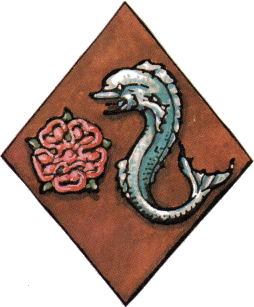
The Perfumers’ Guild has a monopoly on the manufacture and sale of soap, toothpaste, ointments, perfume, incense, and the like. Temples use perfumes extensively and make their own, but they cannot sell such work. The guild is very secretive about its arts and recipes.
To cater to the Courtesans’ Guild and Church of Halea extensive hygiene requirements master perfumer's run a thriving business. Cosmetics and perfumes are considered an art and perfumers take their trade very seriously since their products are so important to their character. A poor product will be judged harshly, and such a judgment would result not only in a loss of reputation in the community but the risk of a poor reception! To make sure they provide the very best, Osirian perfumers are extremely picky and goes to considerable length to acquire the finest natural ingredients, the most intricate of secret recipes and strict production methods.
For obvious reasons a master perfumers' book of recipes with detailed descriptions of top notes, middle notes and base notes, are a carefully guarded secret, on par with the spellbook of a student at the Shek P'Var.
Daily use of cosmetics and perfumes
Men and women of all social classes use cosmetics, although, the better products can only be afforded by the wealthy.
At dawn, as a morning ritual, Courtesans begin the day by taking a bath. Every household, no matter the class, have some form of a basin and jug for washing the hands and showering. The wealthy take aromatic baths. Common among most people are also foot baths, made of stone, ceramic, or wood. They wash hands, face, and feet before and after meals, before bed, and upon rising in the morning. Priests are expected to bathe three times a day. In the morning, after bath, come the application of a sunblock cream, and then men and women of standing apply make-up, derived from ochre and sometimes mixed with sandalwood.
Creams and oils is also used to preserve a youthful appearance and prevent wrinkling. Honey is applied to the skin to help heal and fade scars, and crushed lotus flowers and the oil from various plants (such as the papyrus) is used in making these applications. In addition to the health benefits of protecting the skin from the sun, these cosmetics ward off sand flies and other insects.
The most sought after and best-known perfume is kyphi. It is made of frankincense, myrrh, mastic, pine resin, cinnamon, cardamom, saffron, juniper, mint, and other herbs and spices (which of course is a secret to everyone but the perfumers). The scent is completely elevating, and those who could afford it are envied by those who could not. Courtesans love sweet, spicy perfumes that fill the air with a heady, long-lasting aroma, and kyphi is the most expensive and sought-after of these. Kyphi is so expensive that it is primarily used in Halean temples as an incense burned for the goddess. And by the nobility. The ingredients for kyphi are rare in Hârn and are typically imported from the southern and eastern reaches of the kingdoms around the Venerian Sea. Perfumer's and their partner mercantyler pay handsomely to guard their shipments.
Less expensive and more common perfumes are made from flowers, roots, herbs, and other natural elements, which are ground into a paste and then either combined with fat or oil for a cream or made into a cone of incense.