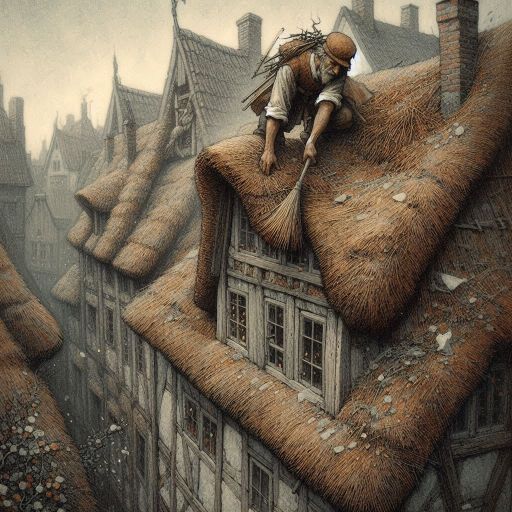
Thatchers are skilled but largely unrecognized laborers who specialize in roofing structures with straw, reeds, rushes, or sedge. As the primary method of roofing in rural villages, peasant homes, longhouses, granaries, and agricultural buildings, thatching is a trade rooted in necessity and sustainability. While tile, slate, and wooden shingle roofs dominate in wealthier urban areas, thatched roofs remain the standard in northwestern Lythia, particularly among peasants, monasteries, and isolated noble estates.
The trade is physically demanding, seasonal, and dependent on local material availability. Peak employment occurs in late summer and autumn, when harvested thatching materials are at their best, but work slows in winter. Thatchers compete with carpenters in guild-controlled towns, limiting their professional opportunities. In many cases, thatching does not qualify as a craft worthy of guild recognition, making thatchers more vulnerable to low pay, exploitation, and disputes over contracts.
Despite their often low social status, experienced thatchers are highly valued in rural communities. A well-thatched roof lasts decades, providing excellent insulation and protection from the elements. In some cultures, such as among the Ivinian, thatchers hold greater respect due to their vital role in maintaining longhouses, barns, and temples. The work receives patronage from nobles, monasteries, and landowners, who rely on thatch’s durability, affordability, and availability in areas where tile or stone roofing is impractical.