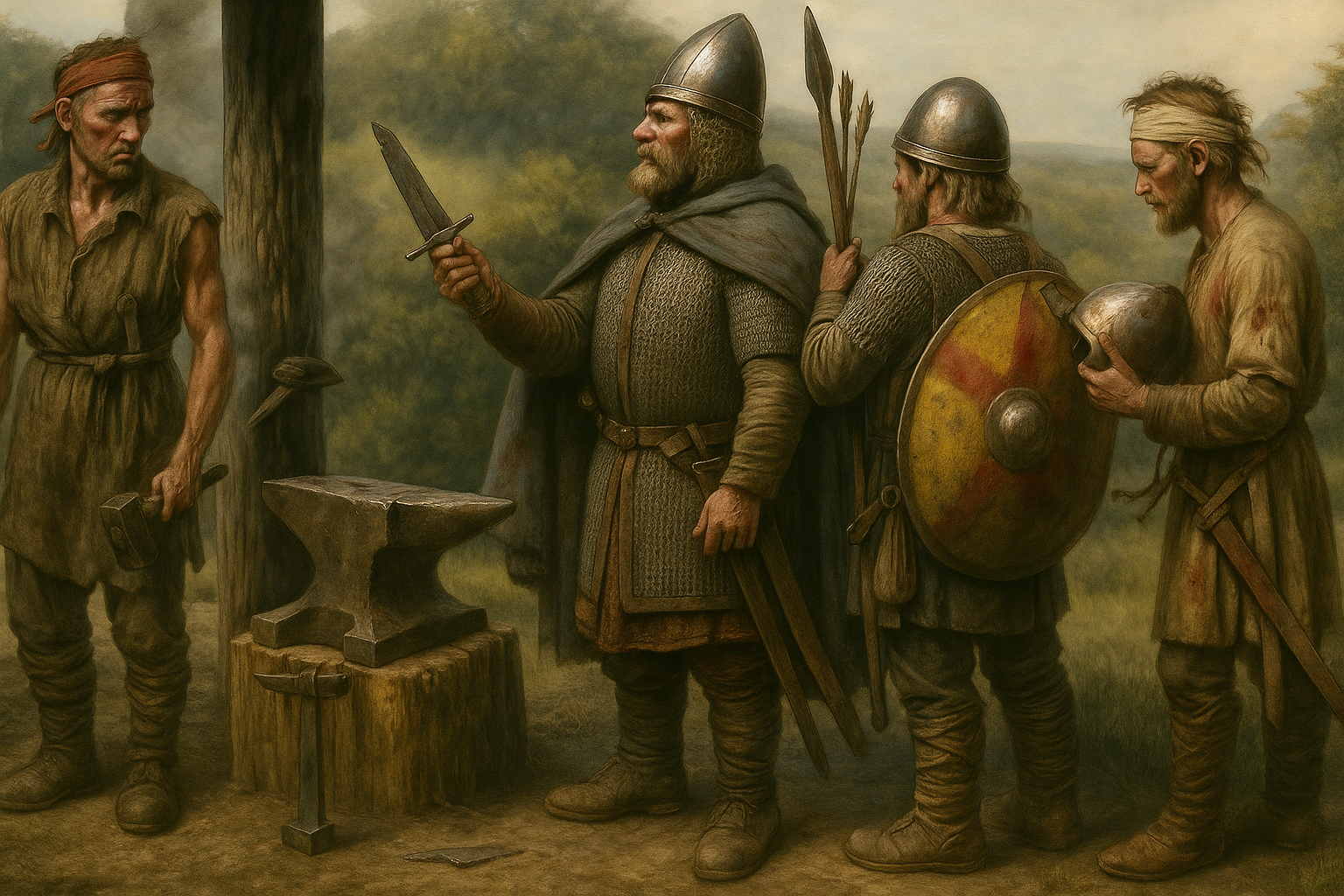
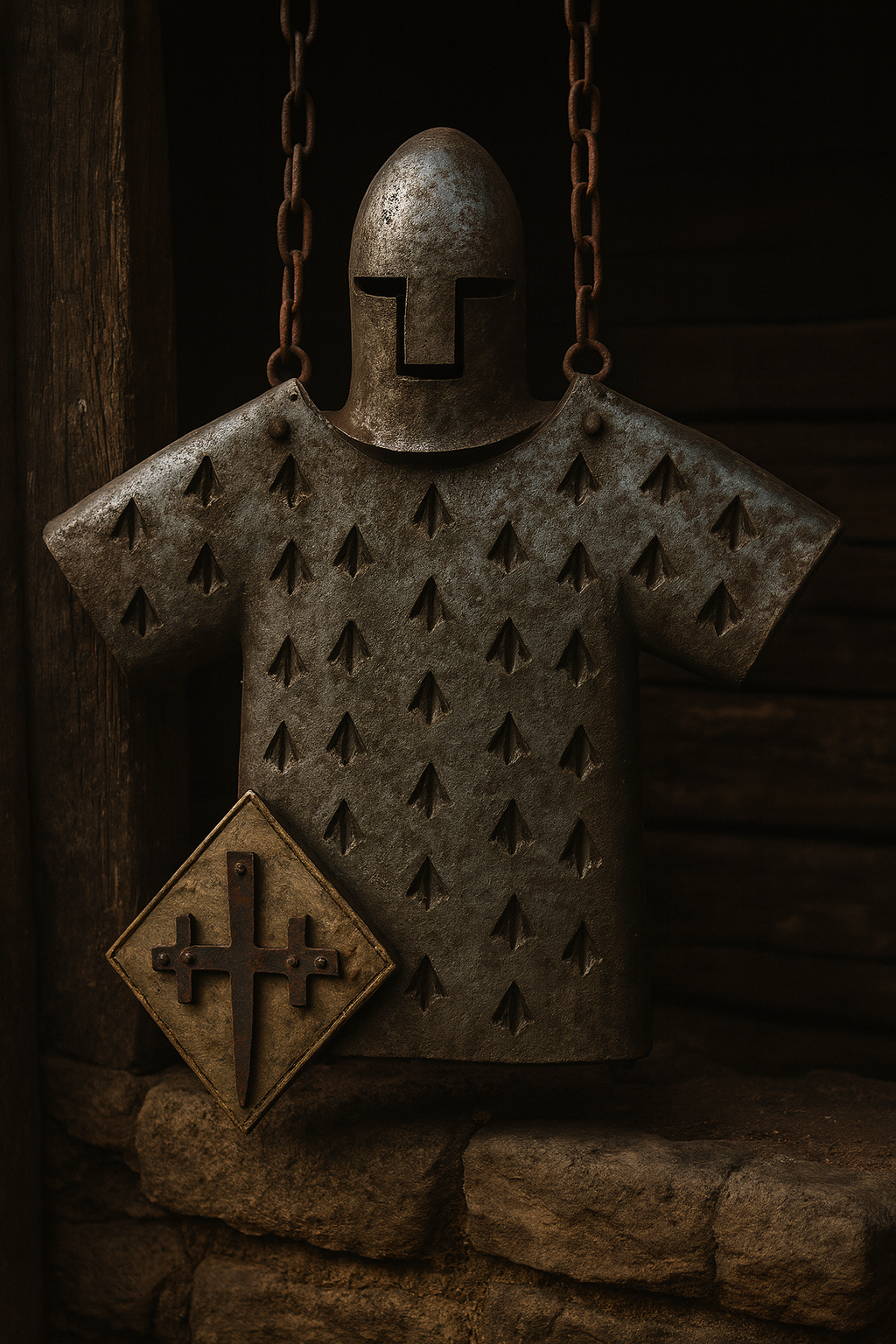
The Weaponcrafters’ Guild follows the normal customs and rules set out by the Mangai, the association of Lythian guilds. The Hârnic realms have their own chapters, each with a guildhall (often the chapter master’s workshop or house) located in the capital city or other important town. A chapter council made up of all freemasters (those who own a franchise) elects one of its members each year to be the grandmaster of the chapter. Many grandmasters serve for a number of years, some for life.
The guild has the usual ranks of master, journeyman, and apprentice. Apprentices are taught the basic skills of the craft and whatever aspects their master chooses to teach them of their primary discipline. The length of an apprenticeship varies. For example, learning the skills of a bowyer takes a couple of years but those of an armorer can take seven or more.
A journeyman is expected to work for several masters over time to build up skills in multiple disciplines. The balance between working and learning is a common source of tension. A journeyman expects to learn skills he doesn’t already have, but some masters wish to exploit their journeyman’s existing skills rather than teach him new ones. A journeyman who is a skilled armorer may take a position with a master swordsmith hoping to learn more about bladesmithing, yet find himself doing mostly armor repair jobs the master doesn’t want to do himself. Disputes of this nature are resolved by the guild chapter council.
To achieve the rank of master, a journeyman collects recommendations from at least three masters under whom they have served and produces a “masterpiece” in one discipline for validation by the members of the chapter council. A newly named master may try to obtain his or her own franchise but will more commonly accept bonded service with another master while they continue to improve their skills and save their coin.
Weaponcrafter Locations
There are relatively few weaponcrafters on Hârn but most cities and towns have at least one. Some are freemasters with their own franchises, but most are bonded masters employed by the local ruler or military leader or by a freemaster. Fighting orders and armies often have their own weaponcrafters to accompany them on campaigns and maintain their armor and weapons.
Weaponcrafters can be hard to find in rural areas. There are few freemasters and not all manor lords can afford to support a bonded weaponcrafter. People in these areas often must travel to the nearest city or town to obtain the goods or services of a weaponcrafter.
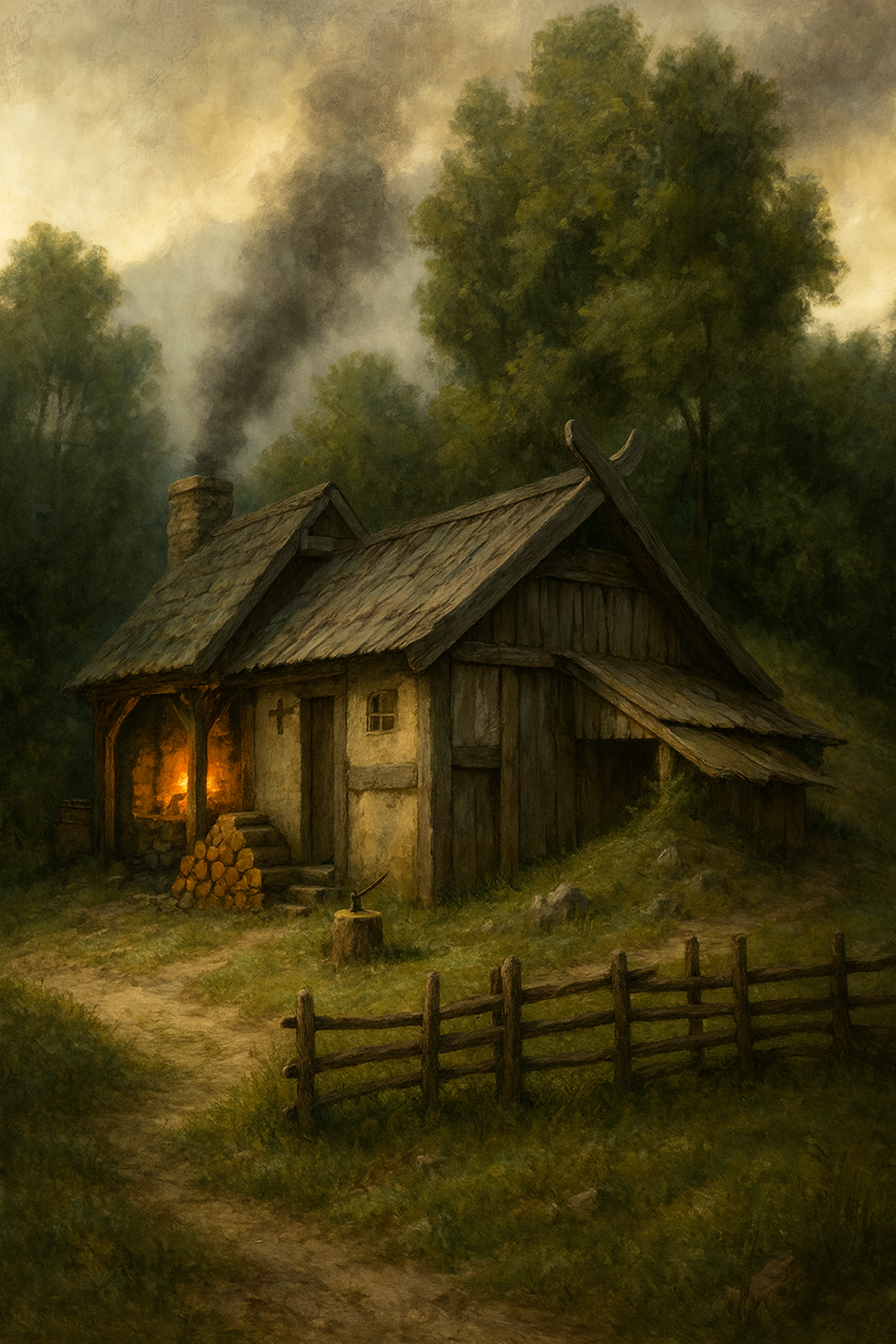
Specialization
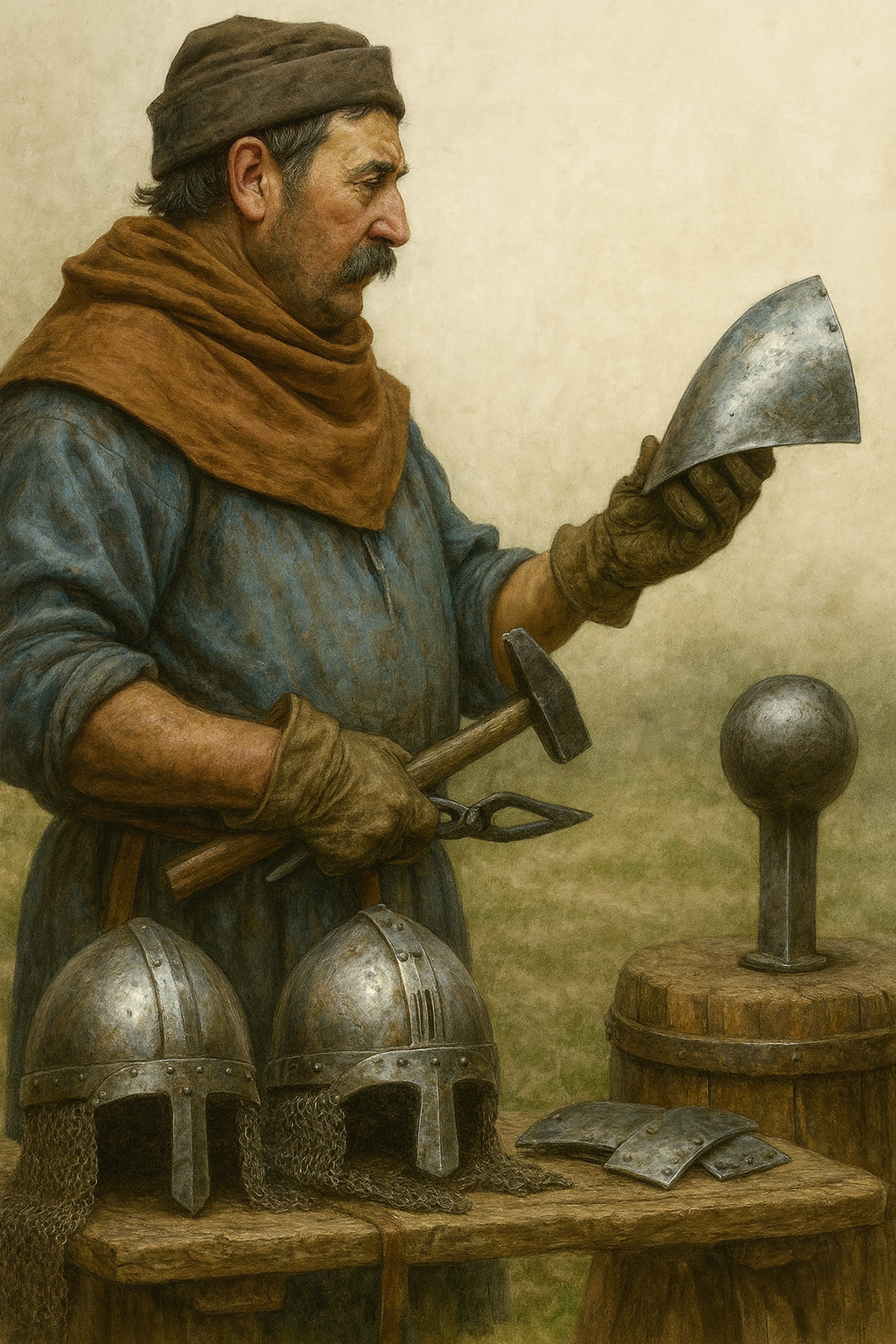
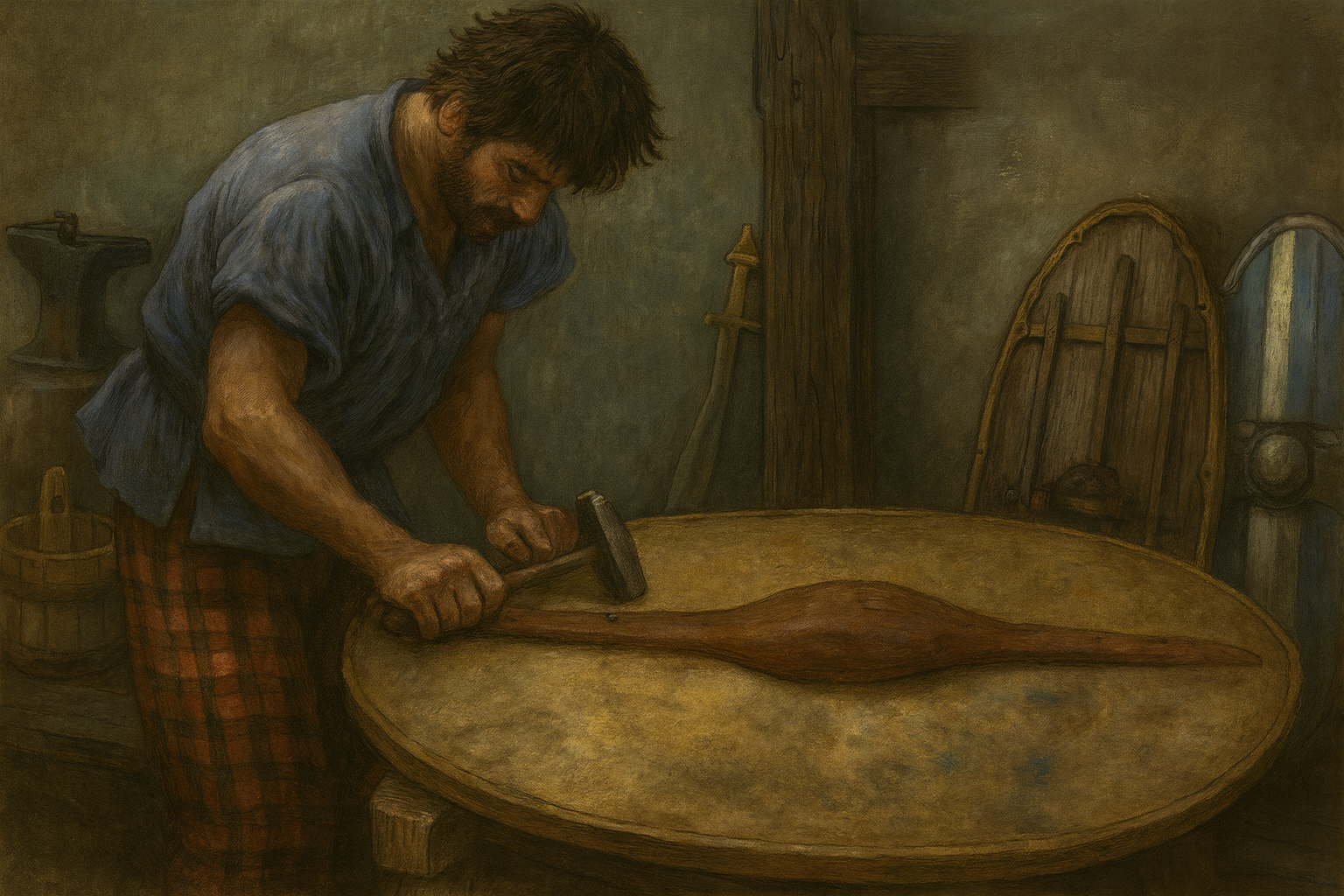
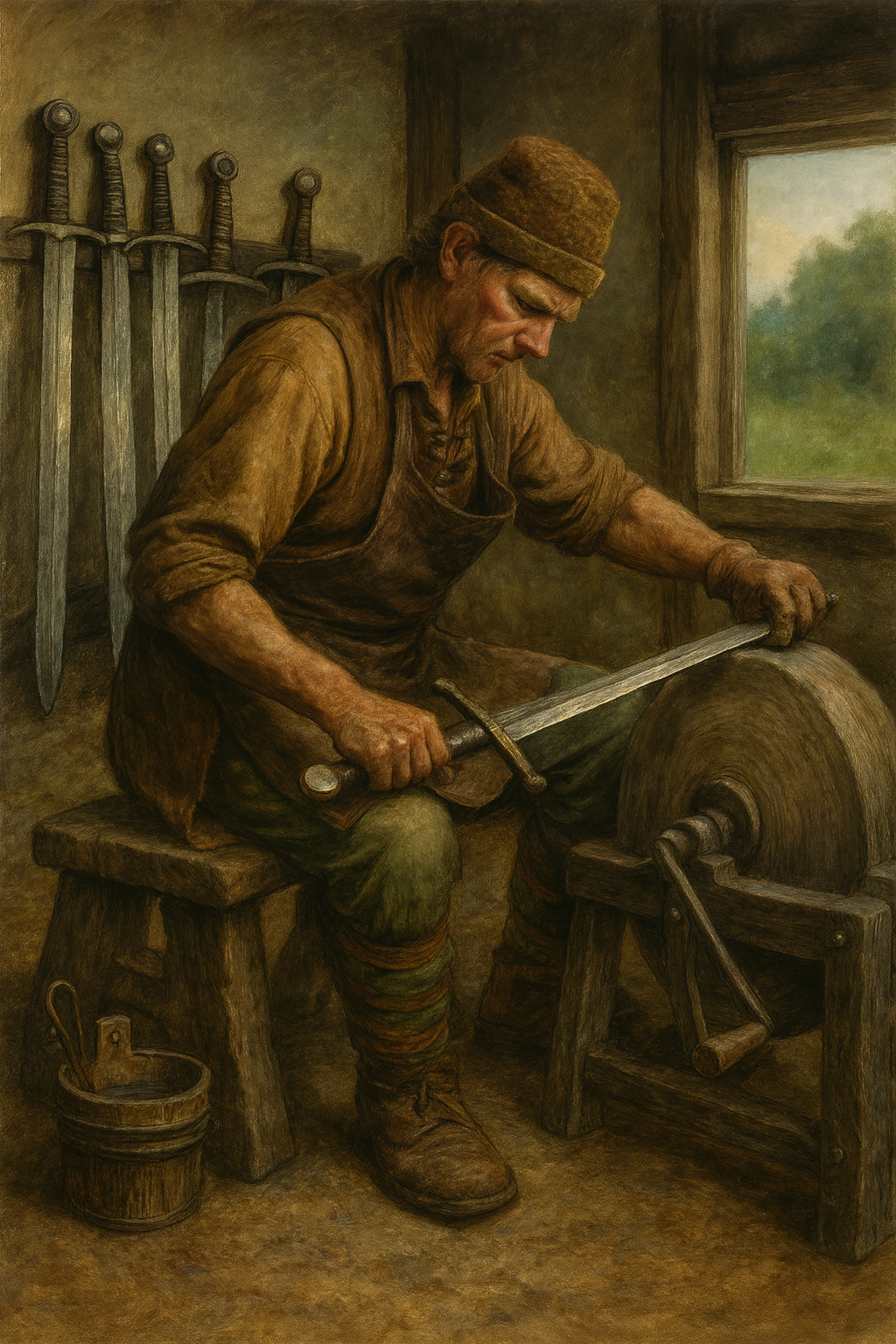
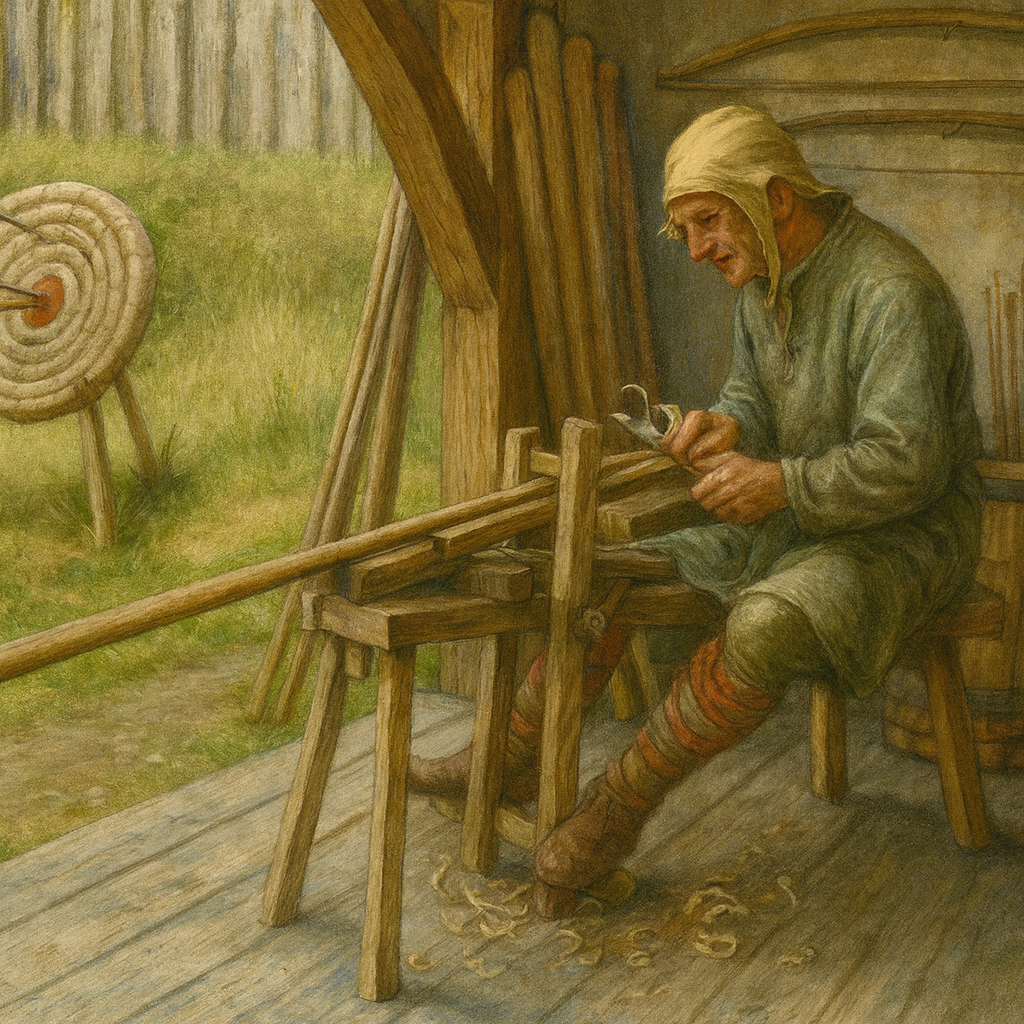
Weaponcrafters may work across the entire spectrum of their craft, but the majority specialize in one of five disciplines: armorer, bowyer/fletcher, shieldmaker, swordsmith, or weaponsmith.
Specialization is a matter of interest, not restriction. Any weaponcrafter, regardless of specialization, is free to make any item under the guild’s purview.
Income
The wage rates below are for bonded masters. Journeymen receive 30–60% of the list amount and apprentices will likely get only room and board and perhaps a few coins for pocket money.
• Daily 18cp
• Monthly 108sp
• Yearly 1,296sp
Annual Costs
All masters, whether bonded or free, pay 10% of their income as guild dues. Freemasters must pay for their workshop, tools, and maintenance, as well as general costs of running the franchise. The approximate annual costs are as follows:
• Bowyer or shieldmaker 720sp
• Armorer (cloth/quilt only) 720sp
• Armorer (leather or kurbul) 840sp
• Weaponcrafter or swordsmith 960sp
• Armorer (all types) 1,440sp
Opening a Franchise
To ensure the livelihood of its masters, the guild limits the number of franchises. Many masters, either by choice or financial circumstance, never obtain one.
A prospective freemaster must persuade (or bribe) the masters in the local chapter to award him a franchise, then pay a new franchise fee (720gp is typical for most areas of Hârn). A share of this fee may go to other masters in the area to compensate for potential loss of business. A weaponcrafter who inherits a franchise must pay a transfer fee, typically 120gp.
Working Time
Regardless of how many hours a shop is open for business, a crafter’s productive time averages roughly six hours per day. Most masters have sufficient work for only about three quarters of the year.
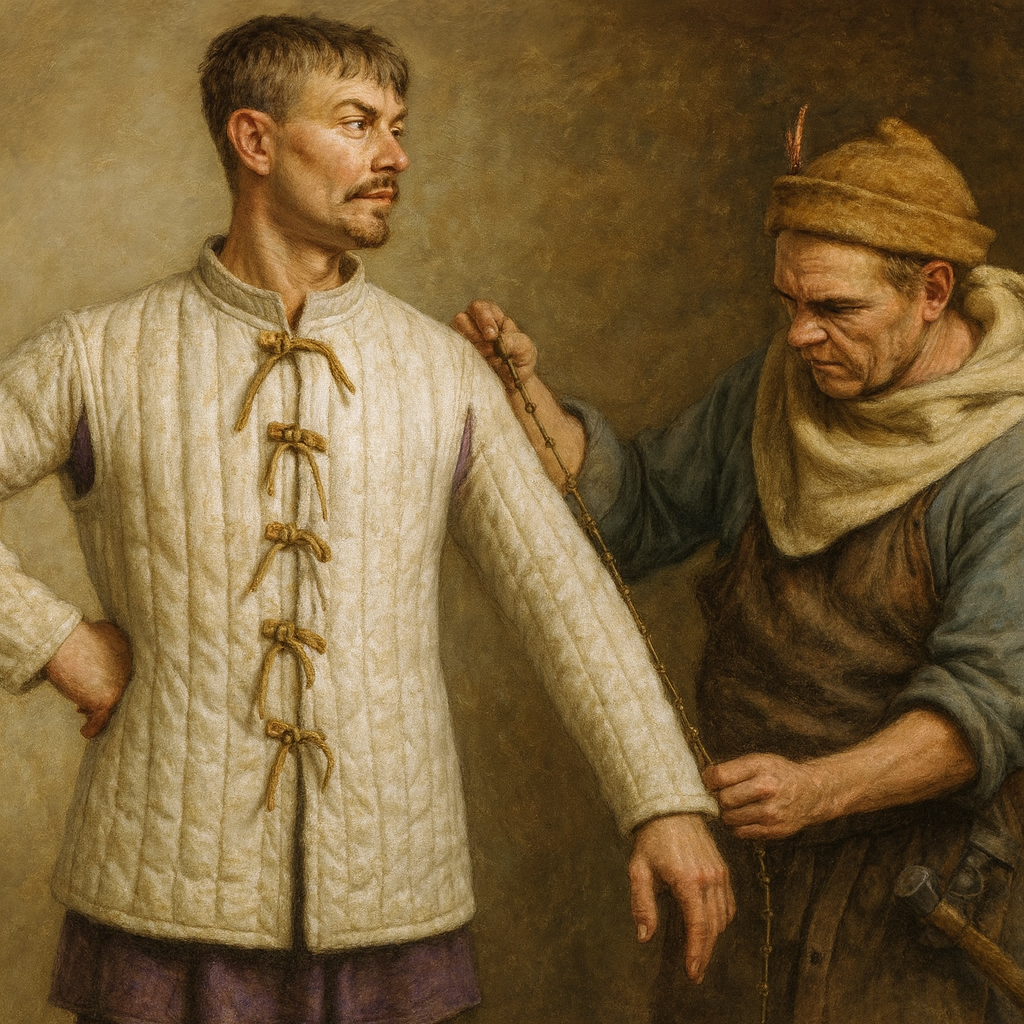
 A Custom Fit