Salt is an essential part of life. It is used in many ways, from preserving and flavoring food to fixing dyes in cloth and even for preserving the dead. Salt is mined in many places across Hârn but the island’s largest known source of rock salt is the area around Imrium in the Thardic Republic. The snow-white Thardic rock salt is in demand because of its superior purity over rock and sea salt produced in other regions.
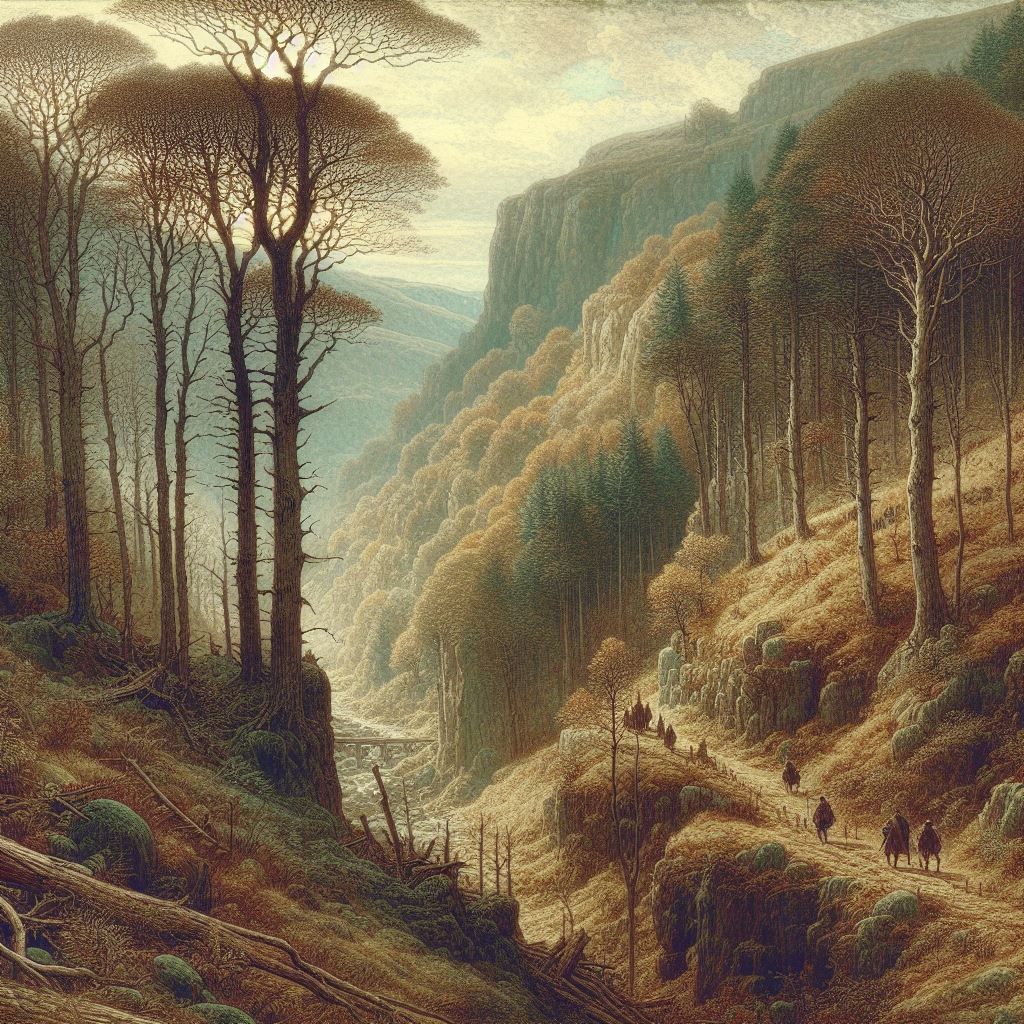
Trade in this precious mineral has given rise to the Salt Route, the main trail between western and eastern Hârn. The dangerous trail crosses the territories of four barbarian nations and countless rivers and streams as it covers the 170 leagues between Coranan in the Thardic Republic and Tashal in the Kingdom of Kaldor.
Large, well-protected caravans carry salt and other goods from western Hârn to Tashal each spring, returning in early autumn with goods from eastern Hârn and Lythia. Merchants use the trail throughout the year but most are reluctant to risk its dangers in small groups. A few companies of the Ramala Legion sporadically patrol the trail east to Trobridge Inn, while Kaldoric forces intermittently guard it as far west as the Farin River. Neither state is able to exert as much control as the Gozyda, Kath, Chelni, and
Tulwyn tribes who live along its path.
Pack animals, carts, and wagons from the west carry salt, brasswares, and luxury items such as perfumes, luxury garments, and fine linen. A typical caravan has between 75 and 150 animals, a score or so merchants, and two to three dozen animal handlers and servants. Protection is provided by mercenary guards, whose number depends on how restless the barbarians are expected to be that year. Most years, 40 to 60 guards are hired but 200 or even 300 is not unknown.
Several powerful mercantylers in the Thardic Republic and Kaldor are involved with the caravan trade. Although any mercantyler may organize a caravan, the complexity involved has led to the custom of using caravan masters. These members of the Mercantylers’ Guild are often ex-military officers who possess the skills to get the job done; some have special relationships with tribesmen and guildmembers.
The trail running between Tashal in the east and Coranan in the west. Although many goods now move in both directions, the trail was so named because it was first used to transport salt from Thardic Republic to Kaldor. Most of the traffic is carried by two great annual caravans, one in spring bearing salt and other goods from western Hârn to Tashal, and the other in early autumn conveying the products of eastern Hârn and Lythia to Coranan. At other times, smaller groups of merchants use the trail, but most are reluctant to risk the danger posed by the tribesmen along the way. West of the Farin River, the trail is sporadically patrolled by a few companies of the Ramala Legion. The trail east of Trobridge Inn is intermittently guarded by forces of the King of Kaldor. Neither state is able to exert as much control as the Kath, Chelni, and Tulwyn tribes.