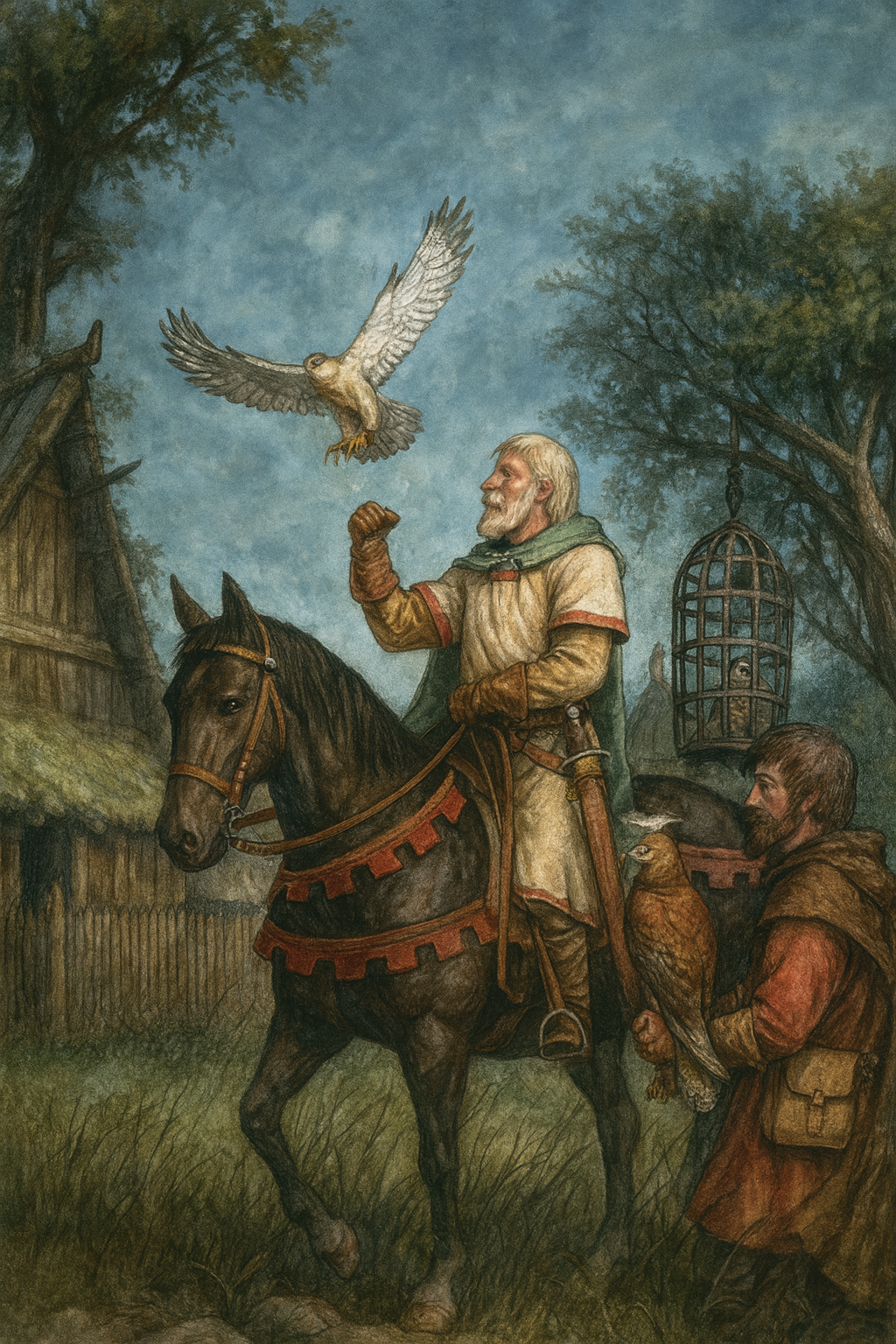
The basic economic unit arrived at by subinfeudation. Manorial Fief (or Feoff) range from 600 to 3600 acres and are generally considered synonymous with a Knight’s Fee. Manors may be held by Knights who owe fealty and service to Lieges, typically Barons or Earls, or may be held directly by such greater lords. Some manors are held by religious Clerical Orders or Fighting Orders; a few are held by wealthy commoners. An absentee holder appoints a Bailiff of the Hundred to govern in his stead.
A manor might contain a manorhouse, at least one village of 10–30 families, and a mill owned by the Guild of Millers and Millwrights. The manorhouse is usually a fortified wood or stone house built around a great hall surrounded by outbuildings and a palisade or outer wall. The house is often situated on a hill and may be surrounded by a ditch, moat, and/or earthworks. Each peasant has a cottage and adjacent garden.