/src/w/37862/legacy/70374353-0450-5c01-b68c-5c0c00c624d3.jpg)
/src/w/37862/legacy/70374353-0450-5c01-b68c-5c0c00c624d3.jpg)
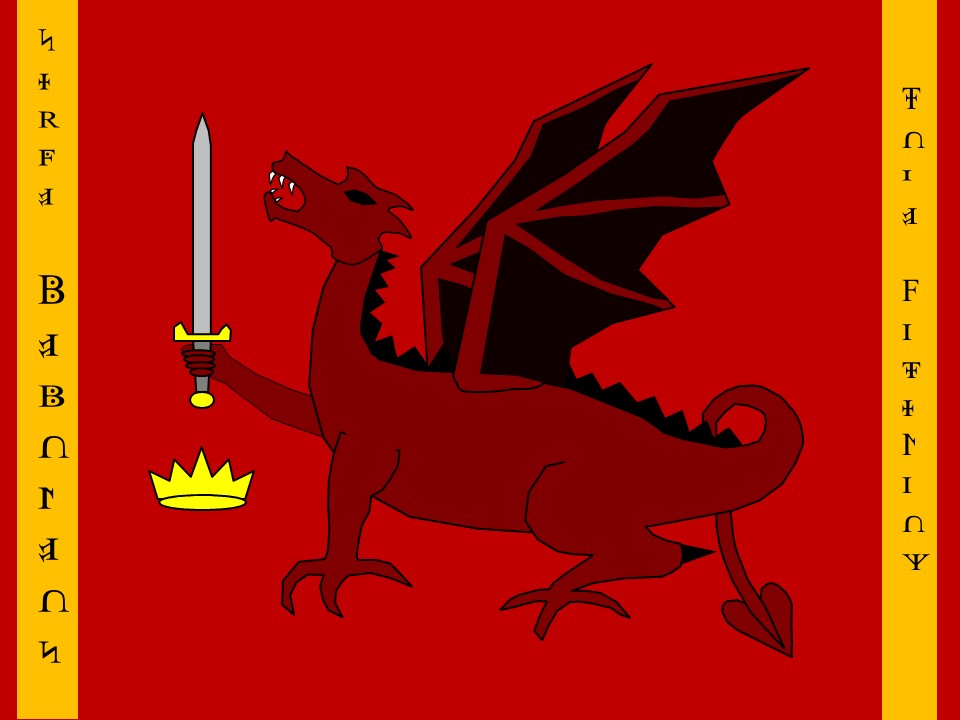
Location
Varencia sits on fertile river plains on the south eastern edge of the Aes Draconis (the Dragon Sea). A standard temperate climate provides for a normal four seasonal year. The eastern edge of Varencia is bordered by the dense and dark Venifica forest, and the western edge runs into the Mistglen hills. The central and northern portions of Varencia meet the Aes Draconis sea and curl their shoreline around Bronze Bay. The southern borders of Varencia slowly turn into brushland and wilderness that extend to the Rampart Ridges, which act as the border between Varencia and Landfall.
History
Varencia was formed after the ancient Wensharian civil war by the victorious rebels and their supporters. The rebels formed a new city-state, dedicated to protecting the area from the remaining evils of the Wensharian Empire. This city-state soon established a center of calm and safety in the middle of the chaotic aftermath of the wars. Like a beacon of light, it soon established an era of freedom and enlightenment.
Varencia, while greatly diminished in size from the glory that was the Wensharian Empire at it’s height, slowly reclaimed the central area around Brass Bay. With the help of their new gods, they eventually became the dominant power in the area. Today, Varencia occupies the central portion of the Alyndrican continent, providing Imperial rule over the kingdoms of Crondor and Vaasa. The monarchy of Sunaria and the Free State of Landfall are considered members of the empire, but have the right of self rule.
Culture
The culture of Varencia is a Greco-Roman mix. Governmental buildings and temples feature smooth columns and pavilions in their design. The citizens and nobles of Varencia feel they have an artistic heritage and this is reflected in the various statues, gardens, and fountained pools built throughout their villages and towns.
Citizens and nobles prefer robes, tunics, and capes, and live in mainly live in houses with walled gardens and waits high walls. Servants and working people commonly wear pants, shirts, or tunics, and live in varied styles of housing, to include mass population tenements or blocks of housing.
Although slavery is not allowed in the Varencian Empire, certain rules do allow for indentured servants. These who hire or keep these servants are expected to take care of them according to their station, i.e. provide room, board, and fair wage. Misuse of servants is overseen by the courts, and some in cases servants have been released from their bonds when maltreated. Some families have a proud history of servitude, with others it’s the only work they can find.
Weapons preferred by the Varencian empire are the gladius, the longsword, and various types of javelins, spears, and halberds. The most prevalent type of armor is the breastplate, and half-plate armor. The Imperial armies are almost always armed with a breastplate, a gladius, a javelin, and a small shield, and have perfected their use in military maneuvers.
A special feature of the armies of the Varencian empire is the dozen or so young to adult bronze dragons that serve with them in the legions. These dragons are part of an extended clan that lives in the rocky waters off the coast of Varencia. Ancient Wensharia had a pact with an ancestor of these bronze dragons called Neolithic, which was broken during the Wensharian decadence and civil war. The return of the younger bronze dragons to serve with Varencia is seen as a sign that the empire is on the path of righteousness.
The religion of Varencia is a mixture of the newer Imperial gods that assisted the kingdom in their revolt against the wicked and decadent Wensharian empire, and the older gods that were prevalent in the area. The Imperial Temple , with its leaders the god Tyr and his mother Chauntea are the most common religion in the land and is considered the state religion. The Imperial Temple is concerned with the governing of society and the well being of the people, and is focused on freedom and rights for the greater good. The Pantheon (remnants of the Wensharian gods) are more concerned with philosophy, reason, and intellect. Scattered about Varencia, mostly in the farmlands and provincial areas, are temples to the Old Faith gods of nature and agriculture, similar to the religion in Landfall. Varencia is also home to the Draconic Dogma, a temple that worships the three gods that guard and protect the cosmos. While not as prevalent as the other faiths, and mainly considered a fading religion, the draconic faith, especially the order of Bahamut is greatly respected among the populace. The inclusion of Tiamat in the faith, and her significant presence in the religion of the Anguis Imperium does cause some friction.
The hereditary emperor is the ruler of the Varencian Empire. He rules in conjunction with the senate (a council of representatives from the various provinces of the empire. The crown prince/princess of the empire rules the Principality of Crondor once they come of age. Representatives for the senate are elected by the people, and confirmed by the emporer, who also may chose from the candidates if there is no majority. Imperial Legates rule provinces, and Magistrates rule cities and towns. Imperial Legates are also used as representatives of the emperor in allied nations.
Wizard Guilds
The Imperial Academy is the largest and most powerful group of arcane practitioners in Varencia. They are mainly multi-classed practioners of both arcane and divine magic, and follow a philosophy originated by the teachings of Rao. They have sworn binding oaths of allegiance to the empire and the emperor. While mostly neutral in outlook, their servitude and dedication to the empire has won them the respect of the populace.
Banned in the Varencian Empire, the Brimstone Society is a an underground group of sorcerers and diabolists that specialize in the summoning and binding of demons/devils, rumored to have originated the downfall of the Wensharian empire. Proof of participation in Brimstone Society brings a mandatory death sentence anywhere within the Varencian empire.
Fighter Organizations
The Gladiator’s Guild is popular across the all of Varencia and most of the surrounding kingdoms and countries. Participants may be there for various reasons, fame and fortune, debt, punishment for crimes, etc. There are one on one combats, spectacles against dangerous beasts, and multi-participant war games. There is much betting and most individuals in the empire follow the career of their favorite fighter with great enthusiasm. The games in Varencia are much more professional and less lethal than the ones in the Anguis Imperium, but accidents do happen.
Current Events
The Anguis Imperium and the Varencian Empire are currently in a state of uneasy détente. The wilderness between the two countries that used to be the old kingdoms of the ogres is a unofficial warzone. Scuffles between forces occur with alarming frequency, yet nothing to the point of causing another decades long costly war like the one that ended nearly 30 years ago. The Varencian Empire is becoming increasingly concerned about the rise in piracy in the area of the Aes Draconis, and has sent numerous envoys to the Anguis Imperium, insisting something be done. The Anguis Imperium replies that it is suffering from piracy as much as Varencia, and that they are aggressively pursuing the matter.


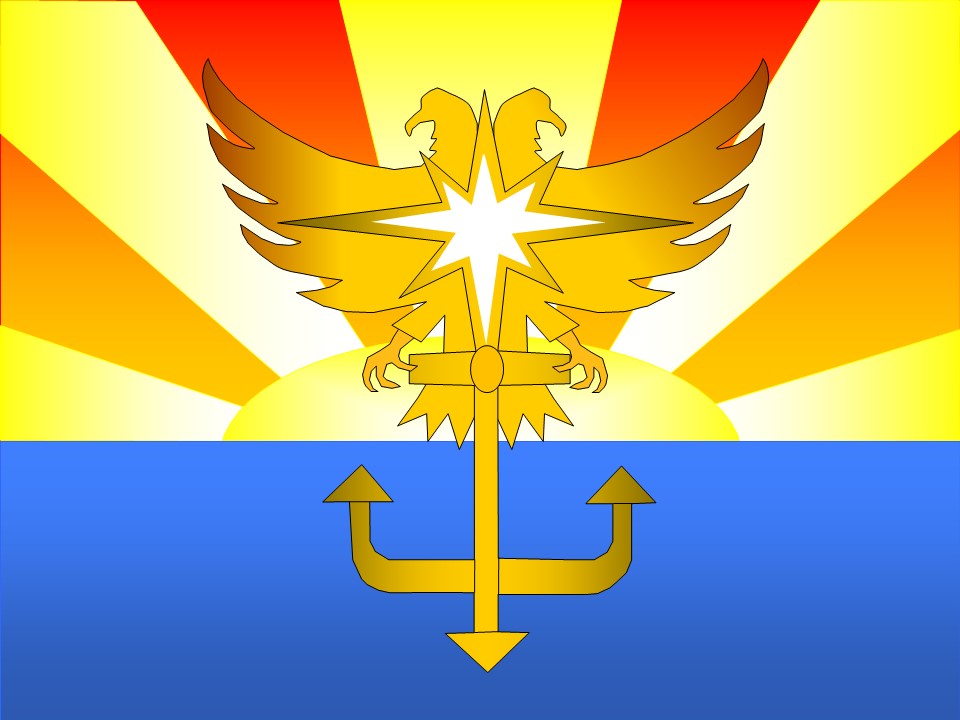 Location
The Free State of Landfall sits south of the Varencia , on the northern edge of Falco Bay. A jagged chain of mountains called the Rampart Ridges form the eastern boundary and the northern boundary of the free state. The northern Rampart Ridges form a barrier between Landfall and Varencia, while the eastern Rampart Ridges separate Landfall from the unexplored wilderness beyond. The western edge of the Free State of Landfall is another slightly lower chain of mountains called the Thundyre Mountains, beyond which lies the dreaded Trollfen Forest, the Blasted Plateau, and the long dangerous road to Sunaria Sunaria. The climate of Landfall has the standard four seasons, with the occasional extremes in summer and winter.
History
Landfall grew from a single city outpost of a vanished kingdom to a country with a resilient and strong populace, fiercely protective of their right to self-rule. Although once dominated by the Wensharian empire at the height of it’s decadence, Landfall threw off the yoke of oppression during the Wensharian civil war. Many years later, the newly formed Varencian empire eventually annexed the kingdom of Landfall during it’s war with the Anguis Imperium (evil survivors of the Wensharian civil war). After the goblin wars of recent history, Landfall was officially designated a free state by the Varencian Empire in recognition of their contributions to multiple wars and years of foreign rule.
Culture
The culture of the Free State of Landfall is a mixture of medieval and middle ages. Most older buildings are built of granite and rock that is abundant throughout the area, with wooden or tile roofing, while newer buildings tend to be made of wood. People in Landfall wear clothing of all types, with cloaks and hoods being fairly popular in the countryside. The most popular clothing colors in Landfall are blue, yellow, and white.
Citizens in Landfall are considered free people. There is no system of slavery allowed in Landfall, although a form of contract servitude exists, where services and labor can be promised for a period of years in return for land, housing, or things like an apprenticeship. There is an upper class of nobility composed of old families and newer merchant types. The middle class is the largest class, while some of the larger towns and cities have a poor lower class living in slums.
Weapons favored in Landfall are the longsword and the broadsword. The longsword is the most popular as the broadsword is considered an archaic style weapon. Most common weapons can be found for sale, in addition to some locally unique weapons, such as the two-bladed sword, the sword-axe, and the sword-staff. Shortbows and crossbows are also common. The most common armor is leather, with scale and chain mail the next most popular. Shields of all types are fairly common.
Religion
The most common deities in the rustic/countryside areas of Landfall are the Old Faith a nature/wind based group of deities that tend to the natural order of the world. Unique to Landfall is the Temple of Light , a church built upon the worship of the god Pelor. Pelor is considered a lost or dead god throughout the rest of the continent of Alyndrica, and Landfall is the sole remaining center of worship for his faith. The Imperial Temple (official religion of the Varencian Empire) has semi-common temples throughout Landfall, but is nowhere near as popular as the Old Faith or the Temple of Light.
Leadership
The King of Landfall (King Fenris Rogear) is the hereditary ruler. As king he is the leader of the House of Lords, and commander of the armies. The House of Lords is made up nobility, merchant, and craft representatives. These representatives are not elected, they are appointed by the existing House when there is a vacancy after showing they have the support of an important segment of the populace. House members are normally appointed for life, unless impeached by unanimous vote of the council, or removed by the king and a majority of the House. The House of Lords consists of 12 members and the king.
Organizations
Wizard Guilds
The Stellar Guild is a magic guild of wizards that have their academy in the city of Landfall. These wizards are normally scholarly in nature and specialize in astronomy and using the stars to discern patterns in the world. They normally dress in gray-blue robes and can be seen throughout the city of Landfall especially the nighttime and early morning. It is estimated that there are as many as seven full members, with a various number of apprentices and servants.
The Council of Magic is a loose organization of magic users headed by the court wizard Tazannir. The council was developed to advise the king and the House of Lords on magical matters, but does not answer to them any more than any other free citizen of Landfall.
Fighter Organizations
The Knights of Pelor are a group of paladins that follow Pelor and the Temple of Light. They work closely with the armies of Landfall as needed.
The Landsguard are elite fighters and soldiers tasked with the day to day policing and protecting the city of Landfall, separate from the armies.
The Highguard are promoted from the ranks of the army and the Landsguard and are the personal legion of the king and his family.
Current Events
The Free State of Landfall is currently at peace and hopes to have things stay that way. The goblin wars of their grandfathers are long over, and no new enemies are apparent. There is a concern about the rise of piracy in and around Falco Bay. In addition, trolls from the Trollfen forest have made the overland route to Sunaria increasingly dangerous. Merchants and explorers have returned from beyond the Jevveled forest and the wilderness to the east with riches and tall tales, while some have not returned at all. Mysterious ruins have been found near the headwaters of the Nepthys river. And as usual, stories abound about undead and witches near Valhingin graveyard. The elves of the town of Canticle send tales of abnormally large snakes, and an increase in wyvern activity in the eastern Wyvern forest. But for the average Landfall citizen there is really nothing to worry about except the occasional bad weather, and the rumors of the governor of Tarno’s increasing independence. All is well in the Free State of Landfall.


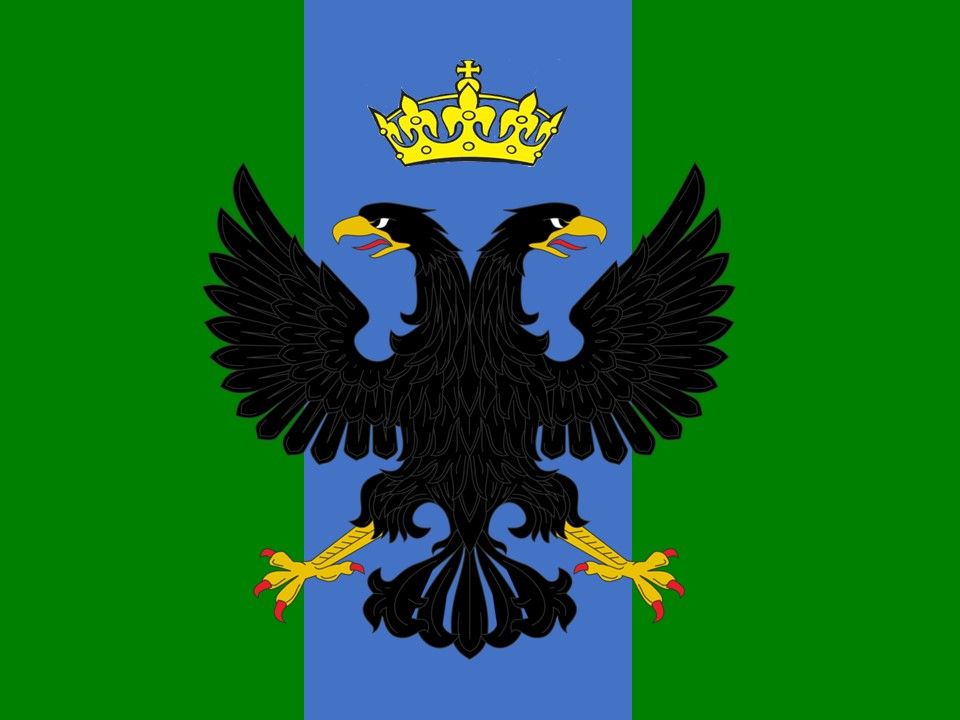 Location
Chrondor is an agricultural and mercantile state to the west of Varencia . Its northern shores lie adjacent to the Azhure Sea, the inner sea of the Alyndrican continent, and its western side borders Crevice Bay, a rocky and treacherous body of water. Several dangerous swamps and a large natural escarpment separate it from the bulk of Varencia. The repaired remnants of the ancient Wensharian Imperial highway cross its southern borders, providing a fairly safe route for trade and commerce. Chrondor sits at a confluence of natural wind and water currents that cause it to experience an above average amount of rainfall and foggy mists than other kingdoms in the region.
Culture
The culture of Chrondor tends to emulate the middle ages, leaning slightly towards a renaissance, with merchant lords, innovations in trade and finance, and a widespread support for the arts and philosophy. Chrondor has a higher incidence of literacy than most other kingdoms within the Alyndrican continent. Buildings are made mainly of stone and and wood, and tend to be multi-story, with peaked rooflines. Dorians, as some tend to call themselves, mostly dress in shirts and pants of green, brown or blue day to day. With the emphasis on the arts, new styles and colors of clothing come and go with the passing seasons/fads.
Weapons and Armor: Dueling is popular in Chrondor, and as such swords such as the gladius, longsword, rapier, cutlass, are very popular. Chrondor also favors dueling styles and two weapons fighting, making light off-hand weapons such as dagger or main-gauche popular. To support such styles of fighting, light armor (leather, padded, studded leather) is highly preferred.
Religion/Philosophy: The Imperial Temple , the state religion of the Varencian Empire, is very popular within the lands of Chrondor. While Chrondor is home to the main temple of Midas, god of merchants, many of the populace follow and revere the leadership of the Imperial Temple, Tyrand Chauntea.
Organizations
Fighter Organizations
The Society of Swordsman is a loose organization of beings dedicated to perfection in the use of swords. Everything about swords is fascinating to them to such a degree that they devote their lives to the study of swords and their use. Swordsman have a ranking system that they use to gauge their progress against others who share their interest. Much like a martial arts style they are spread across the world with the most skilled among them famous even to non-swordsman. One of their largest and more well known schools is in the kingdom of Chrondor.
The Merchant Princes are the ruling council of the most powerful mercantile guilds in Chrondor. They are involved with trade both over the land and across the sea.
Structure
Chrondor, being a principality of the Varencian Empire, is ruled by an Imperial Legate, who is normally the 2nd in line to the Imperial throne of Varencia. The legate rules in conjunction with the Merchant House of Lords, a council of nobility and merchant lords that numbers from a minimum of 25 to a max of 50. The House of Lords "can" override the rule of the Imperial Legate, but that in turn can be overruled by order of the Imperial throne itself. In practice, it rarely comes to that, as most policies and matters of state are thoroughly discussed prior to any decree or major change.
History
Chrondor was a loose federation of city states prior to the rise of the Wensharian empire. Those city states had been the remnants of an earlier kingdom that had fought a long war with an ancient lizard race that dwelled in the area. The old kingdom had fallen, and the area dissolved into the cities and towns struggling against the lacerta forces. As the kingdom of Wenshar rose in strength to the east of what would become Chrondor, they formed an alliance with the city-states and eventually decimated the lizard forces in the area.
With the threat of annihilation gone, the newly organized city-states formed an alliance with the young kingdom of Wenshar, and eventually became the kingdom/principality known as Crondor today. Years of prosperity passed, until the time of the Wensharian Civil war threw the area back into the dark ages. Coming out of the dark ages, Crondor joined forces with the kingdom of Varencia to protect and civilize the areas they controlled, a partnership that still exists to this day.
/src/w/37862/legacy/6d61d8b2-0c35-591e-9ced-3ca5c7e78833.jpg)
/src/w/37862/legacy/6d61d8b2-0c35-591e-9ced-3ca5c7e78833.jpg)

Location
Sunaria is centrally located on the continent of Alyndrica, and forms the western edge of the Varencian Empire. Rocky hills dominate the central areas of the kingdom, forming natural barriers and rough coastlines. The western shores of Sunaria border the deep and dangerous Vermis Bay, across which it is a semi-perilous voyage to the Sahvage Coast. The eastern shores of the kingdom meet Epona Bay, and from there its a short distance to the open waters of the Aes Draconis Sea. The upper half of Sunaria is a pleasant and fertile area, that slowly turns more arid as you travel northward to Crevice Bay and the Thundyre Mountains.
Culture
The Sunarian people claim a long history in the area, reaching back into the pre-Wensharian days. Their claim is evidenced by their ancient style of building and architecture, along with a political structure and society reminiscent of a bronze age society. The majority of buildings are made of stone. The day to day clothing of most inhabitants are tunics and pants. Fanciful and colorful robes and cloaks are adorned for special occasions.
The citizens of Sunaria are free people, and are allowed to ply their trade or live and move as they saw fit. While living or working in a city or region, they are subject to the law of the area. Sunarians consider most laws to be common sense, and punishments were meted out in accordance with the severity of a crime. If you stole something, you were punished according to what you stole. If you offended the gods, you were punished. Each city-state might have its own nobility and its own leader and an assembly of the people. So a leader in one area might pass a law, and pretty soon, if it was a good law and stuck around, all of Sunaria adopted the same law. The various local assemblies were usually made up of elders and wise folk, and although the leader or noble was not required to take their advice, it was rare for them not to. However, military officials and jurisdiction override any other consideration, by order of the Autarch, Queen and military leader.
Sunarian labor and military forces are comprised of obligated labor levied by the temple and palace to maintain the city or area. Not only was levied labor used for public works, it was also allocated for military service.
Weapons and Armor: Sunarians seem to prefer half armors and helms, protecting the vital areas while allowing for some mobility. As such breastplates, and half-plate are common, along with leathered armors. The masterwork craftsman of Sunaria have learned to forge bronze into armor that is not soft and inferior to steel. As such, this armor is usually a prized possession. Shields range from light bucklers to tower shields. Many warriors in Sunaria served some time in the military, either conscripted or hoping to earn a place of leadership. While few rise above the lowest ranks, they all receive training in basic weapons and tactics such as javelins, maces, shortswords, and shields. Other fighters in the area learn their trade in the gladiator rings, and as such develop a taste for wide and varied selection of weapons, to include shortswords, scimitars, khopesh, axes, tridents and cesti.
Religion/Philosophy: The overall prevailing religion in Sunaria, and the official religion of the state and the military, is the worship of Ishtar, Goddess of Love and War. But the worship of Ishtar is not just institutionalized by the government, it is also supported by the majority of the populace. Ishtar is worshipped for her rule over love (home, hearth, friendship, life) and war (protection, justice). The goddess Ishtar is also considered a goddess of magic, and is revered for such both on her own and as part of The Trifecta. As she is across most of Alyndrica, the goddess Ereshkigal is revered for her stewardship of the honored dead. There are scattered temples to the Draconic Dogma , with Bahamut figuring most prominently. The Old Faith has a scattered following in the outlying areas of the kingdom represented by four militant orders of knighthood.
Organizations
Structure: The Autarch is the hereditary Queen of Sunaria, the High Priestess of Ishtar, and the General of the Armies. The military leaders form the government of Sunaria, with most larger areas or towns under the command of a military governor. The various cities, towns, and regions of the area usually have some form of nobility or civilian leadership, and an assembly of elders. The military governors and the leadership of the areas usually work hand in hand to govern the area, but the military representative has the final word in cases of dispute or directives of the Autarch.
The Queen, in her role as Autarch, has formed a People's Assembly to advise her on matters as they pertain to the well being and governance of the populace, but she is in no way obligated or (as High Priestess) expected to always follow their advice.
History
Sunaria was devastated during the Wensharian civil war. Even before the civil war, their kingdom had taken the brunt of several battles and campaigns as directed by the Wensharian throne, notably the war with, and sacking of, the kingdom of Labyris. During the dark ages, Sunaria struggled to survive. Goblinoids from the north and eastern wastelands encroached with almost impunity, while demihuman tribes under the direction of fell evils from the Thiondar Plateau threatened from the west. Slowly over time, from the strongholds of the three major cities (Tar'Leon, Ishtaris, and Val'Kier) stability and civilization spread once more. The city of Elenium was rebuilt, and the city of Palladium founded many years later, the point at Sunaria officially proclaimed their return.
Proud of their struggle to survive, Sunarians looked at the colonization of land from the north east by Varencia with much skepticism. It was only after the events of the 2nd Man-Elf war, that Sunaria formally recognized Varencia as an ally, and helped them broker a peace with the Alfar clans in the area. In return, Varencia greatly assisted Sunaria with defeating the goblinoids along its borders, and rebuilt the great paved Wensharian highway through Cartesian Pass, and patrolled its length.
After many years of joint prosperity, and finding much in common, Sunaria agreed to join the Varencian Empire as it was to be known, formally reserving the right to secede from the empire at its discretion. As such, Varencia maintains only a single consul within the capital of Sunaria, considered by the majority to be merely a figurehead.
Current Events
/src/campaigns/37862/9e6871b1-d8dc-4e77-b2d1-dd65abdfce5a.jpg)
/src/campaigns/37862/9e6871b1-d8dc-4e77-b2d1-dd65abdfce5a.jpg)
"Vassa, the Vast Highland"
"Where women glow and men thunder"

Location
The kingdom of Vaasa lies to the southeast of the plains of Varencia, situated in a large valley up in the the Rampart Ridges mountains. The kingdom extends past the ridges and mountains, to the foothills on the other side of the Ramparts. The valley contains a large freshwater lake and is surrounded by crop fields and small towns and villages. The entire valley itself is separated by a great wall that blocks off the northeastern opening of the valley almost completely. There are two main gates, one on the river, and one on the land. Towns have been built up around the gates, named Rivergate, and Landgate respectively. These gates are normally open during times of peace, but remain functional, and can be closed fairly quickly.
The climate of Vaasa is temperate, with slightly more rain and thunderstorms than usual, occurring when moisture from the Aes Draconis and Brass Bay collide with the mountains, and colder heavier winters.
Culture
The culture of Vaasa is mainly medieval. Their architecture and buildings are mainly stone. The newer farming towns and fishing villages in the valley are fairly standard, but many of the older towns and mountain cities seem to have a more archaic style. People in Vaasa wear clothing of all types, with cloaks and hoods being fairly popular in the countryside. The most popular clothing colors are blue, black, and white.
Citizens in Vaasa suffer no restrictions on freedom or status, although the prevailing theory among the people is that such must be earned. That said, the people take care of each other, and only save their "scorn" for the truly lazy or wastrel in nature. The nobility and upper class of Vaasa tend to come from the families who founded the older mountainous settlements. The exception of course is the king and their nobility, who reside in the capital city on the shores of the central lake. There are jokes about the valley folk (including the king) having gone soft from being too far from the mountains, but it is usually in the form of humor.
Weapons and Armor
Halberds, Glaives, Battlespears etc.
Religion/Philosophy: The faith/organization known as The Kalevala is an amalgamation of deities from the Pre-Wensharian era, led by the storm god Ukko.
Structure
with each town having a magistrate that answers to the governor of the province, who answers to the duke of one or more provinces, who answers to the king.


 Location
The Anguis Imperium lies across the Azhure Sea from the kingdoms of the Varencian Empire. A warm climate bathes the heartlands of the Anguis Imperium, the source of the nation’s bountiful resources.
History
The Imperium was formed after the ancient Wensharian civil war by the evil survivors and their slaves. Fleeing north through the lands of the ogre nations, the survivors reached the area that would become the Anguis Imperium, in the arable croplands south of the Chasm mountains. The Anguisians soon became the dominant power in that region, assisted by distance from the young Varencian kingdom, and the discovery of ancient ruins of an unknown civilization in the mountains.
Culture
The culture of the Anguis Imperium is a mixture of medieval and oriental. Citizens and nobles prefer robes, tunics, and capes, and live in houses with curves and domes. Slaves and working people commonly wear pants, shirts, or tunics, and live in wooden houses with thatch roofs.
Most swords are light, straight, edged on both sides, and good for stabbing and slashing. Some nobility prefer katana like swords. Spears and pole arms are popular throughout the region, as are all kinds of straight and curved daggers. Armor ranges from the rare ornate plate armor, to leather. Shields are rare and normally associated with the army.
Worship of Tiamat as the stern mother of all creation is prevalent throughout the area, even among the non-evil residents. Snakes and other draconic reptiles are seen as the progeny of Tiamat, and are revered in all aspects of life. Other serpent powers are tolerated if associated with Tiamat, and watched cautiously if not. Shrines to various devils are openly accepted, as long as they pay homage to Tiamat’s authority.
Slavery is legal and encouraged throughout the Imperium. Slaves “may” earn their freedom, or be bought and then set free by their owner, although both of these practices are frowned upon.
With all the Tiamat and serpent worship, one would assume that the clergy would be the true power in the Anguis Imperium. This assumption would be false, the wizards rule throughout the Anguis Imperium and are the highest form of nobility. A wizard of rank’s word is law, unless overruled by the authority of a higher ranked wizard, or by the standing decrees of the wizard’s council. Second in power is the military leadership, whose highest ranked general is declared the Imperator (emperor) by the Wizard council. The clergy of Tiamat are third in power in the Imperium, which is rumored to greatly amuse Tiamat.
Wizard Guilds
The ruling wizards of the Anguis Imperium are formed into guilds, which can be identified by the color of the robes they wear.
- Blue Wizards – Battle wizards and specialists in evocation and destruction.
- Gray Wizards – Illusionists and mind readers.
- Red Wizards – Summoners and diabolists.
- Black Wizards – Necromancers and delvers into shadows.
- Green Wizards – Arcanists, sages and seers.
- Purple Wizards – Purple Wizards of the Anguis Imperium are the politically powerful members of the wizards council that have theoretically left their previous guild behind, gaining knowledge and secrets not known to other guilds. Wizards are only promoted to the council (which numbers 13) when there is a vacancy, which seems to be often caused by death, another fact that amuses Tiamat to no end.
Current Events
The Anguis Imperium and the Varencian Empire are currently in a state of uneasy détente. The wilderness between the two countries that used to be the old kingdoms of the ogres is a unofficial warzone. Scuffles between forces occur with alarming frequency, yet nothing to the point of causing another decades long costly war like the one that ended nearly 30 years ago. The Varencian Empire is becoming increasingly concerned about the rise in piracy in the area of the Aes Draconis, and has sent numerous envoys to the Anguis Imperium, insisting something be done. The Anguis Imperium replies that it is suffering from piracy as much as Varencia, and that they are aggressively pursuing the matter.


/src/w/37862/legacy/65628da0-439e-57a7-8ccb-e7b062efc096.jpg)
/src/w/37862/legacy/65628da0-439e-57a7-8ccb-e7b062efc096.jpg)
/src/w/37862/legacy/3a8c08f5-fa13-505c-be5a-1745fdcf3429.jpg)
/src/w/37862/legacy/3a8c08f5-fa13-505c-be5a-1745fdcf3429.jpg)


/src/campaigns/37862/9f8ec6c7-7150-40b2-8b11-73ebaf7e144b.jpg)
/src/campaigns/37862/9f8ec6c7-7150-40b2-8b11-73ebaf7e144b.jpg)