/src/organisations/07utP8fpNRTzQP4A4rjqHqkO8va3GQnMn2fjKAfW.jpg)
/src/organisations/07utP8fpNRTzQP4A4rjqHqkO8va3GQnMn2fjKAfW.jpg)
The Imperial gods are the powers of justice, wisdom, and liberty that helped the Varencian Empire overthrow the ancient Wensharians. They are led by Tyr and his partner Chauntea.
Description: The deities of the Imperial faith deal with the governing of society, and the well being of the people. They believe in freedom and rights, with a code of laws designed to bring about greater good for society and individuals. Worshippers of the Imperial faith come from all walks of life, with the Imperial Temple and it’s various Fraternity Orders being the largest single faith in Varencia.
Deity | Alignment | Weapon | Portfolio | Symbol/Info |
Tyr | Lawful Good | Sword | Protection, Leadership, Fire, Rebirth (Phoenix) | Phoenix in Flames |
Chauntea | Good | Spear/Shield | Wisdom, Crafts, Hearth/Home, Agriculture | |
Hecate (tri-fold Goddess) | Unaligned (E) | Spear, Scimitar, Dagger | Moon, Magic, Necromancy (Sky, Earth, Sea) | |
Tempus | Unaligned (L) | Sword or Hammer | War, Combat, Strength, Honor, Lightning | |
Midas | Unaligned | Dagger | Gold, Wealth, Money, Trade | |
Dyadis (Lord/Lady) | Unaligned | Dagger or Gladius | Duality, Gateways, Beginning/Ending, Change, Luck | |
Trithereon | Good | Sword, Spear, Scepter | Heroes, Liberty, Retribution | |
The Furies | Unaligned | Flail | Punishment, Vengeance, Fate | cautiously respected |
Structure
The clerics and priests of the Imperial Temple have a multi layered hierarchy of ranks and responsibilities. The ranks run from Clericus (priest/student), Ceptor (priest/teacher) Praeceptor (priest/leader), to Primarch (arch-leaders). The overall leader of the Imperial Temple (when there is one) is called the Primarex. Outside the hierarchy are the titles Incantor and Praecantor (arcane scholars) and the Auruspex (prophets/seers/mystics). The term "Sanctified" is used for saints of the church.
Public Agenda
Dogma
 Followers of the Imperial Temple feel they must live up to a standard, as dictated by the canon of the church. The lands of Elysium are where the souls of the just travel to upon their death, to join the ranks of the aasimon, and protect the common good of the heavens. Those not blessed to join the ranks of the aasimon may qualify to become one with the lands of the heavens, while those who pervert the cause of the faith, or turn their backs upon it, either wander aimlessly, or fall prey to the temptations of devils and fiends.
Tenets of the Faith
Uphold the highest values of honor and justice.
Protect the weak, liberate the oppressed, and defend just order.
Be strong and wise in all things.
— Tyr
Assets
Servitors
Angeloi (angels, judges): Celestial servants that normally have winged humanoid torsos and heads, and auras of force for legs and hair.


The Old Faith are the Gods/Spirits of nature, wind, and the wilderness that can be found in some form in the background of many regions.
Description: The most common deities in the rustic/countryside areas of Landfall are the “Old Faith”, a nature/weather based group of deities.
The Old Faith deities tend to the natural order of the world, and are venerated for their power over the growing of crops, the coming of rain, the harvest of the sea, and the successful hunt. Prayers are also given to gain protection from the wrath of nature. There are both druidic cults of the old faith, and temples of clerics to the various deities, with the Temple of Danaan being the most common. Followers of the Old Faith are commonly anyone with strong ties to nature.
Deity | Alignment | Weapon | Portfolio | Symbol/Info |
|---|---|---|---|---|
Danaan (c. Beory ) | Unaligned (G) | Sickle | Earth, Stone, Plants, Animals | |
Cerunnos | Unaligned | Spear | Hunters, Canines, Dark Forests, Magic | (Lycans?) |
Auril | Unaligned (E) | Winter, Cold, Death | ||
Ehlonna | Unaligned | Javelin | Forests, Wilderness, Weather, and the Sea | |
Oghma | Unaligned (G) | Staff | Knowledge, Lore | "Binder of Fiends" |
Umberlee | Unaligned (E) | Trident | Oceans, Depths, Undead | |
Talos | Evil (C) | Spear/Halberd | Storms, Earthquakes, Conflagrations, Destruction | "The Destroyer" |
Dogma
Followers of the Old Faith have a unique view on faith and religion, as many of the entities and beings of the faith are spirits, but of the main powers, mostly only Danaan and Oghma have come to be worshipped as a gods.
 There is a cycle of seasons to nature; Spring (Ehlonna) , Summer (Cerunnos), Fall (Danaan), and Winter (Auril).
Followers of the Old Faith believe in an ongoing and continual cycle of life and death. Worshippers that are close to nature are absorbed back into the life force of the world when they pass on, contributing to the natural growth and health of the world. For most beings this means becoming one with the world itself, but for a rare few it means reincarnation in a circle of constant improvement and service to the world. Others may join or become the manifestation of a natural feature or spirit of the world.
Naturally with this view on life, death, and re-birth, there is no concept of heaven or hell. People live, become one with the world, or fade into oblivion.
Tenets Of The Faith
• Live in balance with nature.
• Respect the cycle of seasons and the natural order of life.
• Undead are a defiance of the natural order and should be destroyed wherever found.
Related Faiths
•
Structure
Text text
Aspects of the Old Faith
Nature spirits that may take the form of various flora or fauna.
Air, Earth, Fire, Water nature spirits (as elemental).
Ancestor spirits.
Forest or Tree Dryads.
Nymphs, Sylphs, and Undines.
Treants.


Gods of reason, magic, and physical and mental mastery
The Eleven Amara (Immortals)
Description: The Pantheon are a group of deities that were previously worshiped by the Wensharian Empire before their slide into decadence and the resulting civil war. Some say the reason for the turn of the Wensharian Empire away from the Pantheon and towards totalitarianism was the subverting influence of various devil worshiping cults.
The Pantheon believes in mental acuity, reason, and the use of knowledge as power. They are proponents of physical and mental mastery, striving for enlightenment and perfection in all things.
Pantheon Priests are loosely ranked with titles corresponding to their level of understanding and reason. Pupil, Scholar, Mentor, Docent, and Sensei. Equivalent to Sensei, but outside of the standard church hierarchy are those titled Eruditess, individuals who are considered to have reached ultimate reason and enlightenment.
Scattered temples to various deities remain within the previous domain of Wensharia, but as a whole the Pantheon seems to be on decline after the fall of the Wensharian Empire.
Deity | Alignment | Weapon | Portfolio | Symbol/Info |
Rao* | Good | Rod | Wisdom, Serenity, Light, Magic, Jinn | Rulers |
Anshar | Evil | Morningstar | Darkness, Shadows, Combat | |
Madriel | Good | ... | Compassion, Healing, Growth | |
Ramuh* | Unaligned (G) | Spear, Lance, Staff | Lightning, Knowledge, Combat | |
Ereshkigal | Unaligned | Rod or Staff | The Dead, Magic, Fate | |
Girru | Good | Battleaxe | Fire, Protection, Cleansing | |
Ishtar | Unaligned (G) | Rod or Mace | Love and War, Healing, Magic | |
Xan-Yai | Unaligned | Falchions | Twilight, Shadows, Stealth | |
Zuoken | Good | Bare Hand | Physical and Mental Mastery | |
Tvashtri* | Unaligned | Rod and Fan | Crafts, Artifice, Knowledge | |
Nanshe* | Good | Bo Stick | Divination, Protection, Water, Birds/Fish | |
|
|
|
|
|
Demigods/Spirits |
|
|
|
|
Azi Dahaka | Evil (C) | ... | Destruction, Storms | (Demigod) |
*non-active
bold (Aratur)
Dogma
 Followers of the Pantheon believe that if they reach a certain level of understanding and enlightenment, their soul will travel to the Sea of Tranquility in the heavens. The shore of the Sea of Tranquility lies at the base of a mighty and majestic mountain, Mt Celestia. From there their soul will ascend the mountain until it reaches the appropriate heaven for their level of enlightenment. The light of an invisible sun illuminates the front side of the mountain, the color of the sky changing as you ascend the mountain. The seven plateaus/layers of understanding are:
Lunia: Awareness (moonlight)
Mecuria: Insight (dawn)
Venya: Inspiration (daylight)
Solania: Understanding (silver glow)
Mertion: Acceptance (silver glow)
Jovar: Unity (golden glow)
Chronias: Illumination (???)
According to the faith, behind Mt Celestia lies a land of shadow and darkness filled with sinners and those who deliberately cast aside reason and understanding. Travelling deeper into the shadow leads towards the realm of Acheron, an endless darkened battleground for the lost.
Some sects of the Pantheon tell of those who ascend the mountain by travelling the path between the light and the darkness, and that various monasteries and temples are built along this route for those of pure reason and intellect, unburdened by questions of morality.
Tenets Of The Faith
Ensure Reason and intellect must prevail in all decisions.
Always strive for Physical and Mental improvement and set the example for others.
Genies and Demons must be bound and constrained wherever found.
Structure
Servitors
/src/organisations/QgifFi5voXLXL7h5xjDdZ5SfY4JUDxm7jS7agqZt.png)
/src/organisations/QgifFi5voXLXL7h5xjDdZ5SfY4JUDxm7jS7agqZt.png)
Description: The core of elven philosophy revolves around two key precepts — their veneration of nature and belief that the natural state of the world is wilderness and forest, and their centuries-long natural life spans and focus on excellence and perfection.
Elves believe that spirits or supernatural entities inhabit all of nature. These spirits are most commonly found in natural surroundings and living beings. In this view, the spirits of forests, individual trees, and other aspects of nature are the ideal state of the world. Melora (elvish word for mother) is the spirit of "Mother Nature" or the world in its entirety. Melora is also known by the elves as "The Wildmother" Other spirits are the essence of elves that have passed on and returned to the world,
Elven faith is more of a philosophy than a religion, as most elves do not worship gods. This philosophy (called Seldarine)encompasses not only the guiding principles of elven life but also transformation and dying.
Seldarine (or arete) is an ancient word, that in its basic sense, means "excellence of any kind". The term may also mean "moral virtue". In its earliest known meaning, this notion of excellence was ultimately bound up with the notion of the fulfillment of purpose or function: the act of living up to one's full potential.
The Celestial Paragons are elven beings who followed the philosophy of Seldarine until they transformed into the personification of an ideal or concept, and transcended the mortal realm without dying, traveling across the sea to the Blessed Isles of Arvandor and the Celestial Court.
An offshoot of elves, rarely spoken off, has turned to demon worship and darkness.
Celestial Paragons (Hero-Spirits)
Deity | Alignment | Weapon | Portfolio | Symbol/Info |
Ilsundal | Unaligned (G) | Quarterstaff | Wisdom, Nature, Plants | |
Corellon | Unaligned (G) | Longsword | Swordplay, Magic, Excellence | Swordmasters |
Mealiden | Unaligned (G) | Staff | Knowledge, Time | Lorekeepers |
Unaligned (G) | Staff, Bow | Moon, Stars, Travel, Illusion |
| |
Unaligned (E) | 2 edged sword | Darkness, Shadows, Knowledge/Secrets | ...also some Shadow Alfar (Druas), shadevari (Mother Dark) | |
Sune | Chaotic Good | Silken Sash | Light, Life, Beauty, Passion | sunlight, fire (sylvan) |
Solonor | Unaligned (G) | Sword, Bow | Woodlands, Combat, Protection | |
Severash | Unaligned (E) | Sword, Spear | War, Vengeance | |
|
|
|
|
|
| Chaotic Evil | Dagger, Whip | Destiny, Power, Beauty, Art | some Shadow Alfar |
|
|
|
|
|
Dogma
Seldarine teaches that everything inherently strives for arete, and that to become one with nature, or to become the ideal personification of a thing or concept is life's goal. Life rises from nature and having reached arete, either returns to nature, strengthening the world, or transforms into a pure form of spirit, that guides or strengthens a concept or ideal.
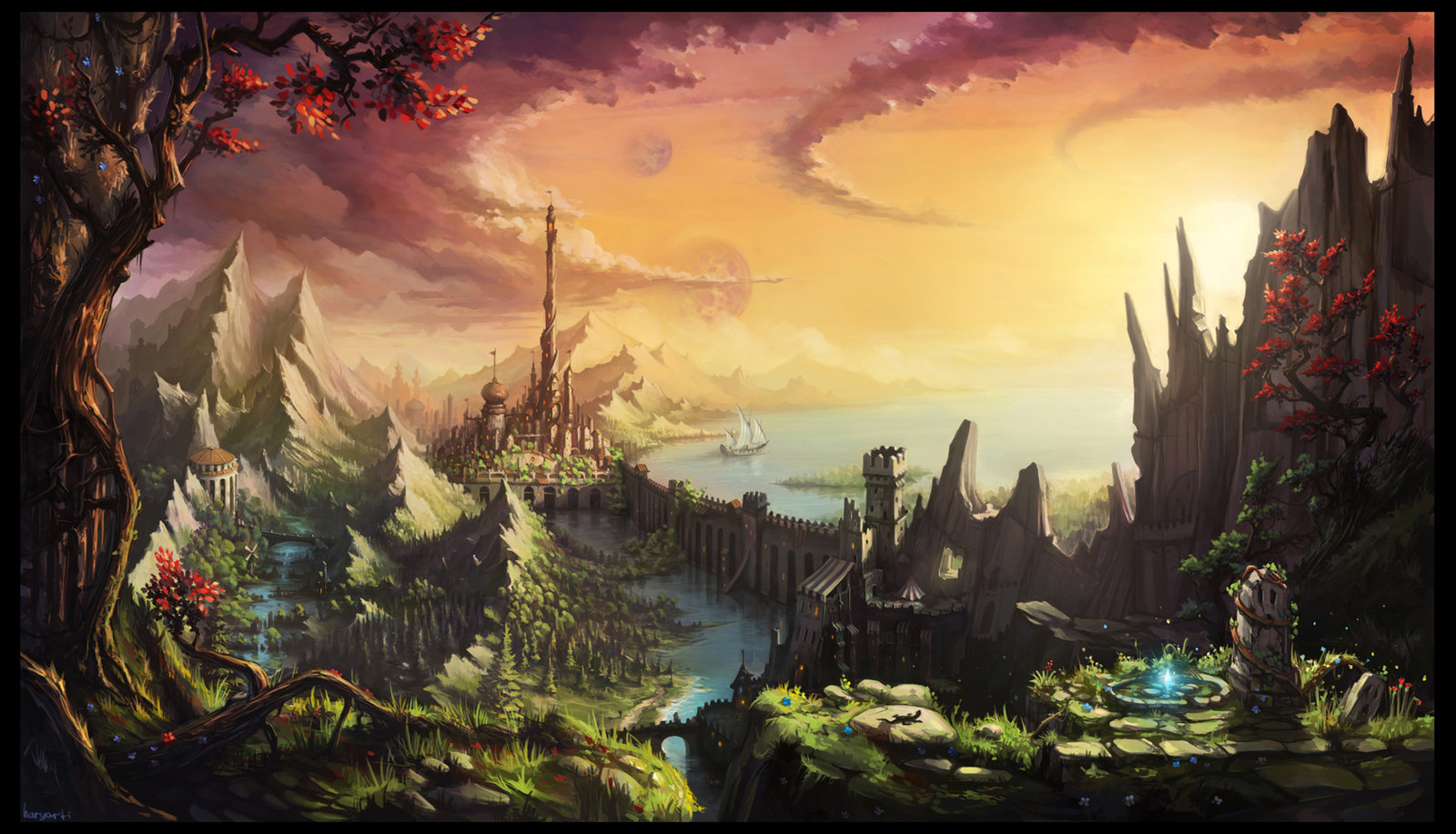 It also teaches that the natural world is composed of three main parts. The middle world, or the natural world of mortals and spirits. The sylvan realm, realm of celestial paragons, arch-fey, and idealized concepts. And finally, the nether realm, where tainted or unclean spirits, and cast off shadows dwell. Seldarine texts nevertheless do not draw firm demarcations between these realms. Seldarine places greater emphasis on this life than on any afterlife. Elven philosophy is singularly preoccupied with this world, with its emphasis on finding ways to cohabitate with the gaia and other beings. A common view among elven druids (or rare clerics) is that the dead continue to inhabit our world and work towards the prosperity of their descendants and the land.
Seldarine has a very basic and generalized set of precepts, there is basically no standard doctrine, except perhaps some of the temples dedicated to a Celestial Paragon. Elves, while not worshipping gods, recognize that such beings embody their portfolios in much the same manner as arete, and as such are normally very tolerant of other religions.
Tenets Of The Faith
Respect nature, honoring Melora and true spirit of all things.
Evil is not the natural state of things, most anything can be redeemed or purified.
Focus not on things that should be believed but on things that should be done.
Cultivate a sincere and pure mind, all else will follow.
Related Faiths
•
Structure
Druids (commonly called Speakers) are the most common form of religious figure within an elven community, with the appellation of "Treespeaker" , "Windspeaker", etc in accordance with their position or expertise. In some areas followers of elvish hero-deities or fey powers have formed small sects or temples dedicated to their patron, these priests are normally clerics.
Servitors


A group of deities worshipped by the dwarven race and the Korsic barbarians. Common folklore is that the dwarves and barbarians brought the faith with them from an unknown land.
The Vaesir expect strength and skill from their followers, with martial skill or expertise in crafting being the most highly regarded traits worthy of respect in society.
It is said that the Vaesir struggled long ago against the enemies of the mortal world, the primordials, during a battle called the Dawn War. The Vaesir battled and defeated four mighty primordials; Balor (of the Evil Eye), Surtur (The Fire Storm), Thrym (The Ice Titan), and Fafnir (The Serpent of Greed).
They call for their followers to prepare for the next war at the end of times called the Twilight War, in which those worthy shall fight beside the Vaesir against the primordials and their allies. The spirits of worthy heroes are called the einherjar.
The Vaesir
Gods and Powers of the Giant, Dwarven, and Korsic peoples.
|
Diety |
Alignment |
Favored Weapon |
Portfolio |
Symbol/Info |
|
All-Father |
Unaligned(G) |
Spear |
Knowledge, Magic, War, Wisdom/Inspiration |
|
| Othea | Unaligned (C) | Club | Chaos, Magic, Nature, Hunting | Giants, Giant-kin, Ogres |
|
Hel |
Unaligned(E) |
Longsword |
Death, Disease, Culling the Weak |
|
| Uthgar | Unaligned (G) | Battleaxe | War, Strength, Beasts, Hunting | |
| Memnor | Unaligned (E) | Morningstar | Knowledge, Pride, Control/Manipulation | duergar, psionics |
| Hiatea | Unaligned (G) | Scythe/Sickle | Nature, Agriculture, Hunting | /Ceres |
|
Aegir |
Unaligned(C) |
Glaive |
Oceans, Rivers, Storms |
|
| Moradin | Good (L) | Hammer | Creation, Strength, Knowledge | (All-Father to dwarves) |
| Abbathor | Unaligned (E) | Pickaxe | Wealth, Negotiation, Power, Trickery, Luck | |
| Valfreyja | Unaligned (G) | Longsword | Battle, Honor, Passion, Chooser of the Slain | Einherjar |
|
Fenrir |
Unaligned(C,E) |
Dagger, Claw |
Luck, Fate, Trickery |
Shapeshifting (c.Loki) |
|
Heimdall |
Good |
Sword |
Vigilance, Protection |
Dwarven Orders /Helm |
|
Dumathoin |
Unaligned |
Pickaxe (Mattock) |
Mountains, Mining, Tombs and Graves |
|
|
Sindri (f) |
Unaligned(G) |
Hammer |
Crafts, Blacksmithing, War |
|
|
Umberlee |
Evil |
Trident |
Oceans, Depths, Undead |
|
|
The Norns |
Unaligned(L) |
… |
Fate, Divination |
|

Common Phrases: "Until the End of Times". "Better to Die with Honor, than to Live in Shame". "To Hades" (a curse). "By the (insert weapon)" "By (insert god)'s hand/will/beard/ass etc.
/src/campaigns/37862/a0255283-e4be-4f28-aa0c-b930d55d9b23.jpg)
/src/campaigns/37862/a0255283-e4be-4f28-aa0c-b930d55d9b23.jpg)
/src/organisations/yfNHuY5vgEPuscyhAFwWFmiEA2caNGvIAWFd6qGN.png)
/src/organisations/yfNHuY5vgEPuscyhAFwWFmiEA2caNGvIAWFd6qGN.png)


/src/campaigns/37862/a0948ad7-5224-455c-9b86-15a1c40e389b.jpg)
/src/campaigns/37862/a0948ad7-5224-455c-9b86-15a1c40e389b.jpg)


/src/campaigns/37862/9f6404ef-830b-4d69-a1a4-3e6adef67da5.jpg)
/src/campaigns/37862/9f6404ef-830b-4d69-a1a4-3e6adef67da5.jpg)
/src/campaigns/37862/9d79e8ee-5487-4e5f-9a38-de14bf244b06.jpg)
/src/campaigns/37862/9d79e8ee-5487-4e5f-9a38-de14bf244b06.jpg)
The Million Spheres cosmology uses the Myriad Planes concept from the DMG, and Beyond Countless Doorways by Monte Cook as a basic framework.
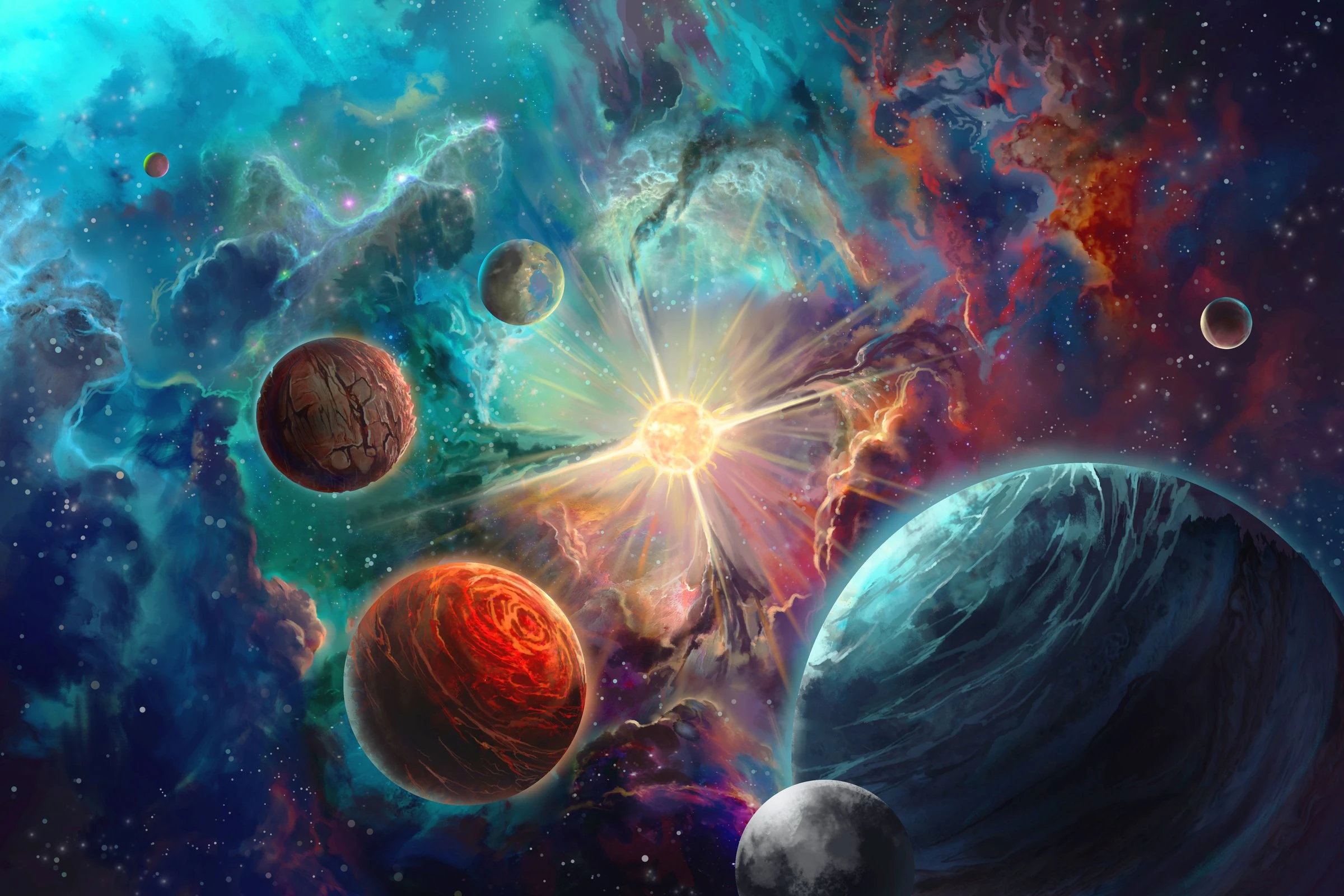 The Prime: The world in which the campaign exists. The prime is more a “universe” than just the single planet of Alfaysia. There are thousands and thousands of other solar systems and perhaps even other inhabited planets. For those so inclined, space travel could be a real possibility. Some even say that Alfaysia was settled originally by an Ancient Race from beyond the stars. Sages say that the Prime and the worlds within it represent the ultimate embodiment of Law.
The Void: The “universe” of the Prime is surrounded by the void, an infinite expanse of complete emptiness. It is said that it is in this void that the outer beings originated, incomprehensible and maddening, that are anathema to worlds of reality. Legends tell of times when creatures from the Void can descend on the Prime. Ancient sorcerers are said to traffic with such alien creatures in an attempt to gain greater power and knowledge. Others who claim to have seen such mind-rending monstrosities claim they are like blots of fetid living blackness, nearly formless. The Void surrounds the prime, but also mingles with it.
Astral Plane (Astral Sea, the Silver Void): The Astral Plane is the realm of thought and dream, where visitors travel as disembodied souls to reach other worlds. It is a great silvery sea, the same above and below, with swirling wisps of white and gray streaking among motes of light like distant stars. Most of the Astral Sea is a vast, empty expanse. Visitors occasionally stumble upon the petrified corpse of a dead god or other chunks of rock drifting forever in the silvery void. Even though the Astral Sea is a three-dimensional expanse, it possesses a distinct astral horizon that forms something like the surface of an ocean. The mists below this surface are darker and denser, and those above it are brighter and more open. The Astral Plane metaphysically links the prime worlds sperates them from the Void. (concept Astral is the Lattice of Heaven?)
The Ethereal Veil: The Ethereal Veil is a gray shadow of the world. For the most part, the Veil functions exactly as described in canon. Standing in the Veil, you see a gray shadow of reality. You can see the misty forms of buildings, of trees, of people going about their business… but you cannot be seen or heard, and you cannot affect the adjacent reality. With few exceptions, the Veil is empty. It reflects the adjacent reality, but it holds nothing of its own, and for this reason people rarely stay there for long; there’s no food, no water, and most of the time, no people. As noted earlier, the Veil is an extension of whatever plane you’re currently on. Haunts and Borders are two special places where the Ethereal takes on more concrete form.
- The Ethereal Veil extends from the plane its attached to, but no farther. There’s no Deep Ethereal, no curtains to other planes; the Astral Plane is the primary corridor for travel. However, the Borders are where planes come together, and it may be possible to move between material and the connected planes in such places.
The Feywild: An infinite realm named for the scattered lands and demesnes of the fae, the Feywild is a vibrant mirror reflecting the adjoining plane. It is a land of soft lights and wonder, a place of music and death. It is a realm of everlasting twilight, with glittering faerie lights bobbing in the gentle breeze and fat fireflies buzzing through groves and fields. The sky is alight with the faded colors of an ever-setting sun, which never truly sets (or rises for that matter); it remains stationary, dusky and low in the sky. Away from the settled areas ruled by the seelie fey that compose the Summer Court, the land is mirrors the natural world but turns its features into spectacular forms. In-between the realms of the fae, the lands take on ancient and elemental aspects of primeval splendor.
The Shadow Realm: The Shadow Realm is in some respects a transitional plane allowing passage into other planes. The Shadow Realm is an infinite expanse of shadowy existence mirroring what is occurring on the surrounding planes. Strange and evil creatures inhabit these domains. It is lit from an unknown source with but the dimmest gray light, giving all its stark and mostly barren features as deep ashen gray. If a spell calls for travel to the ethereal plane, it means the Shadowlands. The Shadowlands are sometimes called the Spirit Plane, as this is the first destination of souls after death before they progress to other realms.
- As the Feywild and the Shadow Realms both reflect and mirror the prime world, there are countless pathways and hidden gates between both them and the natural worlds.
Alternate Primes: There are other versions of the main world. Some ahead in time, some behind in time, some diverging as a result of different events. For example, there are alternate primes where the Science, not Magic, is the dominant force and world is ruled by logicians and the magic has receded (some would say that might be our world). Other primes might have the Wensharian Empire never having fallen, or the Alfar never having retreated to the forests in isolation. While there can are an infinite number of alternate primes, the rivers of time tend to follow a convergent path in the long run.
The Inner Planes (Elemental Planes): A realm of energy and matter, the Inner Planes are the fountain and forge, the building blocks for the worlds of the Prime. At their outermost edges, where they are closest to the Material Plane (in a conceptual if not a literal geographical sense), the four Elemental Planes resemble places in the Material Plane. The four elements mingle together as they do in the Material Plane, forming land, sea, and sky. But the dominant element exerts a strong influence on the environment, reflecting its fundamental qualities. As they extend farther from the Material Plane, the Elemental Planes become increasingly alien and hostile. Here, in the innermost regions, the elements exist in their purest form: great expanses of solid earth, blazing fire, crystal-clear water, and unsullied air. At the center of the Cosmos, the pure elements dissolve and bleed together into an unending tumult of clashing energies and colliding substance called Limbo, the Elemental Chaos. Elementals can be found here as well, but they usually don’t stay long, preferring the comfort of their native planes.
Limbo (Elemental Chaos): Limbo is a plane of pure chaos, a roiling soup of impermanent matter and energy. Stone melts into water that freezes into metal, then turns into diamond that burns up into smoke that becomes snow, and on and on in an endless, unpredictable process of change. Limbo conforms to the will of the creatures inhabiting it. Very disciplined and powerful minds can create whole islands of their own invention within the plane, sometimes maintaining those places for years. Sometimes the unpredictable borders of Limbo flow and ebb across the worlds of the Prime, causing chaos and change, or even the creation of new worlds. Limbo is both center and border of the Cosmos. (Chaos is contradiction)
The World Tree: The World Tree: At the cosmic intersection between Limbo, the Inner Planes, the Prime Worlds, and the Astral Plane stands the World Tree--growing in the elemental earth, fed from the elemental water, warmed by the elemental flame and expanding in the elemental air. It is said that a version of the World Tree extends into every Prime. Legends tell that it is the flowering of the World Tree that created all the planes. Some sages have said that the World Tree will one day lose its flowers to bloom again with a new cosmology. Priests, believing in the eternal nature of their gods, generally reject this notion.
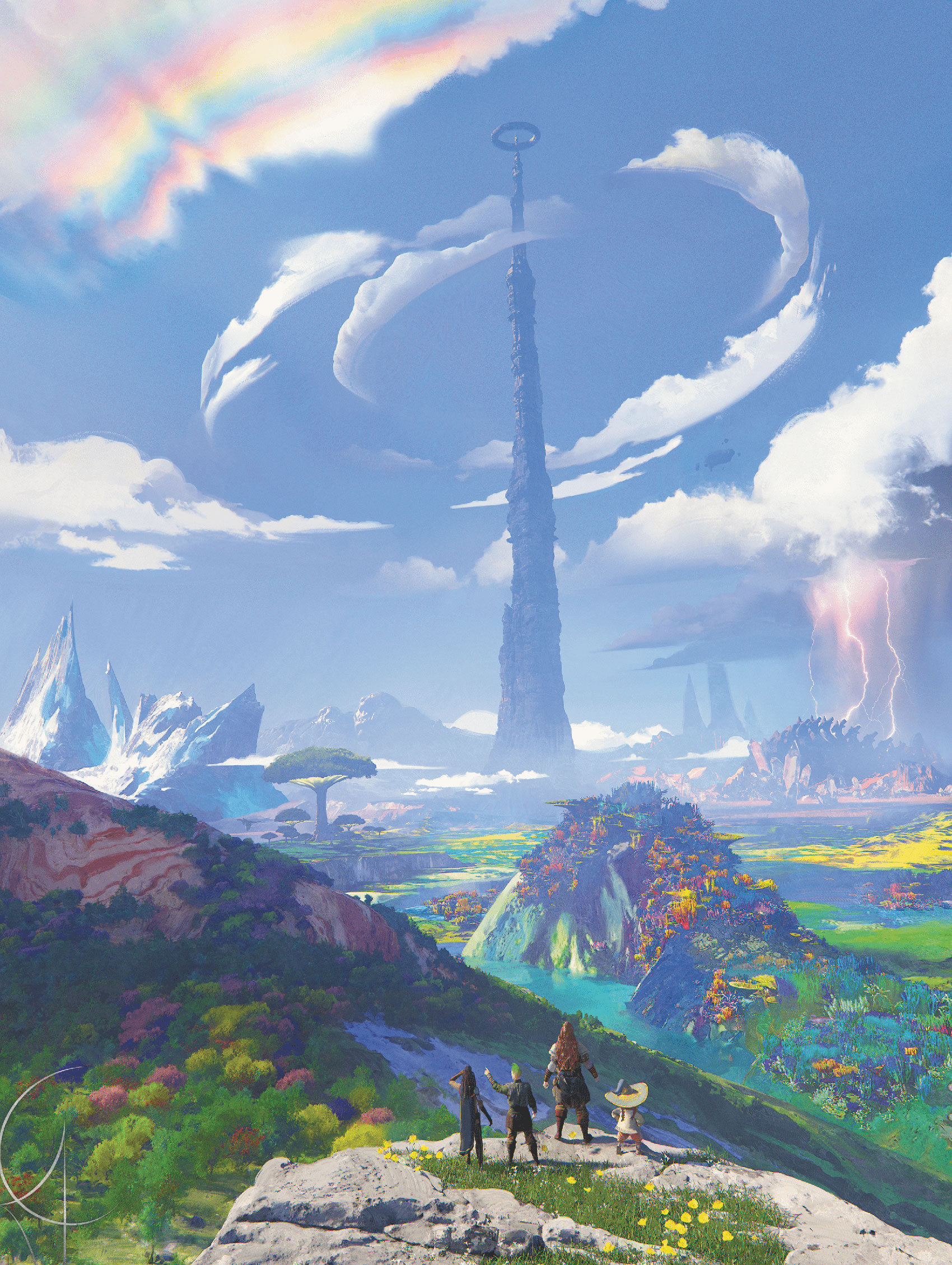 The Oldlands (First World): In the shadow of the World Tree is a vast glade and forested realm. Farther out into edges the Oldlands are ringed with hills and mountains as they transition to wilder and more primeval lands: a broad region whose boundless terrain blends to match the extreme forces that shape it. Arid, flame-scarred plains give way to heroic mountain ranges sculpted in the likenesses of forgotten beings, moldy caverns ruled by sapient fungi, bottomless seas, and other fantastic terrain. The beasts of the field, good and evil, lawful and chaotic, roam here. The law of the wild still prevails, but there is no death, there is no aging, there is no illness. Elemental and Primordial spirits take form and inhabit the lands. The creatures of this realm can be killed, but they cannot die, being renewed the following day. Visitors, however, are not renewed in the same manner. The outer edge of the Oldlands are ringed with hills and mountains as it transitions to wilder and more primeval lands: a broad region whose boundless terrain blends to match the extreme forces that shape it. The edge contains gates to worlds that retain an affinity with the Oldlands. Here uncommon cities can be found filled with creatures of all kinds, along with the rare strongholds of wizards who have given up on the Prime. Some have argued that it is this plane that is the embodiment of Neutrality.
- The World Tree can appear as different things to different creatures, an immense mountain, an endless tower, or a swirling tornado. Within ten miles of the base of the "tree" magic begins to fade, with magic being totally gone/useless within one mile of the base.