YAYLOVAR
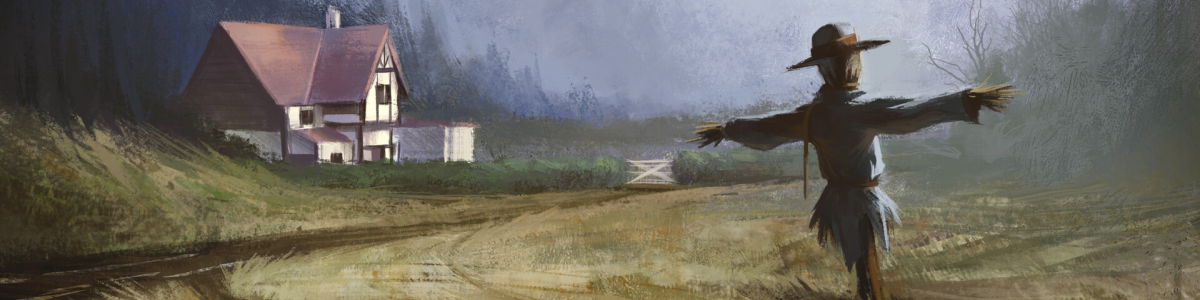
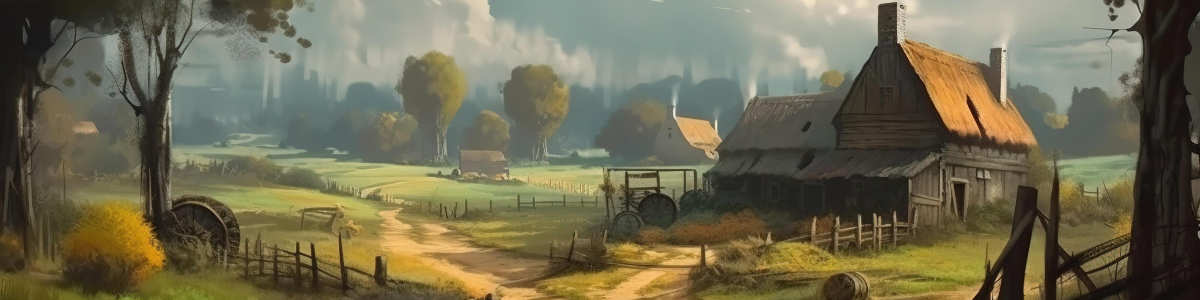
Sprawling across much of the Murray-Darling Basin, the Federal Region of Yaylovar is a vast, ancient heartland, at once a cradle of civilisation and the breadbasket of modern Oceanyka. With its endless grasslands, fertile floodplains, and innumerable farms, it is easy to overlook the depth of history buried beneath the soil. But to do so would be to forget the boneyards upon which it was built. Rivers are the veins of Yaylovar. Multitudes of tributaries converge and feed into the great Darling River, which flows southward until it joins the Murray River at the region’s border. These rivers irrigate endless fields of wheat, barley, maize and Murray Millet, nurturing the millions of cooperative farms, manorial estates and petty peasant republics that dot the landscape. The terrain is mostly flat, broken only by the occasional ancient forest or low hill, but what it lacks in elevation it makes up for in monumental scale and agricultural productivity. No region feeds the Federation as reliably, and as quietly, as Yaylovar.
Though almost wholly rural today, Yaylovar was once the stage upon which empires rose and fell. It was here, amid the river-fed plains, that the First Ankic Empire built its stone cities; it was here that the Second Ankic Empire erected its grand capital of Mir, now long lost to time. And it was here that The Imperial Cenotaph, a colossal 340-metre pyramid of carved diabase, was raised in reverent silence. This towering monument, located where the Murrumbidgee and Murray rivers meet, points almost perfectly to geographic north, a testament to the astronomical knowledge and ambition of a people long vanished. Far to the north lies The Obelisk, its silhouette smaller but no less ominous. A gateway to The Necropolis, the Obelisk marks the surface entrance to a labyrinthine subterranean city that stretches far into The Underdown. With each successive layer, the architecture grows more alien and incomprehensible, twisted by forces unknown.
There is no major city in Yaylovar, and little need for one. The region is a patchwork of Sovereignties; petty feudal lordships, peasant republics, tribal chiefdoms and cooperative unions, bound together not by central authority but by trade, shared faith, and ancient customs. While minor skirmishes erupt from time to time between rival manors or communities, the region remains remarkably stable for Oceanykan standards, a stability reinforced by its indispensable agricultural output and its colonial legacy; it was once a contested frontier, carved up and reconquered a hundred times over, until British colonialism swept through, ending millennia of war with breech-loading rifles and railroads.
To this day, Yaylovar remains supremely well-connected. Highways and railroads pour agricultural bounty into the cities of Melbourne, Cestlep, Trinra and Krampan. Though none of these lie within its borders, they are largely dependent on Yaylovar’s produce and, to a lower degree, on its minerals. The region’s mineral wealth (copper, gold, silver, uranium, thorium, and iron among others) bolsters an industrial sector that thrives modestly alongside its farms and pastures. Thorium mining, in particular, has become a booming enterprise, feeding the Federation’s bleeding-edge fission reactors.
Yaylovar is, demographically, a land of farmers. The vast majority are Ferozen, descendants of the very first arrivals from the Ferozen Invasion, joined in recent centuries by Aboriginals and Australians in relatively few numbers, who have taken root in the urban fringes. Asterism, the old faith of the Ferozen people, reigns supreme. The people of Yaylovar are seen as rustic, pious and conservative to the bone. Feudalism survives here not as a relic, but as a viable political order. In many places, the local manor lord still holds more power than any revolutionary ideologue could ever hope to. While the rest of Oceanyka races toward the future, the heartland moves at a different rhythm. But here, in the shadow of the Cenotaph and among the ordered rows of wheat and flax, many believe the soul of Oceanyka still lives.
Those from the cities might mock them as backward, calling them bumpkins or simpletons. But the Federation’s soldiers eat Yaylovar millet, its steel is smelt from Yaylovar iron, and its reactors burn Yaylovar thorium. For all its modesty, the Federal Region of Yaylovar is one of the pillars upon which the entire edifice of Oceanyka rests, and its people know it.
The fields shall never know neon skies, nor shall they ever know skyscrapers. But so long as the Darling flows, and the stars shine over the plains, Yaylovar will endure.