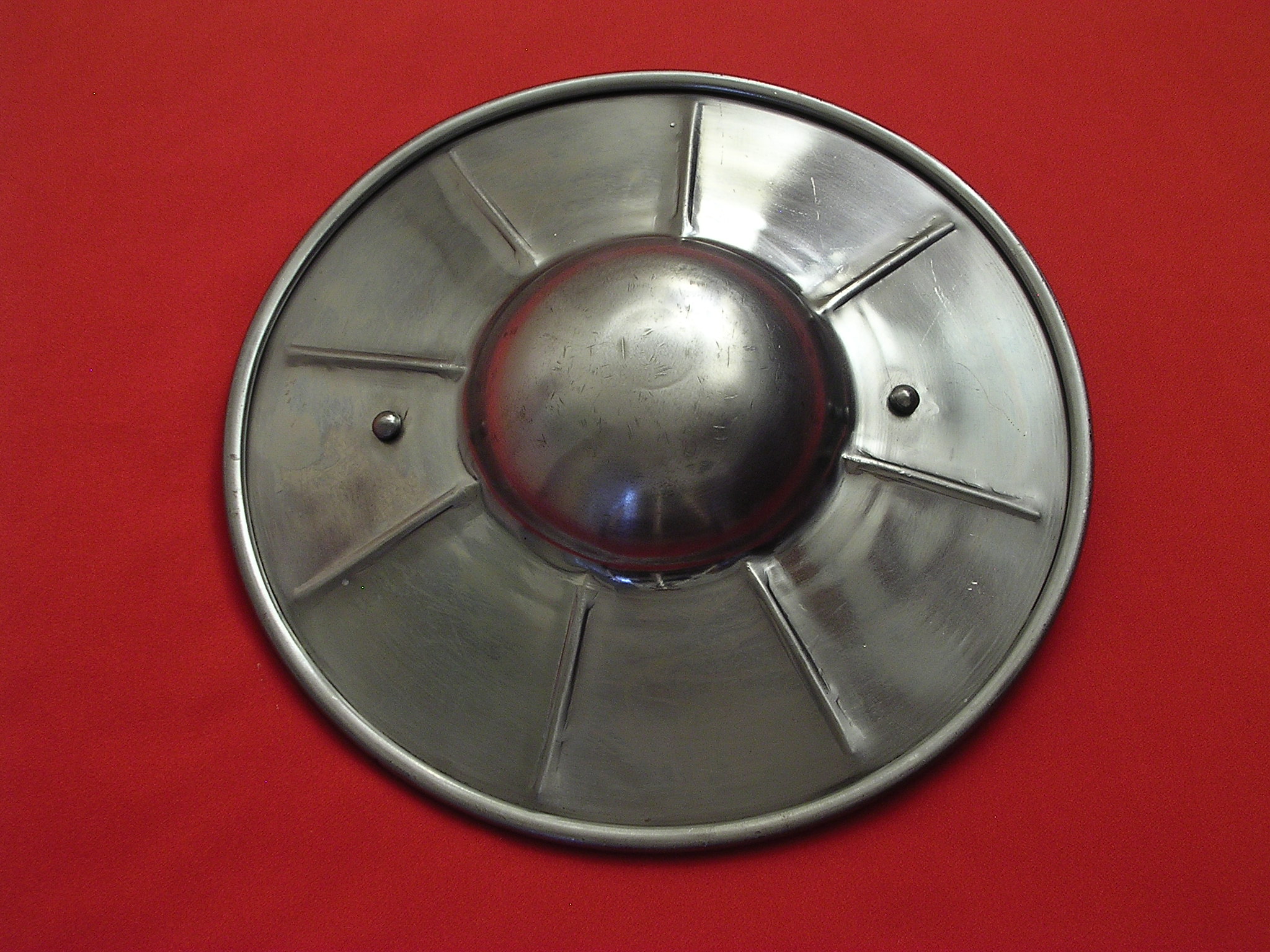
The European Buckler represents the height of Renaissance duelling craftsmanship: a compact, all-metal shield designed less for static defence than for dynamic combat control. Unlike the broad wooden shields of antiquity, the buckler’s function is not to absorb blows but to redirect them. Its small, rounded form allows for swift deflections, precise parries, and sudden counterstrikes, making it the ideal companion for rapiers, arming swords, or short sabres. It is all but useless against ranged projectiles, but this was not a problem in 16th century Europe, where firearms had almost completely placed the traditional Bow 🏹.
This model of shield was introduced to Oceanyka during the ill-fated Alfonso de Albuquerque's Expedition, being common among European mercenaries, explorers, conquistadores and marine infantry. Its legacy in Oceanyka emerged in the hands of northern warriors who first studied and adapted Iberian fencing styles. Their most infamous users were not the Portuguese, but rather the Spanish rodeleros, sword-and-buckler infantry whose speed and aggression was meant to crush through pike walls and less capable melee infantry. These men were instrumental in the 1521 conquest of Tenochtitlan, which gave birth to the long-lived Spanish Empire.