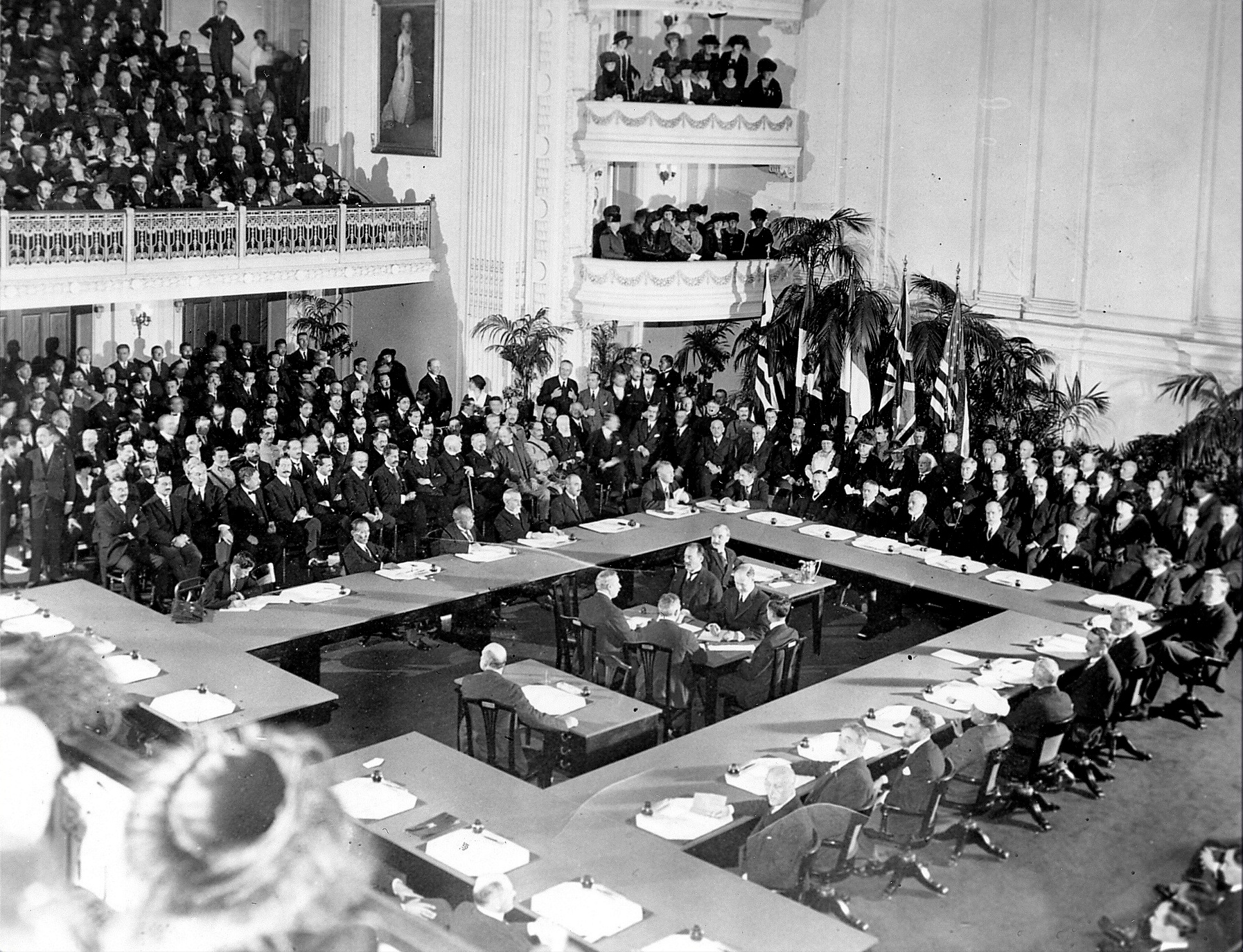
The Second Treaty of Versailles was the definitive peace agreement between the United Nations (UN) and the Fourth Eurasian Communist International (COMINTERN), which brought an end to World War II. It was hastily drafted in a span of little more than two weeks, from the declaration of the February Truce on the 3rd of the same month, to the 18th. Despite an enormous list of disagreements on both sides, none of them could afford to continue hostilities, due to the looming threat of nucleochemical annihilation. In the end, it was agreed that no territorial changes would take place. Whatever gains had been made during the war, they would go not one step further, not out of humility or conformation, but for the preservation of the human race.
No one is really sure who won the war, if anyone did. On one hand, the Comintern lost Japan, Iran, France and Danubia, as well as half of Korea. For this reason, western historians tend to describe the Second Treaty of Versailles as a confirmation of allied victory. However, the East gained China, which though hopelessly war-torn and impoverished, was an invaluable long-term asset to its cause. Additionally, the colonial powers had been mauled so badly that anti-colonial sentiments were brewing all across the world, many of them susceptible to become sympathetic to Trotskyite communism. This assumption would later prove to be accurate.
Nevertheless, for now, the carnage was over. The soldiers were the happiest of all, for they could finally leave their chemically contaminated and irradiated trenches, and head back home.
Unfortunately for them, and for all of humankind, the end of World War II was immediately preceded by the beginning of the Cold War.