A Tapestry of Curiosity, Freedom, and Joyful Irreverence
The kender do not worship the way other peoples worship. They have no cathedrals, no hymn books, no robed hierarchies debating scripture. What they have are stories — thousands of them, constantly evolving, frequently contradictory, and absolutely true (according to whoever is telling them at the time).
Kender theology, such as it is, holds that the gods are not distant judges but fellow travelers — beings who got where they are through cleverness, luck, stubbornness, or some glorious combination of all three. The kender don't kneel to their gods. They toast them. They tell stories about them around fires that smell like jungle flowers and roasting breadfruit, and if the stories get a little bigger each time, well, that's just how good stories work.
Five deities form the core of kender spiritual life, though "core" is a generous word for something so cheerfully disorganized. Three are gods known across Golarion, reinterpreted through the lens of a people who think "forbidden" is just a word for "not yet explored." One is a Mwangi goddess of wildfire and catalytic mischief. And one — the most beloved — is a kender folk hero whose stories have been told so many times and with such conviction that something divine may have actually taken notice.
How Kender Worship
Kender prayer is indistinguishable from conversation. A kender might address Grandmother Spider, The Finder of Lost Things while untangling rope, thank Desna, The Wandering Star while watching the stars, or raise a cup to Cayden Cailean, the Lucky Drunk before doing something spectacularly inadvisable. There are no set prayers, no required observances, and no penalties for getting the words wrong — because there are no right words to begin with.
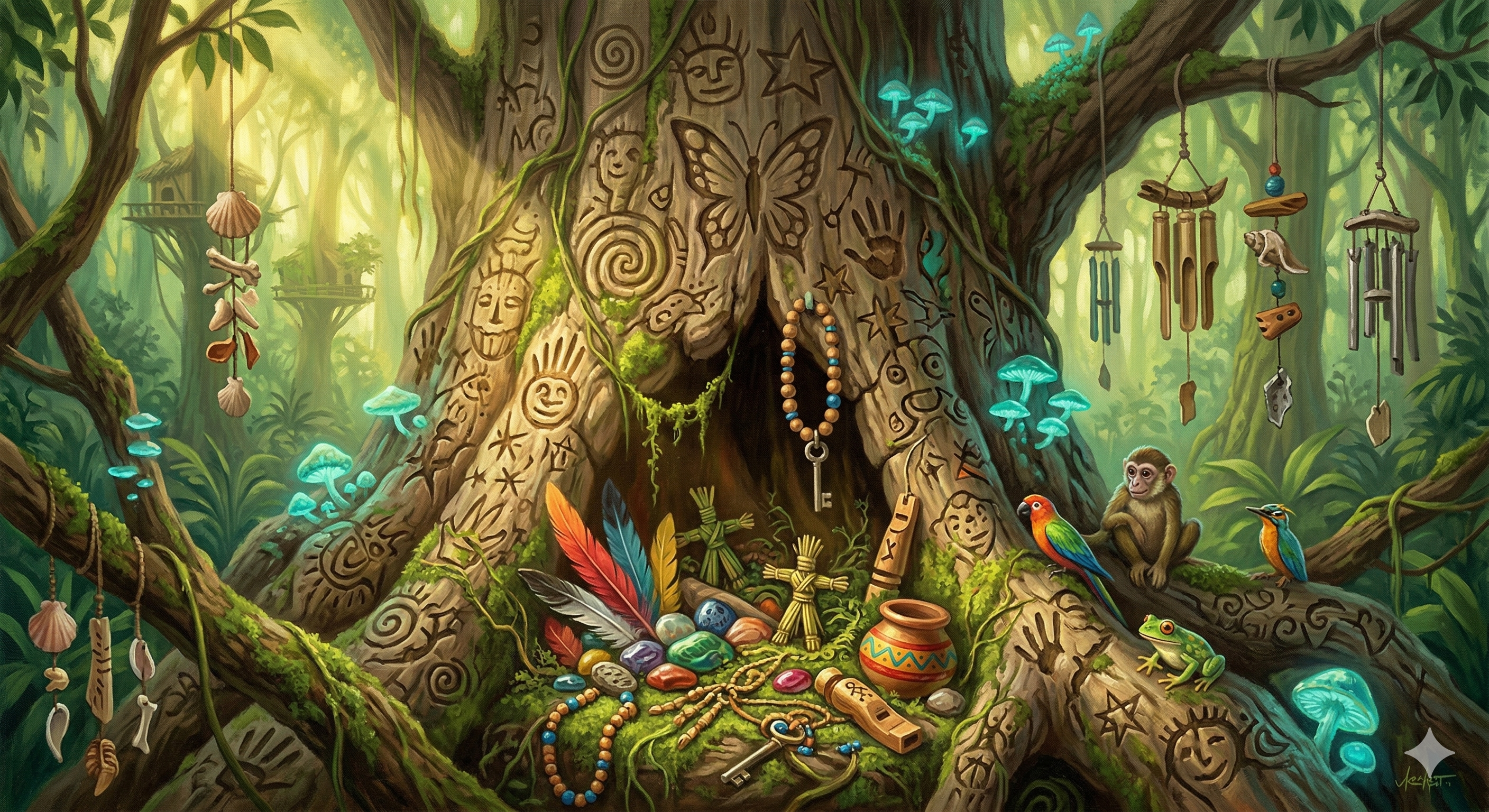
Shrines are informal affairs: a carved spider hung from a branch, a star-shaped trinket left at a crossroads, a pouch of interesting objects placed at the base of an old tree. Kender who find someone else's shrine offering will often "improve" it by adding something from their own collection, which is why kender shrines tend to accumulate into small, colorful heaps of absolute nonsense that somehow feel sacred.
Holy days are celebrated when someone remembers them, which means they might happen three times in one month or not at all for a year. The most commonly observed is the Festival of Found Things, where kender display discoveries and tell the story of each — a tradition that honors Tikkibu, The Collector — Patron of Found Things, Grandmother Spider, and Desna simultaneously, since kender see no reason to celebrate only one god at a time.
Kender Clerics and Divine Servants
Kender clerics exist, though "cleric" feels like a very formal word for what most of them do. They tend to wander, tell stories, patch wounds, settle arguments (or start them), and carry more holy symbols than any reasonable person would need — often for gods they've "borrowed" from other faiths, just to see what happens. A kender cleric might carry Grandmother Spider's woven diamond alongside Desna's butterfly and Tikkibu's overflowing pouch, switching between them based on whichever feels right for the moment.
The Five Deities
- Grandmother Spider — The Finder of Lost Things (Primary deity)
- Desna — The Wandering Star
- Cayden Cailean — The Accidental Hero
- Lubaiko, The Bright Mischief — The Bright Mischief
- Tikkibu, The Collector — Patron of Found Things (Kender-original)