

Foundry Sheet

Vaelin Morivar
Wizard 12 • Level 12 • Halfling
Overview
| Armor Class | 18 |
| Hit Points | 61/61 |
| Temp HP | 0 |
| Initiative | +3 |
| Proficiency Bonus | +4 |
| Speed | 30 ft |
| Passive Perception | 15 |
| Passive Investigation | 20 |
| Passive Insight | 11 |
| Senses | Darkvision 120 ft |
Abilities
| Strength | Dexterity | Constitution | Intelligence | Wisdom | Charisma |
|---|---|---|---|---|---|
| 10 | 16 | 12 | 20 | 12 | 9 |
| +0 | +3 | +1 | +5 | +1 | -1 |
Saving Throws
| Strength | Dexterity | Constitution | Intelligence | Wisdom | Charisma |
|---|---|---|---|---|---|
| +0 | +3 | +1 | +10 | +6 | +0 |
Skills
| Acrobatics | Animal Handling | Anticipation | Arcana |
|---|---|---|---|
| +3 | +1 | +9 | +13 |
| Athletics | Deception | Depicting | Endurance |
|---|---|---|---|
| +0 | -1 | +6 | +5 |
| History | Insight | Intimidation | Investigation |
|---|---|---|---|
| +10 | +1 | -1 | +10 |
| Medicine | Nature | Perception | Performance |
|---|---|---|---|
| +1 | +5 | +5 | -1 |
| Persuasion | Planning | Religion | Riding |
|---|---|---|---|
| -1 | +10 | +9 | +3 |
| Sleight of Hand | Stealth | Streetwise | Survival |
|---|---|---|---|
| +3 | +7 | -1 | +1 |
Languages
Arcane, Common, Draconic, Gnomish, Halfling
Currency
| EP | PP | GP | SP | CP |
|---|---|---|---|---|
| 0 | 10 | 8 | 1 | 0 |
| KAXQ3PVBGJJ7H5CB | ||||
|---|---|---|---|---|
| 0 |
Inventory
Weapons
Caledan's Staff of Insight ×1 Equipped • Legendary
Description:
requires attunement by a divination wizard
Attacks and damage rolls with this staff have a +3 bonus.
Your spellcasting DC increases by 3.
Energy Foresight. Whenever an enemy damages you with a spell, you can use your reaction, to convert the spell's magic into fuel. For every 10 hit points you lost from the spell you regain a level of spell slots. You can split it amongst any spell slot levels you are missing.
I've seen it coming. Whenever you successfully anticipate a creature, your AC increases by 1 against its attacks.
You can use the Cleave weapon mastery when attacking with this weapon, even if your class does not have weapon masteries.
Dagger ×5 Qty 5 • Equipped
Description:
Brutality Effect. Whenever you score a critical hit with this weapon, you spend Brutality Charges to active the corresponding effect. Activating the high effects gives you also the low effect.
Low effect (1 charge): The target is affected by the Hemorrhage (10) condition until the start of your next turn.
High effect (3 charges): The intensity of the Hemorrhage condition increases to 30.
Divinium Orb - LvL 1 ×1 Rare
Description:
This spherical talisman serves as a spellcasting focus, helping the practitioner to channel arcane, primal, or divine energies. Through the blessing of Arzen, this orb enhances the wielder's arcane spells with divine energy.
You get +1 to your spellcasting modifier for the purpose of spell attack rolls and difficulty checks. You must wielding the orb in your hand for the bonuses to apply.
Spellcasting Focus. An arcane focus is a special item designed to channel the power of arcane spells. A sorcerer, warlock, or wizard can use such an item as a spellcasting focus, using it in place of any material component which does not list a cost.
A glimpse of the universe. Whenever you use a divination spell, the orb's interior starts to liquify, forming purple swirls with countless little shiny dots, like a liquid galaxy.
You gain a glimple of a target's future for the next 6 seconds (1 round). The DM will whisper you it's most likely course of action that it will take on its turn, if the general situation remains unchanged (the closer your turn in to the target's the more accurate). If you reveal this info to others, you drastically increase the chances of the future changing.
If the divination spell is used out of combat you have 10% chance of regaining the spell slot you used and 50% chance of seeing a glimpse of one magical presence of a creature or item within 300 feet of you.
Equipment
Cloak of Future Sight ×1 Equipped
Description:
requires attunement by a divination wizard
Future-proof. While attuned to this cloak, the cloak casts Mage Armor on you every 8 hours, beginning when you attune to it.
Resources from the future. Whenever you regain 75% of your max hp by an ally's action, in a single instance, your body experiences the effects of a future long rest. Roll a d6. You regain a spell slot of the rolled value or lower.
Super Importent. You now have a 3rd Portent roll, allowing you to glimpse more often into the future. However, divination can be taxing. Once you have used all your 3 portent rolls, your speed is reduced by 5 until the next long rest.
Divinium Armor (Blade Ward) ×1 Equipped • Rare
Description:
requires attunement
The peak of Eratus defensive gear. Made through countless hours of taming and shaping raw Divinium, only few devout arcane smiths can produce these marvels of defense. Its properties evolve as you get stronger.
While attuned to this armor, you're proficient with it. Monk & Barbarian features work normally with this armor.
Bespoke Resistance. During the crafting process, choose two damage types other than entropic or temporal, and a class feature or a concentration spell with duration of 24h or less. While that feature is active on you or you're concentration on that spell, you're resistant to the chosen damage types.
Resistances: Slashing, Piercing
Fortress Mode. While your speed is 0, your AC increases by 2.
Historian's Hat ×1 Equipped • Common
Description:
Often those who travelled and wander the wilds discovered knowledge, learn of new places and new creatures. However, not all of them return alive. These hats were made to capture some of that knowledge and transfer it to their new owners.
While wearing the hat, you receive the following benefits:
History (Intelligence) and Depicting (Intelligence) checks receive a +1 bonus.
You have advantage on Intelligence checks to decipher, translate or interpret information.
Ink Pen ×1
Description:
Using Ink, an Ink Pen is used to write or draw.
Lamp ×1 Uses 1/1
Description:
A Lamp burns Oil as fuel to cast Bright Light in a 15-foot radius and Dim Light for an additional 30 feet.
Lily's Ceremonial Mask ×1 Equipped • Rare • Uses 1/1
Description:
Wondrous item, rare (requires attunement by a spellcaster)
This smiling silver mask is lined on its back side with stained, purple velvet. It is typically donned by a cult’s leader, allowing it the ability to communicate with the powers they worship.
While wearing this mask, you gain one additional spell slot of 1st level. In addition, you can cast the spells Commune once per long rest, without expending a spell slot and requiring no material components.
This item is associated with a deity or power of rebirth and purity. When you cast commune using the mask, if your normal deity is not the one from the mask, it has 25% chance of refusing to answer.
Rift Converter ×1 Equipped • Very Rare
Description:
Magic conversion from one type to another is usually a very strenuous and damaging purpose to the user. A device of high complexity replicating the efforts of hundreds of mages has been finally been invented after 200 years of trial and error, studying the Devourer's creatures.
requires attunement
After a successfully closing a rift, the Rift Converter attempts to create a manifestation of magic that can boost your capabilities. (10 minutes). [Foundry note: run the separate macro for Spider Rift results]
While attuned to this item, you gain an extra attunement slot.
Rings of Sky Fire ×1 Very Rare • Uses 1/1
Description:
requires attunement by an Arzen follower
These rings are given as rewards to legionnaires performing above and beyond their duties. They are manufactured for the Light Legion and are blessed and magically imbued by someone famous from the legion. When you attune to this ring, you receive a mental recording of its person's history.
Rain of Fire. As an action, while wearing the ring, you summon molten rocks in the sky that start falling and materialize when they are about 20 feet above the target area. The rocks fall down, impacting a 15-feet radius around you. Each creature other than you in the area, must succeed on a DC 15 Dexterity saving throw or take 7d6 fire and 7d6 radiant damage (half damage on success). A creature that fails by 5 or more is also knocked Prone.
Once you use this feature, you cannot use it again until it is recharged through a prayer ceremony in an Arzen's cathedral.
Robe of Useful Items ×1 Equipped • Uncommon
Description:
Wondrous Item, Uncommon
This robe has cloth patches of various shapes and colors covering it. While wearing the robe, you can take a Magic action to detach one of the patches, causing it to become the object or creature it represents. Once the last patch is removed, the robe becomes an ordinary garment.
The robe has two of each of the following patches:
- Bullseye Lantern (filled and lit)
- Dagger
- Mirror
- Pole
- Rope (coiled)
- Sack
In addition, the robe has [[/r 4d4]] other patches. The DM chooses the patches or determines them randomly by rolling on the following table.
Table
dmgRobeOfUsefulI rollable
Foundry Note
This item includes activities for each of the always present patches above which include limited uses for tracking how many are left. They can be duplicated and renamed for the additional patches after rolling for the results.
Signal Whistle ×1
Description:
When blown as a Utilize action, a Signal Whistle produces a sound that can be heard up to 600 feet away.
Tinderbox ×1
Description:
A Tinderbox is a small container holding flint, fire steel, and tinder (usually dry cloth soaked in light oil) used to kindle a fire. Using it to light a Candle, Lamp, Lantern, or Torch—or anything else with exposed fuel—takes a Bonus Action. Lighting any other fire takes 1 minute.
Consumables
Antitoxin ×5 Qty 5 • Uses 1/1
Description:
As a Bonus Action, you can drink a vial of Antitoxin to gain Advantage on saving throws to avoid or end the Poisoned condition for 1 hour.
Arrows ×25 Qty 25 • Equipped
Description:
Storage: Quiver
Ammunition is required by a weapon that has the Ammunition property. A weapon’s description specifies the type of ammunition used by the weapon. The Ammunition table lists the different types and the amount you get when you buy them. The table also lists the item that is typically used to store each type; storage must be bought separately.
charcoal, incense, and herbs ×4 Qty 4
Description:
Materials that are required to summon a familiar through the casting of the spell Find Familiar
Elixir of Effectiveness ×1 Common • Uses 1/1
Description:
A shimmering elixir that sharpens body and mind alike. Upon drinking, the imbiber gains enhanced combat effectiveness for 1 minute.
Increases by 1 your AC, attacks, spell DC.
Increases by 5 your walking speed.
Holy Water ×1 Uses 1/1
Description:
When you take the Attack action, you can replace one of your attacks with throwing a flask of Holy Water. Target one creature you can see within 20 feet of yourself. The target must succeed on a Dexterity saving throw (DC 8 plus your Dexterity modifier and Proficiency Bonus) or take 2d8 Radiant damage if it is a Fiend or an Undead.
Ink ×1 Uses 1/1
Description:
Ink comes in a 1-ounce bottle, which provides enough ink to write about 500 pages.
Master Harvesting Tools ×1 Uncommon • Uses 20/20
Description:
These precise tools are able to extract rare parts of some monstrosities. Rare parts can be used to create magic weapons with unique properties. The amount of rare parts needed, depends on the item.
A natural 20 on the harvesting, grants rare parts.
A natural 1 on the harvesting, spends an extra charge of the tools.
It has 20 charges.
Oil ×2 Qty 2 • Uses 1/1
Description:
You can douse a creature, object, or space with Oil or use it as fuel, as detailed below.
Dousing a Creature or an Object. When you take the Attack action, you can replace one of your attacks with throwing an Oil flask. Target one creature or object within 20 feet of yourself. The target must succeed on a Dexterity saving throw (DC 8 plus your Dexterity modifier and Proficiency Bonus) or be covered in oil. If the target takes Fire damage before the oil dries (after 1 minute), the target takes an extra [[/damage 5 type=fire]] damage from burning oil.
Dousing a Space. You can take the Utilize action to pour an Oil flask on level ground to cover a 5-foot-square area within 5 feet of yourself. If lit, the oil burns until the end of the turn 2 rounds from when the oil was lit (or 12 seconds) and deals 5 Fire damage to any creature that enters the area or ends its turn there. A creature can take this damage only once per turn.
Fuel. Oil serves as fuel for Lamps and Lanterns. Once lit, a flask of Oil burns for 6 hours in a Lamp or Lantern. That duration doesn’t need to be consecutive; you can extinguish the burning Oil (as a Utilize action) and rekindle it again until it has burned for a total of 6 hours.
Ornov Gemstone (purple) ×2 Qty 2 • Very Rare
Description:
Ornov gemstones were the most prized minerals for spellcasters. They had the power to enhance magic when used in conjuction with a spell focus. Depending on the color Ornov gemstones could enhance different aspects of a spell.
When you use a spell that deals cold, radiant, necrotic, thunder or force damage and has multiple targets, choose one of those targets. The chosen target takes triple the damage from the spell.
After the spell is cast, the gemstone shatters into tiny particles of dust that disintegrate while floating upwards.
Pearl (Identify) ×1 Uncommon
Description:
Potion of Greater Healing ×6 Qty 6 • Uncommon • Uses 1/1
Description:
The potion's red liquid glimmers when agitated.
You regain 4d4+4 hit points when you drink this potion.
Spell Scroll: Cure Wounds ×2 Qty 2 • Common • Uses 1/1
Description:
1st Level &Reference[Spell Scroll]
A creature you touch regains a number of Hit Points equal to 2d8 plus your spellcasting ability modifier.
Using a Higher-Level Spell Slot. The healing increases by 2d8 for each spell slot level above 1.
Spell Scroll: Detect Motives ×1 Uncommon • Uses 1/1
Description:
A spell scroll bears the words of a single spell, written in a mystical cipher. If the spell is on your class's spell list, you can read the scroll and cast its spell without providing any material components. Otherwise, the scroll is unintelligible. Casting the spell by reading the scroll requires the spell's normal casting time. Once the spell is cast, the words on the scroll fade, and it crumbles to dust. If the casting is interrupted, the scroll is not lost.
Detect Motives (Level 2)
Choose Past or Future. You pose a question to the Cosmic Leylines, which of the Fragments has or will benefit more from the creature's actions, getting an understanding of its motives, alignment and behavior. If you make a guess (one Fragment per target) before you cast this spell and your guess was correct, the creature has disadvantage on saving throws caused by your spells or features for the next hour.
A creature targeted by this spell is not aware of the spell's effects, unless it is proficient in Arcana. It is still possible to see the somatic components and recognize it.
At Higher Levels. When you cast this spell using a spell slot of 3rd level or higher, choose an additional creature for each slot level above 2nd.
created by Erika
Scroll Details
If the spell is on your class's spell list but of a higher level than you can normally cast, you must make a DC 12 ability check using your spellcasting ability to determine whether you cast it successfully. On a failed check, the spell disappears from the scroll with no other effect.
The level of the spell on the scroll determines the spell's saving throw DC and attack bonus, as well as the scroll's rarity.
Save DC: 13
Attack Bonus: +5.
A wizard spell on a spell scroll can be copied just as spells in spellbooks can be copied. When a spell is copied from a spell scroll, the copier must succeed on a DC 12 Intelligence (Arcana) check. If the check succeeds, the spell is successfully copied. Whether the check succeeds or fails, the spell scroll is destroyed.
Spell Scroll: Locate Object ×1 Uncommon • Uses 1/1
Description:
A spell scroll bears the words of a single spell, written in a mystical cipher. If the spell is on your class's spell list, you can read the scroll and cast its spell without providing any material components. Otherwise, the scroll is unintelligible. Casting the spell by reading the scroll requires the spell's normal casting time. Once the spell is cast, the words on the scroll fade, and it crumbles to dust. If the casting is interrupted, the scroll is not lost.
Locate Object (Level 2)
Describe or name an object that is familiar to you. You sense the direction to the object's location, as long as that object is within 1,000 feet of you. If the object is in motion, you know the direction of its movement.
The spell can locate a specific object known to you, as long as you have seen it up close—within 30 feet—at least once. Alternatively, the spell can locate the nearest object of a particular kind, such as a certain kind of apparel, jewelry, furniture, tool, or weapon.
This spell can't locate an object if any thickness of lead, even a thin sheet, blocks a direct path between you and the object.
Scroll Details
If the spell is on your class's spell list but of a higher level than you can normally cast, you must make a DC 12 ability check using your spellcasting ability to determine whether you cast it successfully. On a failed check, the spell disappears from the scroll with no other effect.
The level of the spell on the scroll determines the spell's saving throw DC and attack bonus, as well as the scroll's rarity.
Save DC: 13
Attack Bonus: +5.
A wizard spell on a spell scroll can be copied just as spells in spellbooks can be copied. When a spell is copied from a spell scroll, the copier must succeed on a DC 12 Intelligence (Arcana) check. If the check succeeds, the spell is successfully copied. Whether the check succeeds or fails, the spell scroll is destroyed.
Spell Scroll: Magic Missile ×1 Common • Uses 1/1
Description:
A spell scroll bears the words of a single spell, written in a mystical cipher. If the spell is on your class's spell list, you can read the scroll and cast its spell without providing any material components. Otherwise, the scroll is unintelligible. Casting the spell by reading the scroll requires the spell's normal casting time. Once the spell is cast, the words on the scroll fade, and it crumbles to dust. If the casting is interrupted, the scroll is not lost.
Magic Missile (Level 1)
You create three glowing darts of magical force. Each dart strikes a creature of your choice that you can see within range. A dart deals 1d4 + 1 Force damage to its target. The darts all strike simultaneously, and you can direct them to hit one creature or several.
Using a Higher-Level Spell Slot. The spell creates one more dart for each spell slot level above 1.
[[2 + @item.level]]{Level [[lookup @item.level]] darts}
Scroll Details
If the spell is on your class's spell list but of a higher level than you can normally cast, you must make a DC 11 ability check using your spellcasting ability to determine whether you cast it successfully. On a failed check, the spell disappears from the scroll with no other effect.
The level of the spell on the scroll determines the spell's saving throw DC and attack bonus, as well as the scroll's rarity.
Save DC: 13
Attack Bonus: +5.
A wizard spell on a spell scroll can be copied just as spells in spellbooks can be copied. When a spell is copied from a spell scroll, the copier must succeed on a DC 11 Intelligence (Arcana) check. If the check succeeds, the spell is successfully copied. Whether the check succeeds or fails, the spell scroll is destroyed.
Spell Scroll: Prayer of Healing ×1 Uncommon • Uses 1/1
Description:
A spell scroll bears the words of a single spell, written in a mystical cipher. If the spell is on your class's spell list, you can read the scroll and cast its spell without providing any material components. Otherwise, the scroll is unintelligible. Casting the spell by reading the scroll requires the spell's normal casting time. Once the spell is cast, the words on the scroll fade, and it crumbles to dust. If the casting is interrupted, the scroll is not lost.
Prayer of Healing (Level 2)
Up to five creatures of your choice who remain within range for the spell’s entire casting gain the benefits of a &Reference[shortrest] and also regain 2d8 Hit Points. A creature can’t be affected by this spell again until that creature finishes a Long Rest.
Using a Higher-Level Spell Slot. The healing increases by 1d8 for each spell slot level above 2.
Scroll Details
If the spell is on your class's spell list but of a higher level than you can normally cast, you must make a DC 12 ability check using your spellcasting ability to determine whether you cast it successfully. On a failed check, the spell disappears from the scroll with no other effect.
The level of the spell on the scroll determines the spell's saving throw DC and attack bonus, as well as the scroll's rarity.
Save DC: 13
Attack Bonus: +5.
A wizard spell on a spell scroll can be copied just as spells in spellbooks can be copied. When a spell is copied from a spell scroll, the copier must succeed on a DC 12 Intelligence (Arcana) check. If the check succeeds, the spell is successfully copied. Whether the check succeeds or fails, the spell scroll is destroyed.
Spell Scroll: Quicksilver Steps ×1 Rare • Uses 1/1
Description:
A spell scroll bears the words of a single spell, written in a mystical cipher. If the spell is on your class's spell list, you can read the scroll and cast its spell without providing any material components. Otherwise, the scroll is unintelligible. Casting the spell by reading the scroll requires the spell's normal casting time. Once the spell is cast, the words on the scroll fade, and it crumbles to dust. If the casting is interrupted, the scroll is not lost.
Quicksilver Steps (Level 4)
For the duration of the spell your movement does not provoke attacks of opportunity, and you can move up to 10 feet each time another creature you can see or hear ends their turn (no action required), up to 4 times, regaining all uses at the start of your turn. The first attack against you after each time you move have disadvantage.
When you cast this spell using a spell slot of 5th level or higher, the number of times you can move at the end of another creature's turn increases by 1, equaling the level of the spell slot used.
Scroll Details
If the spell is on your class's spell list but of a higher level than you can normally cast, you must make a DC 14 ability check using your spellcasting ability to determine whether you cast it successfully. On a failed check, the spell disappears from the scroll with no other effect.
The level of the spell on the scroll determines the spell's saving throw DC and attack bonus, as well as the scroll's rarity.
Save DC: 15
Attack Bonus: +7.
A wizard spell on a spell scroll can be copied just as spells in spellbooks can be copied. When a spell is copied from a spell scroll, the copier must succeed on a DC 14 Intelligence (Arcana) check. If the check succeeds, the spell is successfully copied. Whether the check succeeds or fails, the spell scroll is destroyed.
Spell Scroll: Unseen Servant ×1 Common • Uses 1/1
Description:
A spell scroll bears the words of a single spell, written in a mystical cipher. If the spell is on your class's spell list, you can read the scroll and cast its spell without providing any material components. Otherwise, the scroll is unintelligible. Casting the spell by reading the scroll requires the spell's normal casting time. Once the spell is cast, the words on the scroll fade, and it crumbles to dust. If the casting is interrupted, the scroll is not lost.
Unseen Servant (Level 1)
This spell creates an Invisible, mindless, shapeless, Medium force that performs simple tasks at your command until the spell ends. The servant springs into existence in an unoccupied space on the ground within range. It has AC 10, 1 Hit Point, and a Strength of 2, and it can’t attack. If it drops to 0 Hit Points, the spell ends.
Once on each of your turns as a Bonus Action, you can mentally command the servant to move up to 15 feet and interact with an object. The servant can perform simple tasks that a human could do, such as fetching things, cleaning, mending, folding clothes, lighting fires, serving food, and pouring drinks. Once you give the command, the servant performs the task to the best of its ability until it completes the task, then waits for your next command.
If you command the servant to perform a task that would move it more than 60 feet away from you, the spell ends.
Scroll Details
If the spell is on your class's spell list but of a higher level than you can normally cast, you must make a DC 11 ability check using your spellcasting ability to determine whether you cast it successfully. On a failed check, the spell disappears from the scroll with no other effect.
The level of the spell on the scroll determines the spell's saving throw DC and attack bonus, as well as the scroll's rarity.
Save DC: 13
Attack Bonus: +5.
A wizard spell on a spell scroll can be copied just as spells in spellbooks can be copied. When a spell is copied from a spell scroll, the copier must succeed on a DC 11 Intelligence (Arcana) check. If the check succeeds, the spell is successfully copied. Whether the check succeeds or fails, the spell scroll is destroyed.
Water (Pint) ×4 Qty 4 • Uses 1/1
Description:
If you don’t drink sufficient water, you risk &Reference[dehydration].
Tools
Calligrapher's Supplies ×1
Description:
Loot
Bedroll ×1
Description:
A Bedroll sleeps one Small or Medium creature. While in a Bedroll, you automatically succeed on saving throws against extreme cold (see the Dungeon Master ’s Guide).
Block of Incense ×9 Qty 9 • Common
Description:
Frequently used by the rich and religious alike to scent the air for purposes of pleasure or ritual.
Parchment ×10 Qty 10
Description:
One sheet of Parchment can hold about 250 handwritten words.
Containers
Scholar's Pack ×1
Description:
A Scholar’s Pack contains the following items: Backpack, Book, Ink, Ink Pen, Lamp, 10 flasks of Oil, 10 sheets of Parchment, and Tinderbox.
Waterskin ×1
Description:
A Waterskin holds up to 4 pints. If you don’t drink sufficient water, you risk &Reference[dehydration].
Features
Ancestry
Halfling
Description:
Description
The comforts of home are the goals of most halflings’ lives: a place to settle in peace and quiet, far from marauding monsters and clashing armies; a blazing fire and a generous meal; fine drink and fine conversation. Though some halflings live out their days in remote agricultural communities, others form nomadic bands that travel constantly, lured by the open road and the wide horizon to discover the wonders of new lands and peoples. But even these wanderers love peace, food, hearth, and home, though home might be a wagon jostling along a dirt road or a raft floating downriver.
The diminutive halflings survive in a world full of larger creatures by avoiding notice or, barring that, avoiding offense. Standing about 3 feet tall, they appear relatively harmless and so have managed to survive for centuries in the shadow of empires and on the edges of wars and political strife. They are inclined to be stout, weighing between 40 and 45 pounds.
Halflings’ skin ranges from tan to pale with a ruddy cast, and their hair is usually brown or sandy brown and wavy. They have brown or hazel eyes. Halfling men often sport long sideburns, but beards are rare among them and mustaches even more so. They like to wear simple, comfortable, and practical clothes, favoring bright colors.
Halfling practicality extends beyond their clothing. They’re concerned with basic needs and simple pleasures and have little use for ostentation. Even the wealthiest of halflings keep their treasures locked in a cellar rather than on display for all to see. They have a knack for finding the most straightforward solution to a problem, and have little patience for dithering.
Origins
Halflings were created by Izalith and Luthien. The former was responsible for their tricky personalities and mischievous acts, while the latter was responsible for their hospitality and warm personalities.
Genetics
Halflings have an innate drive towards trickery, imbued in their genes by Izalith, but also an innate compassion for others, resulting in them, more often than not, being benevolent pranksters.
Lifespan
A halfling reaches adulthood at the age of 20 and generally lives into the middle of his or her second century.
Homeland
Also found in
Unified Caldar, Aldion, Ironbeard, Eratus, Darna, Blackden
Reputation
Haflings have notorious reputation for being pranksters, thieves and con artists. Those who have lived enough with one of them, know that behind that notoriety, they usually have soft hearts and good personalities.
Background
Scribe
Description:
Ability Scores: Dexterity, Intelligence, Wisdom
Feat: Skilled
Skill Proficiencies: Investigation and Perception
Tool Proficiency: Calligrapher’s Supplies
Equipment: Choose A or B: (A) Calligrapher’s Supplies, Fine Clothes, Lamp, Oil (3 flasks), Parchment (12 sheets), 23 GP; or (B) 50 GP
You spent formative years in a scriptorium, a monastery dedicated to the preservation of knowledge, or a government agency, where you learned to write with a clear hand and produce finely written texts. Perhaps you scribed government documents or copied tomes of literature. You might have some skill as a writer of poetry, narrative, or scholarly research. Above all, you have a careful attention to detail, helping you avoid introducing mistakes to the documents you copy and create.
Classes
Wizard
Description:
A Scholarly Magic-User of Arcane Power
Core Wizard Traits
Primary Ability | Intelligence |
|---|---|
Hit Point Die | D6 per Wizard level |
Saving Throw Proficiencies | Intelligence and Wisdom |
Skill Proficiencies | Choose 2:Arcana, History, Insight, Investigation, Medicine, Nature, or Religion |
Weapon Proficiencies | Simple weapons |
Armor Training | None |
Starting Equipment | Choose A or B: (A) 2 Daggers, Arcane Focus (Quarterstaff), Robe, Spellbook, Scholar’s Pack, and [[/award 5GP]]; or (B) [[/award 55GP]] |
Wizards are defined by their exhaustive study of magic’s inner workings. They cast spells of explosive fire, arcing lightning, subtle deception, and spectacular transformations. Their magic conjures monsters from other planes of existence, glimpses the future, or forms protective barriers. Their mightiest spells change one substance into another, call meteors from the sky, or open portals to other worlds.
Most Wizards share a scholarly approach to magic. They examine the theoretical underpinnings of magic, particularly the categorization of spells into schools of magic. Renowned Wizards such as Bigby, Tasha, Mordenkainen, and Yolande have built on their studies to invent iconic spells now used across the multiverse.
The closest a Wizard is likely to come to an ordinary life is working as a sage or lecturer. Other Wizards sell their services as advisers, serve in military forces, or pursue lives of crime or domination.
But the lure of knowledge calls even the most unadventurous Wizards from the safety of their libraries and laboratories and into crumbling ruins and lost cities. Most Wizards believe that their counterparts in ancient civilizations knew secrets of magic that have been lost to the ages, and discovering those secrets could unlock the path to a power greater than any magic available in the present age.
Becoming a Wizard …
As a Level 1 Character
- Gain all the traits in the Core Wizard Traits table.
- Gain the Wizard’s level 1 features, which are listed in the Wizard Features table.
As a Multiclass Character
- Gain the Hit Point Die from the Core Wizard Traits table.
- Gain the Wizard’s level 1 features, which are listed in the Wizard Features table. See the multiclassing rules to determine your available spell slots.
Expanding and Replacing a Spellbook
The spells you add to your spellbook as you gain levels reflect your ongoing magical research, but you might find other spells during your adventures that you can add to the book. You could discover a Wizard spell on a Spell Scroll, for example, and then copy it into your spellbook.
Copying a Spell into the Book. When you find a level 1+ Wizard spell, you can copy it into your spellbook if it’s of a level you can prepare and if you have time to copy it. For each level of the spell, the transcription takes 2 hours and costs 50 GP. Afterward you can prepare the spell like the other spells in your spellbook.
Copying the Book. You can copy a spell from your spellbook into another book. This is like copying a new spell into your spellbook but faster, since you already know how to cast the spell. You need spend only 1 hour and 10 GP for each level of the copied spell.
If you lose your spellbook, you can use the same procedure to transcribe the Wizard spells that you have prepared into a new spellbook. Filling out the remainder of the new book requires you to find new spells to do so. For this reason, many wizards keep a backup spellbook.
Subclasses
Diviner
Description:
Learn the Secrets of the Multiverse
The counsel of a Diviner is sought by those who want a clearer understanding of the past, present, and future. As a Diviner, you strive to part the veils of space, time, and consciousness. You work to master spells of discernment, remote viewing, supernatural knowledge, and foresight.
Feats
[Arzen] A new religion
Description:
You obtain clothing and a symbol of your faith, recognizable only by others of the same faith.
[Arzen] Legionnaire of Mind
Description:
You gain +1 to Intelligence, Wisdom, and Charisma saving throws.
[EE] Friend of Light Legion
Description:
You gain +1 bonus to Charisma checks to influence legionnaires from the Light Legion. You can purchase mundane armors at a discount.
[EE] Member of the Settlement
Description:
You have successfully become part of this community! Provided that you carry any identification required, other citizens cannot dispute whether you belong to the settlement. You have access to facilities and privileges that ordinary members have. From here on, you can establish yourself further in the community.
[EE] Recognized Citizen
Description:
Other citizens are more likely to help you in need or cooperate for a non-suspicious task, giving you Advantage on Persuasion checks for such cases.
[EE] Reputable Legionnaire
Description:
People start to consider you reputable and are willing to trust you, within reason. You have advantage on Persuasion checks against Eratus citizens. All mundane stores are willing to offer some discounts.
[Exp] Analyzing the Data
Description:
You gain a +1 bonus on Investigation checks.
[Exp] Learning of the Wilds
Description:
You've started exploring the wild life. While on the surface of Arda, you always know where North is and what time of the day is.
[Exp] Someone has to organize them
Description:
You gain a +1 bonus on Planning checks.
Anticipating an Enemy's move
Description:
Using a Bonus Action, in combat you can make an Anticipation check DC: 10 or 2 * the target's CR/Level (whichever is higher) to prepare yourself against another creature's offensive. On a success you have advantage on saving throws against the target and the target has disadvantage on attacks against you, until the start of your next turn.
Arcane Decipher Uses 1/1
Description:
Increase your Intelligence by 1.
You gain proficiency in &Reference[skill=Arcana], Anticipation and &Reference[skill=Religion].
When you see another creature casting a spell, you can use your reaction to give the targets a +2 to their saving throws if they are within 60 feet of you. You regain this feature after a long rest.
When casting spells through a spell scroll, you're considered to have that spell in your spell list.
Arcane Recovery Uses 1/1
Description:
You can regain some of your magical energy by studying your spellbook. When you finish a Short Rest, you can choose expended spell slots to recover. The spell slots can have a combined level equal to no more than half your Wizard level (round up), and none of the slots can be level 6 or higher. For example, if you’re a level 4 Wizard, you can recover up to two levels’ worth of spell slots, regaining either one level 2 spell slot or two level 1 spell slots.
Once you use this feature, you can’t do so again until you finish a Long Rest.
Combined Level Available: [[(@classes.wizard.levels / 2)]]
Foundry Note
Since you can select the slots you will have to manually adjust your available slots. This feature can be used to track the one-time use though.
Brave
Description:
You have Advantage on saving throws you make to avoid or end the &Reference[Frightened] condition.
Cultist of the Dragon Uses 1/1
Description:
You gain the following benefits.
Dragon's Tongue. You know Draconic.
Dragon's Terror. You can take a Magic|XPHB action to instill terror in a creature you can see within 30 feet of yourself. The target must succeed on a Wisdom saving throw (DC 8 plus your Wisdom modifier and Proficiency|XPHB|Proficiency Bonus) or have the &Reference[condition=Frightened] condition until the end of your next turn. If the target succeeds on the save or when the effect ends for a target, the target is immune to this effect for 24 hours.
Inspired by Fear. When you cause a creature to have the &Reference[condition=Frightened] condition and you are the source of its fear, you can gain Heroic Inspiration|XPHB if you lack it. Once you use this benefit, you can't use it again until you finish a Short Rest|XPHB|Short or Long Rest|XPHB.
Dash
Description:
When you take the Dash action, you gain extra movement for the current turn. The increase equals your Speed after applying any modifiers. With a Speed of 30 feet, for example, you can move up to 60 feet on your turn if you Dash. If your Speed of 30 feet is reduced to 15 feet, you can move up to 30 feet this turn if you Dash.
If you have a special speed, such as a Fly Speed or Swim Speed, you can use that speed instead of your Speed when you take this action. You choose which speed to use each time you take it.
Desert Devastator (t.v)
Description:
You have travelled through the Furnace Fields time after time enduring the harsh climate and hostile creatures. You have figured out some paths that will make your life easier for some time.
While in the Furnace Fields, you gain the following benefits
You can reroll each complication result once, while travelling through the Furnace Fields.
You have +1 to your OLT rolls while travelling through the Furnace Fields.
Your chances to find Invasion Rifts in the Furnace Fields increases by 100%.
If any of your attacks roll less than average damage, they deal the average amount instead.
Your movement speed increases by 5.
Disengage
Description:
If you take the Disengage action, your movement doesn’t provoke Opportunity Attacks for the rest of the current turn.
Divination Savant
Description:
Choose two Wizard spells from the Divination school (change the Grouping mode to "School" for easier selection), each of which must be no higher than level 2, and add them to your spellbook for free.
In addition, whenever you gain access to a new level of spell slots in this class, you can add one Wizard spell from the Divination school to your spellbook for free. The chosen spell must be of a level for which you have spell slots.
Expert Divination
Description:
Casting Divination spells comes so easily to you that it expends only a fraction of your spellcasting efforts. When you cast a Divination spell using a level 2+ spell slot, you regain one expended spell slot. The slot you regain must be of a level lower than the slot you expended and can’t be higher than level 5.
Foundry Note
You can manually regain the expended spell slot or use the Regain Spell Slot activity which will prompt you for the slot to restore.
Halfling Nimbleness
Description:
You can move through the space of any creature that is a size larger than you, but you can’t stop in the same space.
Help
Description:
When you take the Help action, you do one of the following.
Assist an Ability Check. Choose one of your skill or tool proficiencies that you proficient in and one ally who is near enough for you to assist verbally or physically when they make an ability check. That ally has Advantage on the next ability check they make with the chosen skill or tool. This benefit expires if the ally doesn’t use it before the start of your next turn. The DM has final say on whether your assistance is possible.
Assist an Attack Roll. You momentarily distract an enemy within 5 feet of you, giving Advantage to the next attack roll by one of your allies against that enemy. This benefit expires at the start of your next turn.
Hymns of the Fire Legion
Description:
Trusted Legionnaires are taught the hymns of their legion. These hymns draw power from the top brass of their respective Legion, manifesting extraordinary power for short terms. As excessive usage of those hymns can be dangerous for the source people, using these hymns is a double edged sword and a source of stigma in some legions.
Once a Hymn is used by a legionnaire it applies its effects to all legionnaires of the same squad and replaces all other Hymn effects.
Once a Hymn is used, it cannot be used again until the source person has recovered their power (The GM rolls randomly or decides when the source has been replenished).
For a Hymn to be used the squad must be strong in faith (group check Religion), then any of its members can initiate the Hymn.
As an action, a legionnaire can sing with a divinely epic voice one of the following Hymns:
Darelor's hymn of Flame Vanguard. Until the end of your next turn, you and your squad can cast Hellish Rebuke at 4th level without expending a spell slot. When the effect ends, you and your squad gain 25 temporary HP.
Darelor's hymn of Inferno. Until the end of your next turn, your weapons and foci burst into flames. All your damage becomes fire damage. This damage bypasses resistances and treats immunity as resistance. Treat all damage rolls as maximum.
Nefeli's hymn of Immolation. For 1 minute, you and your squad are engulfed in a flame mantle that burns enemies but not you. At the start of your turn, creatures of your choice within 5 feet of you, take 10 fire damage. A creature can take this damage twice per round. A creature that dies from that damage, burst into more flames dealing an extra 20 damage to its adjacent allies.
Alexa's hymn of Arzen's Grace. Until the end of your next turn, healing from spells, class features and feats is maximized and then doubled. Source must be a squad member but target can be anyone.
Dulahan's hymn of Arzen's Aegis. Until the end of your next turn, you and your squad gain resistance to all damage.
If your voice is impeded in some way (silence, underwater, gagged) the Hymns cannot be used.
Influence
Description:
With the Influence action, you urge a monster to do something. Describe or roleplay how you’re communicating with the monster. Are you trying to deceive, intimidate, amuse, or gently persuade? The DM then determines whether the monster feels willing, unwilling, or hesitant due to your interaction; this determination establishes whether an ability check is necessary, as explained below.
Willing. If your urging aligns with the monster’s desires, no ability check is necessary; the monster fulfills your request in a way it prefers.
Unwilling. If your urging is repugnant to the monster or counter to its alignment, no ability check is necessary; it doesn’t comply.
Hesitant. If you urge the monster to do something that it is hesitant to do, you must make an ability check, which is affected by the monster’s attitude: Indifferent, Friendly, or Hostile, each of which is defined in this glossary. The Influence Checks table suggests which ability check to make based on how you’re interacting with the monster. The DM chooses the check, which has a default DC equal to 15 or the monster’s Intelligence score, whichever is higher. On a successful check, the monster does as urged. On a failed check, you must wait 24 hours (or a duration set by the DM) before urging it in the same way again.
Influence Checks
Ability CheckInteractionCharisma (Deception)Deceiving a monster that understands youCharisma (Intimidation)Intimidating a monsterCharisma (Performance)Amusing a monsterCharisma (Persuasion)Persuading a monster that understands youWisdom (Animal Handling)Gently coaxing a Beast or MonstrosityLuck
Description:
When you roll a 1 on the d20 of a D20 Test, you can reroll the die, and you must use the new roll.
Memorize Spell
Description:
Whenever you finish a Short Rest, you can study your spellbook and replace one of the level 1+ Wizard spells you have prepared for your Spellcasting feature with another level 1+ spell from the book.
Naturally Stealthy
Description:
You can take the &Reference[Hide] action even when you are obscured only by a creature that is at least one size larger than you.
Portent Uses 1/1
Description:
Glimpses of the future begin to press on your awareness. Whenever you finish a Long Rest, roll two [[/r d20]] and record the numbers rolled. You can replace any &Reference[D20 Test] made by you or a creature that you can see with one of these foretelling rolls. You must choose to do so before the roll, and you can replace a roll in this way only once per turn.
Each foretelling roll can be used only once. When you finish a Long Rest, you lose any unused foretelling rolls.
Current Portent Rolls: 17, 10
Foundry Note
When you roll both of the d20 you can edit this feature's description to track them or log it another way.
Ready Non-Spell
Description:
You take the Ready action to wait for a particular circumstance before you act. To do so, you take this action on your turn, which lets you act by taking a Reaction before the start of your next turn.
First, you decide what perceivable circumstance will trigger your Reaction. Then, you choose the action you will take in response to that trigger, or you choose to move up to your Speed in response to it. Examples include “If the cultist steps on the trapdoor, I’ll pull the lever that opens it,” and “If the zombie steps next to me, I move away.”
When the trigger occurs, you can either take your Reaction right after the trigger finishes or ignore the trigger.
When you Ready a spell, you cast it as normal (expending any resources used to cast it) but hold its energy, which you release with your Reaction when the trigger occurs. To be readied, a spell must have a casting time of an action, and holding on to the spell’s magic requires Concentration, which you can maintain up to the start of your next turn. If your Concentration is broken, the spell dissipates without taking effect.
Ready Spell
Description:
If you take the Disengage action, your movement doesn’t provoke Opportunity Attacks for the rest of the current turn.
Ritual Adept
Description:
You can cast any spell as a Ritual if that spell has the Ritual tag and the spell is in your spellbook. You needn’t have the spell prepared, but you must read from the book to cast a spell in this way.
Scholar
Description:
While studying magic, you also specialized in another field of study. Choose one of the following skills in which you have proficiency: Arcana, History, Investigation, Medicine, Nature, or Religion. You have Expertise in the chosen skill.
Search
Description:
When you take the Search action, you make a Wisdom check to discern something that isn’t obvious. The Search table suggests which skills are applicable when you take this action, depending on what you’re trying to detect.
Search
SkillThing to DetectInsightCreature’s state of mindMedicineCreature’s ailment or cause of deathPerceptionConcealed creature or objectSurvivalTracks or foodSkilled
Description:
You gain proficiency in any combination of three skills or tools of your choice.
Repeatable. You can take this feat more than once.
Foundry Note
This feature does not automatically grant the proficiencies. You can toggle the "Edit" mode in the "Details" tab of your sheet and click on the circles next to the Skills to choose your proficiencies.
Spell Aegis
Description:
Increase your Intelligence by 1.
When a non-abjuration spell that targets you and only you is cast, you can use a Reaction to make an Intelligence (&Reference[skill=Arcana]) check:
If the Arcana check is higher than 10 + the spell’s level, you choose to negate either the damage or the rest of the spell’s effects.
If the Arcana check is higher than 14 + the spell level, you negate both the damage & the rest of the spell's effects.
If the Arcana check is higher than 20 + the spell’s level, you deflect the spell back at the caster.
Spellcasting
Description:
As a student of arcane magic, you have learned to cast spells. See the rules on spellcasting. The information below details how you use those rules with Wizard spells, which appear in the Wizard spell list.
Cantrips. You know three Wizard cantrips of your choice. Light, Mage Hand, and Ray of Frost are recommended. Whenever you finish a Long Rest, you can replace one of your cantrips from this feature with another Wizard cantrip of your choice.
When you reach Wizard levels 4 and 10, you learn another Wizard cantrip of your choice, as shown in the Cantrips column of the Wizard Features table.
Spellbook. Your wizardly apprenticeship culminated in the creation of a unique book: your spellbook. It is a Tiny object that weighs 3 pounds, contains 100 pages, and can be read only by you or someone casting Identify. You determine the book’s appearance and materials, such as a gilt-edged tome or a collection of vellum bound with twine.
The book contains the level 1+ spells you know. It starts with six level 1 Wizard spells of your choice. Detect Magic, Feather Fall, Mage Armor, Magic Missile, Sleep, and Thunderwave are recommended.
Whenever you gain a Wizard level after 1, add two Wizard spells of your choice to your spellbook. Each of these spells must be of a level for which you have spell slots, as shown in the Wizard Features table. The spells are the culmination of arcane research you do regularly.
Spell Slots. The Wizard Features table shows how many spell slots you have to cast your level 1+ spells. You regain all expended slots when you finish a Long Rest.
Prepared Spells of Level 1+. You prepare the list of level 1+ spells that are available for you to cast with this feature. To do so, choose four spells from your spellbook. The chosen spells must be of a level for which you have spell slots.
The number of spells on your list increases as you gain Wizard levels, as shown in the Prepared Spells column of the Wizard Features table. Whenever that number increases, choose additional Wizard spells until the number of spells on your list matches the number in the table. The chosen spells must be of a level for which you have spell slots. For example, if you’re a level 3 Wizard, your list of prepared spells can include six spells of levels 1 and 2 in any combination, chosen from your spellbook.
If another Wizard feature gives you spells that you always have prepared, those spells don’t count against the number of spells you can prepare with this feature, but those spells otherwise count as Wizard spells for you.
Changing Your Prepared Spells. Whenever you finish a Long Rest, you can change your list of prepared spells, replacing any of the spells there with spells from your spellbook.
Spellcasting Ability. Intelligence is your spellcasting ability for your Wizard spells.
Spellcasting Focus. You can use an Arcane Focus or your spellbook as a Spellcasting Focus for your Wizard spells.
Study
Description:
When you take the Study action, you make an Intelligence check to study your memory, a book, a clue, or another source of knowledge and call to mind an important piece of information about it.
The Areas of Knowledge table suggests which skills are applicable to various areas of knowledge.
Areas of Knowledge
SkillAreasArcanaSpells, magic items, eldritch symbols, magical traditions, planes of existence, and certain creatures (Aberrations, Constructs, Elementals, Fey, and Monstrosities)HistoryHistoric events and people, ancient civilizations, wars, and certain creatures (Giants and Humanoids)InvestigationTraps, ciphers, riddles, and gadgetryNatureTerrain, flora, weather, and certain creatures (Beasts, Dragons, Oozes, and Plants)ReligionDeities, religious hierarchies and rites, holy symbols, cults, and certain creatures (Celestials, Fiends, and Undead)The Third Eye Uses 1/1
Description:
You can increase your powers of perception. As a Bonus Action, choose one of the following benefits, which lasts until you start a Short or Long Rest. You can’t use this feature again until you finish a Short or Long Rest.
Darkvision. You gain Darkvision with a range of 120 feet.
Greater Comprehension. You can read any language.
See Invisibility. You can cast See Invisibility without expending a spell slot.
Foundry Note
The Darkvision activity includes an Active Effect which grants you Darkvision.
The Greater Comprehension activity includes an Active Effect for tracking.
The See Invisibility activity includes a limited use and an Active Effect for tracking.
Utilize
Description:
You normally interact with an object while doing something else, such as when you draw a sword as part of the Attack action. When an object requires an action for its use, you take the Utilize action.
Versatile Magus
Description:
Prerequisite: Access to Spell Slots
Increase your Intelligence by 1 up to a maximum of 20.
Whenever you damage a creature with a damage type that it is Vulnerable to, you gain a number of Temporary Hit Points equal to your highest Class Level.
As a Bonus Action, you can swap the damage type of your next spell as follows:
Radiant <> Necrotic
Fire <> Cold
Thunder <> Lightning
Acid <> Force
Poison <> Psychic
Bastion Facilities
Arcane Study
Description:
Level 5 Bastion Facility
Prerequisite: Ability to use an Arcane Focus or tool as a Spellcasting Focus
Space: Roomy
Hirelings: 1
Order: Craft
An Arcane Study is a place of quiet research that contains one or more desks and bookshelves.
Arcane Study Charm. After spending a Long Rest in your Bastion, you gain a magical Charm (see Supernatural Gifts) that lasts for 7 days or until you use it. The Charm allows you to cast Identify without expending a spell slot or using Material components. You can’t gain this Charm again while you still have it.
Craft Options. When you issue the Craft order to this facility, choose one of the following options:
Craft: Arcane Focus. You commission the facility’s hireling to craft an Arcane Focus. The work takes 7 days and costs no money. The Arcane Focus remains in your Bastion until you claim it.
Craft: Book. You commission the facility’s hireling to craft a blank book. The work takes 7 days and costs you 10 GP. The book remains in your Bastion until you claim it.
Craft: Magic Item (Arcana). If you are level 9+, you can commission the facility’s hireling to craft a Common or an Uncommon magic item chosen by you from the Arcana tables. The facility has the tool required to craft the item, and the hireling has proficiency with that tool as well as proficiency in the Arcana skill. See Crafting Magic Items for the time and money that must be spent to craft the item. If the item allows its user to cast any spells from it, you must craft the item yourself (the facility’s hireling can assist), and you must have all those spells prepared every day you spend crafting the item.
Bedroom
Description:
egGwpYfZ81d1AZps caption=false
Gaming Hall
Description:
Gaming Hall
Level 9 Bastion Facility
Prerequisite: None
Space: Vast
Hirelings: 4
Order: Trade
A Gaming Hall offers recreational activities like chess and games of darts, cards, or dice.
Trade: Gambling Hall. When you issue the Trade order to this facility, the facility’s hirelings turn the Gaming Hall into a gambling den for 7 days. At the end of the seventh day, roll 1d100 and consult the following table to determine your portion of the house’s winnings.
dmgGamingHallWin caption=false rollable
Library
Description:
Level 5 Bastion Facility
Prerequisite: None
Space: Roomy
Hirelings: 1
Order: Research
This Library contains a collection of books plus one or more desks and reading chairs.
Research: Topical Lore. When you issue the Research order to this facility, you commission the facility’s hireling to research a topic. The topic can be a legend, a known event or location, a person of significance, a type of creature, or a famous object. The work takes 7 days. When the research concludes, the hireling obtains up to three accurate pieces of information about the topic that were previously unknown to you and shares this knowledge with you the next time you speak with them. The DM determines what information you learn.
Parlor
Description:
egGwpYfZ81d1AZps caption=false
Scriptorium
Description:
Level 9 Bastion Facility
Prerequisite: None
Space: Roomy
Hirelings: 1
Order: Craft
A Scriptorium contains desks and writing supplies.
Craft Options. When you issue the Craft order to this facility, choose one of the following options:
Craft: Book Replica. You commission the facility’s hireling to make a copy of a nonmagical Book. Doing so requires a blank book. The work takes 7 days.
Craft: Spell Scroll. You commission the facility’s hireling to scribe a Spell Scroll containing one Cleric or Wizard spell of level 3 or lower. The facility has the necessary Calligrapher’s Supplies, and the hireling meets all the prerequisites needed to scribe the scroll. The Crafting Equipment section in the Player’s Handbook specifies the time needed to scribe the scroll and the cost of the scroll, which you must pay.
Craft: Paperwork. You commission the facility’s hireling to create up to fifty copies of a broadsheet, a pamphlet, or another loose-leaf paper product. The work takes 7 days and costs you 1 GP per copy. At no additional cost in time or money, the facility’s hireling can distribute the paperwork to one or more locations within 50 miles of your Bastion.
Skill Trees
—
Spells
| Spellcasting Ability | Spell Save DC | Spell Attack Bonus |
|---|---|---|
| INT | 20 | +11 |
| Pact | Level 1 | Level 2 | Level 3 |
|---|---|---|---|
| 0/0 | 4/5 | 3/3 | 3/3 |
| Level 4 | Level 5 | Level 6 | Level 7 |
|---|---|---|---|
| 3/3 | 2/2 | 1/1 | 0/0 |
| Level 8 | Level 9 | ||
|---|---|---|---|
| 0/0 | 0/0 |
Cantrips
Blade Ward Abjuration • Prepared • Action • Self • 1 minute • V • S • Concentration
Spell Description:
Whenever a creature makes an attack roll against you before the spell ends, the attacker subtracts 1d4 from the attack roll.
Fire Bolt Evocation • Prepared • Action • 120 ft • Instantaneous • V • S
Spell Description:
You hurl a mote of fire at a creature or an object within range. Make a ranged spell attack against the target. On a hit, the target takes 1d10 Fire damage. A flammable object hit by this spell starts burning if it isn’t being worn or carried.
Cantrip Upgrade. The damage increases by 1d10 when you reach levels 5 (2d10), 11 (3d10), and 17 (4d10).
Message Transmutation • Prepared • Action • 120 ft • 1 round • S • M
Spell Description:
You point toward a creature within range and whisper a message. The target (and only the target) hears the message and can reply in a whisper that only you can hear.
You can cast this spell through solid objects if you are familiar with the target and know it is beyond the barrier. Magical silence; 1 foot of stone, metal, or wood; or a thin sheet of lead blocks the spell.
Mind Sliver Enchantment • Prepared • Action • 60 ft • 1 round • V
Spell Description:
You try to temporarily sliver the mind of one creature you can see within range. The target must succeed on an Intelligence saving throw or take 1d6 Psychic damage and subtract 1d4 from the next saving throw it makes before the end of your next turn.
Cantrip Upgrade. The damage increases by 1d6 when you reach levels 5 (2d6), 11 (3d6), and 17 (4d6).
Shocking Grasp Evocation • Prepared • Action • Touch • Instantaneous • V • S
Spell Description:
Lightning springs from you to a creature that you try to touch. Make a melee spell attack against the target. On a hit, the target takes 1d8 Lightning damage, and it can’t make Opportunity Attacks until the start of its next turn.
Cantrip Upgrade. The damage increases by 1d8 when you reach levels 5 (2d8), 11 (3d8), and 17 (4d8).
Level 1
Arctic Breath Conjuration • Not Prepared • Action • Self • Instantaneous • V • S
Spell Description:
A line of freezing arctic wind 30 feet long and 5 feet wide blasts out from you in a direction you choose. Each creature in the line must make a Dexterity saving throw. On a failed save, a creature takes 2d8 cold damage and their movement speed is reduced by 10 feet until the end of their next turn. On a successful save, a creature takes half as much damage and isn't slowed.
When you cast this spell using a spell slot of 2nd level or higher, the damage increases by 1d8 for each slot level above 1st.
Cure Wounds Abjuration • Prepared • Action • Touch • Instantaneous • V • S
Spell Description:
A creature you touch regains a number of Hit Points equal to 2d8 plus your spellcasting ability modifier.
Using a Higher-Level Spell Slot. The healing increases by 2d8 for each spell slot level above 1.
Detect Magic Divination • Not Prepared • Action • Self • 10 minutes • V • S • Concentration • Ritual
Spell Description:
For the duration, you sense the presence of magical effects within 30 feet of yourself. If you sense such effects, you can take the Magic action to see a faint aura around any visible creature or object in the area that bears the magic, and if an effect was created by a spell, you learn the spell’s school of magic.
The spell is blocked by 1 foot of stone, dirt, or wood; 1 inch of metal; or a thin sheet of lead.
Find Familiar Conjuration • Not Prepared • 1 hour • 10 ft • Instantaneous • V • S • M • Ritual
Spell Description:
You gain the service of a familiar, a spirit that takes an animal form you choose: Bat, Cat, Frog, Hawk, Lizard, Octopus, Owl, Rat, Raven, Spider, Weasel, or another Beast that has a Challenge Rating of 0. Appearing in an unoccupied space within range, the familiar has the statistics of the chosen form (see appendix B), though it is a Celestial, Fey, or Fiend (your choice) instead of a Beast. Your familiar acts independently of you, but it obeys your commands.
Telepathic Connection. While your familiar is within 100 feet of you, you can communicate with it telepathically. Additionally, as a Bonus Action, you can see through the familiar’s eyes and hear what it hears until the start of your next turn, gaining the benefits of any special senses it has.
Finally, when you cast a spell with a range of touch, your familiar can deliver the touch. Your familiar must be within 100 feet of you, and it must take a Reaction to deliver the touch when you cast the spell.
Combat. The familiar is an ally to you and your allies. It rolls its own Initiative and acts on its own turn. A familiar can’t attack, but it can take other actions as normal.
Disappearance of the Familiar. When the familiar drops to 0 Hit Points, it disappears. It reappears after you cast this spell again. As a Magic action, you can temporarily dismiss the familiar to a pocket dimension. Alternatively, you can dismiss it forever. As a Magic action while it is temporarily dismissed, you can cause it to reappear in an unoccupied space within 30 feet of you. Whenever the familiar drops to 0 Hit Points or disappears into the pocket dimension, it leaves behind in its space anything it was wearing or carrying.
One Familiar Only. You can’t have more than one familiar at a time. If you cast this spell while you have a familiar, you instead cause it to adopt a new eligible form.
Fog Cloud Conjuration • Not Prepared • Action • 120 ft • 1 hour • V • S • Concentration
Spell Description:
You create a 20-foot-radius Sphere of fog centered on a point within range. The Sphere is &Reference[heavilyobscured]. It lasts for the duration or until a strong wind (such as one created by Gust of Wind) disperses it.
Using a Higher-Level Spell Slot. The fog’s radius increases by 20 feet for each spell slot level above 1.
Identify Divination • Not Prepared • 1 minute • Touch • Instantaneous • V • S • M • Ritual
Spell Description:
You touch an object throughout the spell’s casting. If the object is a magic item or some other magical object, you learn its properties and how to use them, whether it requires Attunement, and how many charges it has, if any. You learn whether any ongoing spells are affecting the item and what they are. If the item was created by a spell, you learn that spell’s name.
If you instead touch a creature throughout the casting, you learn which ongoing spells, if any, are currently affecting it.
Mage Armor Abjuration • Not Prepared • Special • Self • 8 hours
Spell Description:
You touch a willing creature who isn’t wearing armor. Until the spell ends, the target’s base AC becomes 13 plus its Dexterity modifier. The spell ends early if the target dons armor.
Magic Missile Evocation • Not Prepared • Action • 120 ft • Instantaneous • V • S
Spell Description:
You create three glowing darts of magical force. Each dart strikes a creature of your choice that you can see within range. A dart deals 1d4 + 1 Force damage to its target. The darts all strike simultaneously, and you can direct them to hit one creature or several.
Using a Higher-Level Spell Slot. The spell creates one more dart for each spell slot level above 1.
[[2 + @item.level]]{Level [[lookup @item.level]] darts}
Shield Abjuration • Prepared • Reaction • Self • 1 round • V • S
Spell Description:
An imperceptible barrier of magical force protects you. Until the start of your next turn, you have a +5 bonus to AC, including against the triggering attack, and you take no damage from Magic Missile.
Var'Ekai's Floating Disk Conjuration • Not Prepared • Action • 30 ft • 1 hour • V • S • M • Ritual
Spell Description:
This spell creates a circular, horizontal plane of force, 3 feet in diameter and 1 inch thick, that floats 3 feet above the ground in an unoccupied space of your choice that you can see within range. The disk remains for the duration, and can hold up to 500 pounds. If more weight is placed on it, the spell ends, and everything on the disk falls to the ground.
The disk is immobile while you are within 20 feet of it. If you move more than 20 feet away from it, the disk follows you so that it remains within 20 feet of you. It can move across uneven terrain, up or down stairs, slopes and the like, but it can't cross an elevation change of 10 feet or more. For example, the disk can't move across a 10-foot-deep pit, nor could it leave such a pit if it was created at the bottom.
If you move more than 100 feet from the disk (typically because it can't move around an obstacle to follow you), the spell ends.
Witch Bolt Evocation • Not Prepared • Action • 60 ft • 1 minute • V • S • M • Concentration
Spell Description:
A beam of crackling energy lances toward a creature within range, forming a sustained arc of lightning between you and the target. Make a ranged spell attack against it. On a hit, the target takes 2d12 Lightning damage.
On each of your subsequent turns, you can take a Bonus Action to deal 1d12 Lightning damage to the target automatically, even if the first attack missed.
The spell ends if the target is ever outside the spell’s range or if it has &Reference[totalcover] from you.
Using a Higher-Level Spell Slot. The initial damage increases by 1d12 for each spell slot level above 1.
Level 2
Alacrity Transmutation • Not Prepared • Bonus Action • Self • 1 round • V • S
Spell Description:
Until the spell ends, your speed is doubled, you gain a +2 bonus to AC, you have advantage on Dexterity saving throws, and you gain an additional action. That action can be used only to take the Attack (one weapon attack only), Dash, Disengage, Hide, or Use an Object action.
If you are under the effect of haste, you gain no benefit from this spell.
Arcane Vigor Abjuration • Not Prepared • Bonus Action • Self • Instantaneous • V • S
Spell Description:
You tap into your life force to heal yourself. Roll one or two of your unexpended Hit Point Dice, and regain a number of Hit Points equal to the roll’s total plus your spellcasting ability modifier. Those dice are then expended.
Using a Higher-Level Spell Slot. The number of unexpended Hit Dice you can roll increases by one for each spell slot level above 2.
Foundry Note
The Expend dN Hit Dice activities are configured to consume a minimum of 2 Hit Dice while adding your modifier only once.
If expending a single Hit Die is desired, please deduct, roll, and heal manually.
Augury Divination • Not Prepared • 1 minute • Self • Instantaneous • V • S • M • Ritual
Spell Description:
You receive an omen from an otherworldly entity about the results of a course of action that you plan to take within the next 30 minutes. The DM chooses the omen from the Omens table.
| Omen | For Results That Will Be … |
| Weal | Good |
| Woe | Bad |
| Weal and woe | Good and bad |
| Indifference | Neither good nor bad |
The spell doesn’t account for circumstances, such as other spells, that might change the results.
If you cast the spell more than once before finishing a Long Rest, there is a cumulative 25 percent chance for each casting after the first that you get no answer.
Blur Illusion • Not Prepared • Action • Self • 1 minute • V • Concentration
Spell Description:
Your body becomes blurred. For the duration, any creature has Disadvantage on attack rolls against you. An attacker is immune to this effect if it perceives you with &Reference[blindsight] or &Reference[truesight].
Mind Spike Divination • Prepared • Action • 120 ft • 1 hour • S • Concentration
Spell Description:
You drive a spike of psionic energy into the mind of one creature you can see within range. The target makes a Wisdom saving throw, taking 3d8 Psychic damage on a failed save or half as much damage on a successful one. On a failed save, you also always know the target’s location until the spell ends, but only while the two of you are on the same plane of existence. While you have this knowledge, the target can’t become hidden from you, and if it has the &Reference[invisible apply=false] condition, it gains no benefit from that condition against you.
Using a Higher-Level Spell Slot. The damage increases by 1d8 for each spell slot level above 2.
Misty Step Conjuration • Prepared • Bonus Action • Self • Instantaneous • V
Spell Description:
Briefly surrounded by silvery mist, you teleport up to 30 feet to an unoccupied space you can see.
Prayer of Healing Abjuration • Not Prepared • 10 minutes • 30 ft • Instantaneous
Spell Description:
Up to five creatures of your choice who remain within range for the spell’s entire casting gain the benefits of a &Reference[shortrest] and also regain 2d8 Hit Points. A creature can’t be affected by this spell again until that creature finishes a Long Rest.
Using a Higher-Level Spell Slot. The healing increases by 1d8 for each spell slot level above 2.
Psychic Blast Divination • Not Prepared • Action • 60 ft • 1 round • V • S
Spell Description:
Pointing at a target within range, a blast of psychic energy flies of from your hand. Upon impact on the target, its psyche shatters, bombarding creatures behind it.
Make a ranged spell attack against the target.
On a hit, the target takes 2d10 psychic damage.
The target and each creature in the cone area must succeed on an Intelligence saving throw or have a penalty to their attack rolls equal to your Intelligence modifier, until the end of your next turn.
On a critical hit, the target and the creatures in the cone area take an extra 1d6 psychic damage.
[The cone effect is originating from the target, facing the opposite direction of the caster.]
Classes: Wizard, Bard, Warlock, Circle of Dreams Druid,
Vicious Vapors Transmutation • Not Prepared • Action • 30 ft • 1 minute • V • S • Concentration
Spell Description:
You conjure a swirling poisonous miasma around yourself. For the duration of the spell, you are lightly obscured. When you cast the spell, and as a bonus action on each subsequent turn, you can cause the vapors to surge out and swirl around up to three creatures of your choice within range. Each creature must make a Constitution saving throw. On a failed save, it takes 1d12 poison damage and becomes poisoned until the start of your next turn. On a successful save, it takes half as much poison damage and is not poisoned.
At Higher Levels. When you cast this spell using a spell slot of 3rd level or higher, the damage increases by 1d12 for each slot level above 2nd.
Level 3
Counterspell Abjuration • Not Prepared • Reaction • 60 ft • Instantaneous • S
Spell Description:
You attempt to interrupt a creature in the process of casting a spell. The creature makes a Constitution saving throw. On a failed save, the spell dissipates with no effect, and the action, Bonus Action, or Reaction used to cast it is wasted. If that spell was cast with a spell slot, the slot isn’t expended.
Dispel Magic Abjuration • Prepared • Action • 120 ft • Instantaneous • V • S
Spell Description:
Choose one creature, object, or magical effect within range. Any ongoing spell of level 3 or lower on the target ends. For each ongoing spell of level 4 or higher on the target, make an ability check using your spellcasting ability (DC 10 plus that spell’s level). On a successful check, the spell ends.
Using a Higher-Level Spell Slot. You automatically end a spell on the target if the spell’s level is equal to or less than the level of the spell slot you use.
Fireball Evocation • Not Prepared • Action • 150 ft • Instantaneous • V • S • M
Spell Description:
A bright streak flashes from you to a point you choose within range and then blossoms with a low roar into a fiery explosion. Each creature in a 20-foot-radius Sphere centered on that point makes a Dexterity saving throw, taking 8d6 Fire damage on a failed save or half as much damage on a successful one.
Flammable objects in the area that aren’t being worn or carried start burning.
Using a Higher-Level Spell Slot. The damage increases by 1d6 for each spell slot level above 3.
Glacier Bloom Conjuration • Prepared • Action • 90 ft • 1 round • V • S • M
Spell Description:
Icy air patterns start to form around your finger as point at a target location on the ground, within range, and a giant crystalized flower blooms and explodes.
At a point on the ground that you can see, the flower bloom and suddenly explodes. The radius of the explosion is (14 + 2d8) feet around the origin point. Each creature within its radius must make a Dexterity saving throw. A creature takes 1d12 cold + 3d8 piercing + cold damage equal to extra radius, on a failed save, or half as much on a successful save. Creatures that fail the saving throw by 5 or more, also get knocked prone.
The area becomes difficult terrain until the end of your next turn.
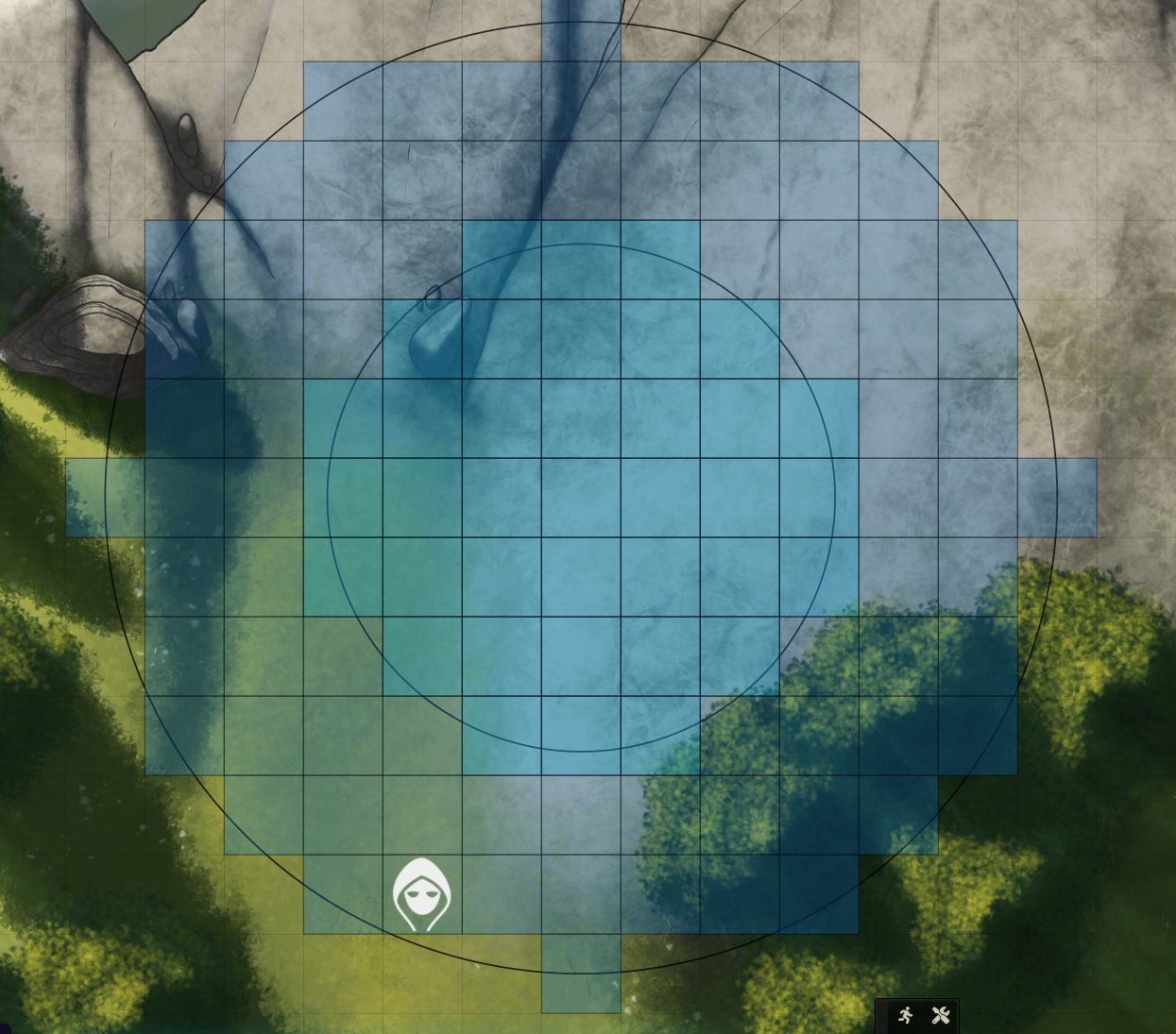
Classes: Wizard, Warlock, Bard, Ranger, Sorceror
Poisonball Evocation • Prepared • Action • 120 ft • Instantaneous • V • S • M
Spell Description:
Noxious gas erupts out of a point that you can see within range. The gas bursts out covering areas that are not behind cover. Each creature in a 20-foot-radius sphere centered on that point must make a Constitution saving throw. A target takes 5d6 poison damage on a failed save, or half as much damage on a successful one. Creatures that failed the save are also Poisoned for 1 minute (end turn save ends).
At Higher Levels.
When you cast this spell using a spell slot of 4th level or higher, the damage increases by 1d6 for each slot level above 3rd.
Sending Divination • Not Prepared • Action • Any • Instantaneous • V • S • M
Spell Description:
You send a short message of 25 words or fewer to a creature you have met or a creature described to you by someone who has met it. The target hears the message in its mind, recognizes you as the sender if it knows you, and can answer in a like manner immediately. The spell enables targets to understand the meaning of your message.
You can send the message across any distance and even to other planes of existence, but if the target is on a different plane than you, there is a 5 percent chance that the message doesn’t arrive. You know if the delivery fails.
Upon receiving your message, a creature can block your ability to reach it again with this spell for 8 hours. If you try to send another message during that time, you learn that you are blocked, and the spell fails.
Slow Transmutation • Prepared • Action • 120 ft • 1 minute • V • S • M • Concentration
Spell Description:
You alter time around up to six creatures of your choice in a 40-foot Cube within range. Each target must succeed on a Wisdom saving throw or be affected by this spell for the duration.
An affected target’s Speed is halved, it takes a −2 penalty to AC and Dexterity saving throws, and it can’t take Reactions. On its turns, it can take either an action or a Bonus Action, not both, and it can make only one attack if it takes the Attack action. If it casts a spell with a Somatic component, there is a [[/r 1d100cs<=25#Slowed spell cast success]]{25 percent} chance the spell fails as a result of the target making the spell’s gestures too slowly.
An affected target repeats the save at the end of each of its turns, ending the spell on itself on a success.
Foundry Note
The inline roll above will return 1 if it succeeded or 0 if it failed.
Vortex Blast Evocation • Not Prepared • Action • Self • Instantaneous • V • S
Spell Description:
You create a sudden violent vortex that blasts outwards in a cone, tossing characters and objects within the area. Creatures take 3d6 bludgeoning damage and must succeed a Strength saving throw or be knocked 20 feet backward and 30 feet upward.
At Higher Levels.
When you cast this spell using a spell slot of 4th level or higher, the damage increases by 1d6 for each slot level above 3rd.
Level 4
Arcane Premonition Divination • Not Prepared • 10 minutes • Self • 8 hours • V • S • M
Spell Description:
As an action you force your mind's eye to see into the next dangerous moment within the next 8 hours. For the duration, the next combat causes you to act on a surprise round.
While on a surprise round, you have a bonus to AC, saving throws, and spellcasting modifiers equal to havel the spell slot's level (rounded down).
This spell always requires the highest spell slot level you have access to.
Banishment Abjuration • Prepared • Action • 30 ft • 1 minute • V • S • M • Concentration
Spell Description:
One creature that you can see within range must succeed on a Charisma saving throw or be transported to a harmless demiplane for the duration. While there, the target has the &Reference[Incapacitated apply=false] condition. When the spell ends, the target reappears in the space it left or in the nearest unoccupied space if that space is occupied.
If the target is an Aberration, a Celestial, an Elemental, a Fey, or a Fiend, the target doesn’t return if the spell lasts for 1 minute. The target is instead transported to a random location on a plane (DM’s choice) associated with its creature type.
Using a Higher-Level Spell Slot. You can target one additional creature for each spell slot level above 4.
Dimension Door Conjuration • Prepared • Action • 500 ft • Instantaneous • V
Spell Description:
You teleport to a location within range. You arrive at exactly the spot desired. It can be a place you can see, one you can visualize, or one you can describe by stating distance and direction, such as “200 feet straight downward” or “300 feet upward to the northwest at a 45-degree angle.”
You can also teleport one willing creature. The creature must be within 5 feet of you when you teleport, and it teleports to a space within 5 feet of your destination space.
If you, the other creature, or both would arrive in a space occupied by a creature or completely filled by one or more objects, you and any creature traveling with you each take 4d6 Force damage, and the teleportation fails.
Divination Divination • Not Prepared • Action • Self • Instantaneous • V • S • M • Ritual
Spell Description:
This spell puts you in contact with a god or a god’s servants. You ask one question about a specific goal, event, or activity to occur within 7 days. The DM offers a truthful reply, which might be a short phrase or cryptic rhyme. The spell doesn’t account for circumstances that might change the answer, such as the casting of other spells.
If you cast the spell more than once before finishing a Long Rest, there is a cumulative 25 percent chance for each casting after the first that you get no answer.
Greater Invisibility Illusion • Not Prepared • Action • Touch • 1 minute • V • S • Concentration
Spell Description:
A creature you touch has the Invisible condition until the spell ends.
Riridia's Web of Fire Evocation • Prepared • Action • 60 ft • Instantaneous • V • S • M
Spell Description:
Striking both palms down upon the ground, a web of flame crackles out around the caster and five streaks of fire rapidly snake along the ground toward up to five enemies the caster can see within a range of 60 feet, leaping towards their target and exploding into a column of flame upon reaching them. Each target must make a Dexterity saving throw, taking 5d8 fire damage on a failed save, or half as much damage on a successful one.
Alternatively, all five streaks of fire can instead converge toward a single target, dealing 7d8 fire damage on a failed save, or half as much damage on a successful one.
The fire can travel over obstacles up to 5 feet high, and ignites flammable objects along its path that aren't being worn or carried
At Higher Levels. When you cast this spell using a spell slot of 5th level or higher, the damage increases by 1d8 for each slot level above 4th.
Spell Lists: Wizard, Wild Magic Sorcerer, Pact of the Tome Warlock,
Suffocate Transmutation • Prepared • Action • 60 ft • 1 minute • V • S • Concentration
Spell Description:
You create a whirling sphere of air around a creature that causes them to struggle to breathe. The target must make a Constitution saving throw. On a failure, the target loses [[/r 5d8]] hit points due to lack of air, has disadvantage on all ability checks, and cannot speak. On a success, the target takes half as much damage and suffers no other effects. For the duration, as an action, you can force the creation to make a saving throw against the ability again.
If a target fails their saving throw against this spell 3 times in a row, they become incapacitated until they succeed on a save or the spell ends. If you don’t use your action to force the target to make a save, it counts as a success.
A creature that does not need to breathe is unaffected by this spell.
Level 5
Aether Storm Evocation • Prepared • Action • 120 ft • Instantaneous • V • S • Concentration
Spell Description:
You conjure a storm of aether erupting from a point of your choice within range. The aether storm fills a 10-foot radius, 40-foot-high cylinder. When the storm appears, each creature within its area takes [[/r 8d4]] force damage.
A creature takes [[/r 1d4]] force damage for each 5 feet they move through the storm, and if a creature ends their turn within the aether storm, they take [[/r 8d4]] force damage. On your turn, you can move the storm 10 feet in any direction as a bonus action.
At Higher Levels. When you cast this spell using a spell slot of 6th level or higher, the damage increases by [[/r 1d4]] for each slot level above 5th.
Commune Divination • Not Prepared • 1 minute • Self • 1 minute • V • S • M • Ritual
Spell Description:
You contact your deity or a divine proxy and ask up to three questions that can be answered with a yes or no. You must ask your questions before the spell ends. You receive a correct answer for each question.
Divine beings aren't necessarily omniscient, so you might receive "unclear" as an answer if a question pertains to information that lies beyond the deity's knowledge. In a case where a one-word answer could be misleading or contrary to the deity's interests, the DM might offer a short phrase as an answer instead.
If you cast the spell two or more times before finishing your next long rest, there is a cumulative 25 percent chance for each casting after the first that you get no answer. The DM makes this roll in secret.
Deringaloziff's Regal Presence Enchantment • Prepared • Action • Self • 1 minute • V • S • M • Concentration
Spell Description:
You surround yourself with unearthly majesty in a 10-foot Emanation. Whenever the Emanation enters the space of a creature you can see and whenever a creature you can see enters the Emanation or ends its turn there, you can force that creature to make a Wisdom saving throw. On a failed save, the target takes 4d6 Psychic damage and has the &Reference[Prone] condition, and you can push it up to 10 feet away. On a successful save, the target takes half as much damage only. A creature makes this save only once per turn.
Far Step Conjuration • Not Prepared • Bonus Action • Self • 1 minute • V • Concentration
Spell Description:
You teleport up to 60 feet to an unoccupied space you can see. On each of your turns before the spell ends, you can use a bonus action to teleport in this way again.
Scrying Divination • Not Prepared • 10 minutes • Self • 10 minutes • V • S • M • Concentration
Spell Description:
You can see and hear a creature you choose that is on the same plane of existence as you. The target makes a Wisdom saving throw, which is modified (see the tables below) by how well you know the target and the sort of physical connection you have to it. The target doesn’t know what it is making the save against, only that it feels uneasy.
| Your Knowledge of the Target Is … | Save Modifier |
| Secondhand (heard of the target) | +5 |
| Firsthand (met the target) | +0 |
| Extensive (know the target well) | −5 |
| You Have the Target’s … | Save Modifier |
| Picture or other likeness | −2 |
| Garment or other possession | −4 |
| Body part, lock of hair, or bit of nail | −10 |
On a successful save, the target isn’t affected, and you can’t use this spell on it again for 24 hours.
On a failed save, the spell creates an Invisible, intangible sensor within 10 feet of the target. You can see and hear through the sensor as if you were there. The sensor moves with the target, remaining within 10 feet of it for the duration. If something can see the sensor, it appears as a luminous orb about the size of your fist.
Instead of targeting a creature, you can target a location you have seen. When you do so, the sensor appears at that location and doesn’t move.
Steel Wind Strike Conjuration • Prepared • Action • 30 ft • Instantaneous • S • M
Spell Description:
You flourish the weapon used in the casting and then vanish to strike like the wind. Choose up to five creatures you can see within range. Make a melee spell attack against each target. On a hit, a target takes 6d10 Force damage.
You then teleport to an unoccupied space you can see within 5 feet of one of the targets.
Level 6
Chain Lightning Evocation • Prepared • Action • 150 ft • Instantaneous • V • S • M
Spell Description:
You launch a lightning bolt toward a target you can see within range. Three bolts then leap from that target to as many as three other targets of your choice, each of which must be within 30 feet of the first target. A target can be a creature or an object and can be targeted by only one of the bolts.
Each target makes a Dexterity saving throw, taking 10d8 Lightning damage on a failed save or half as much damage on a successful one.
Using a Higher-Level Spell Slot. One additional bolt leaps from the first target to another target for each spell slot level above 6.
Last Synced: 09/04/2026, 11:36:54
World: Lands of Arda (Into the Spider's Web) Wednesday