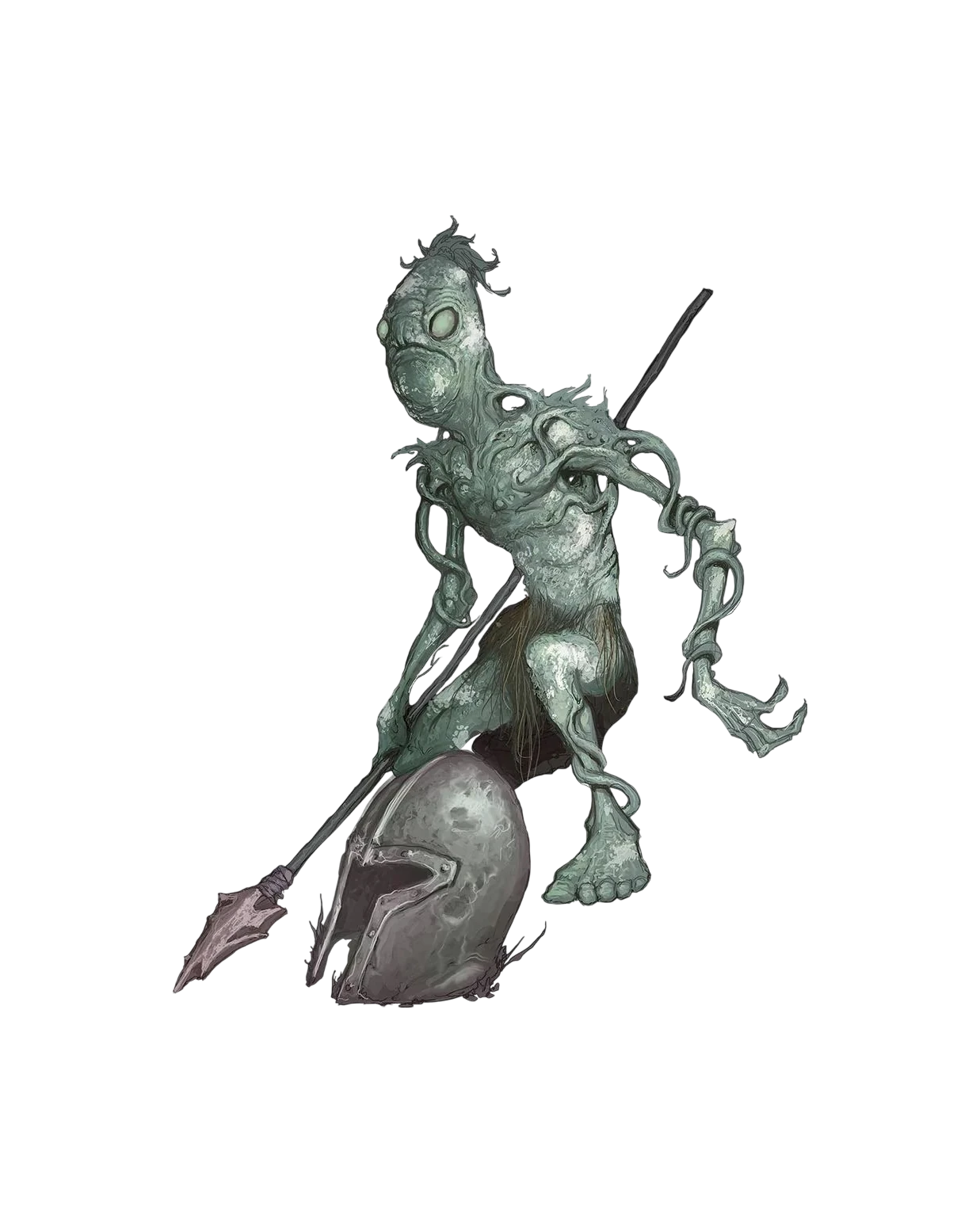
Vegepygmies, sometimes called moldfolk or moldies, were small, fungus-born creatures that stood between two and four and a half feet tall. Their bodies were wiry and muscular, covered in plant-like flesh that varied in color depending on their environment: earthy browns and greens in forests, pale grays and blacks underground, and at times strange hues of moldy blue and white. Their skin was marked with heavy wrinkles, their faces lacked noses, and their eyes were white and lidless, glowing faintly in dimness.
Long tendrils sprouted from their heads and bodies, flowing into a topknot that shifted even without wind, granting them additional senses in the dark. They fought with thorn-like claws and wielded crude clubs or spears, their bodies able to regenerate wounds unless seared by fire, frost, or rot. Resistant to lightning and piercing blows, and difficult to deceive with magic, vegepygmies were durable hunters well suited to their environments.
Physiologically, vegepygmies were neither plant nor animal, but something between, capable of sustaining themselves on decayed matter, fungus, moss, or even soil when little else was available. Though they could eat flesh and blood, they lacked the organs of true predators. Their reproduction was bound to Russet Mold, from which they emerged when a Humanoid perished under its spores. A single vegepygmy could rise from a small corpse, while larger bodies gave rise to multiple; vegepygmies rising from Beasts were called Thornies. In rare cases, when an elder vegepygmy died of age, its body split into two smaller offspring, carrying fragments of its memories. Through this process, ancient recollections could surface in later generations, giving some vegepygmies ancestral knowledge or even speech long forgotten by most of their kind.
Vegepygmies lived in simple tribal societies, led by elders whom outsiders called chiefs. Their culture was centered on survival, hunting, and above all the propagation of their people, with veneration offered to those who spread the spores of their kind. Tribes in forests tended to be aggressive hunters, while those underground were more likely to scavenge and even form loose alliances with other plant creatures. They made use of Shriekers and Violet Fungi as living alarms in their lairs and treated ancient relics or strange constructs as sacred, often elevating them into worship. Primitive and deeply communal, vegepygmies viewed the growth of the tribe as more important than the life of the individual, and their dances and rituals were performed with reckless abandon, sometimes at great cost.
Though most lacked spoken language, vegepygmies communicated through hisses, grunts, chest thumps, gestures, and rhythmic tapping. A rare few, touched by ancestral memory, could form words and pass down forgotten knowledge. They shared a natural kinship with other fungal and plant-based beings, though Myconids regarded them as cruder and less enlightened cousins. Among themselves, vegepygmies forged neutral zones where tribes could meet in relative peace, but with outsiders they were regarded as dangerous and alien. Most sapient races treated them as monsters, wary of the russet mold that spawned them and the tribes that followed.