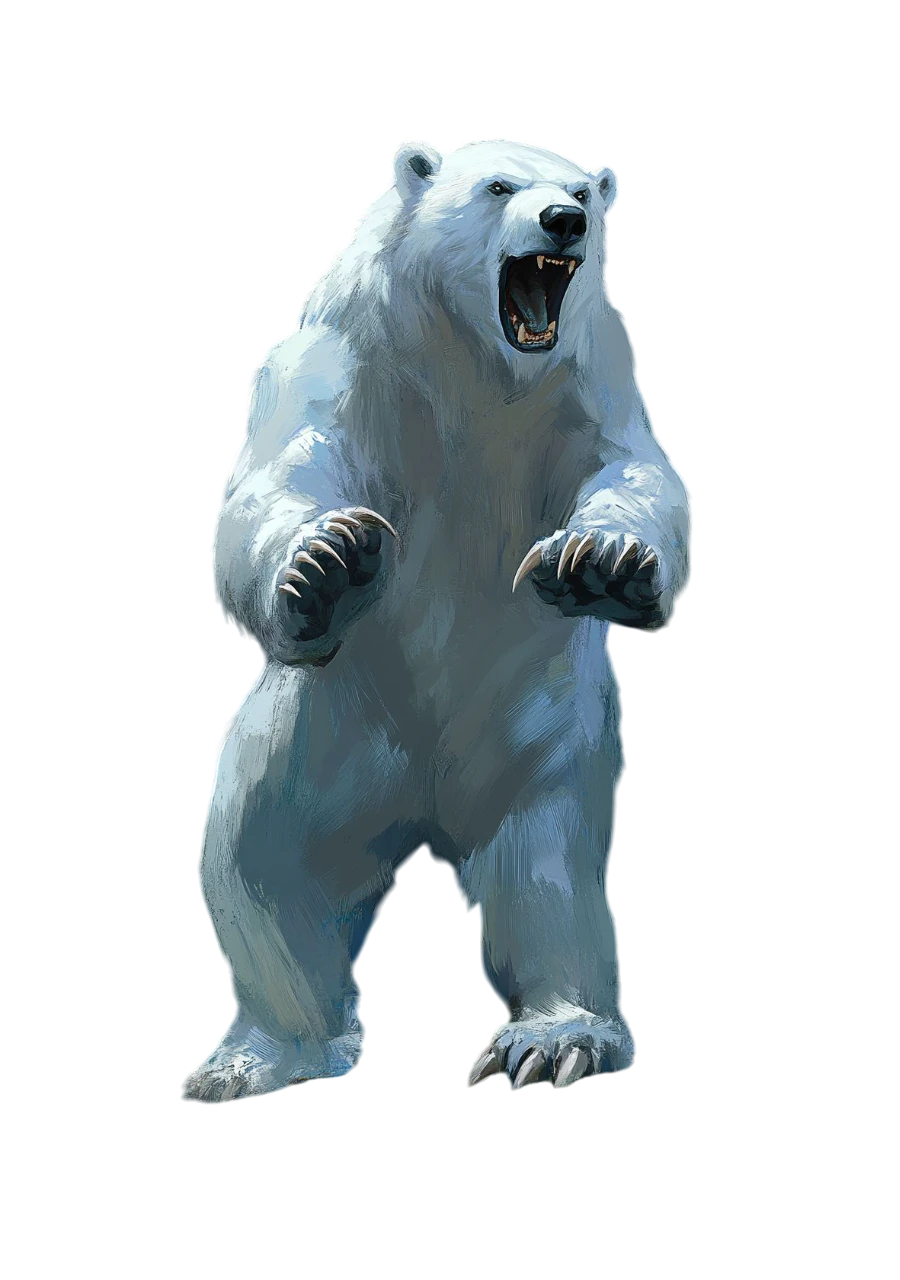
Polar bears were large species of Bear, typically found in cold-climate tundras. They had long, powerful bodies covered in thick, white fur that helped them blend into the ice and snow. Males were slightly larger than females, and could average 2.4–3 m (8–10 ft) in length and weight 350–680 kg (1,500 lb). Their large paws were adapted for swimming, with slightly webbed toes and thick pads that provided traction on ice.
Polar bears were almost entirely carnivorous, specializing in hunting Seals. They relied on keen senses, particularly smell, to locate prey across vast, frozen expanses. They were strong swimmers and could traverse miles of open water in search of food. During lean months, polar bears could fast for long periods, surviving on fat reserves built during hunting seasons. These bears were largely solitary except during mating or when females cared for cubs. Mothers were fiercely protective, raising one to three cubs in dens made of snow and ice.
Polar bears could travel great distances, following sea ice and seasonal prey migrations, making them highly adapted to the extreme conditions of their harsh environments.